Pool Repair Services: Costs, Providers, and What to Expect
Table of Contents
- Pool Repair Services: What They Cover and How to Choose
- Comparing Pool Repair Providers: A Quick Reference Table
- Common Pool Problems and Safe First Checks
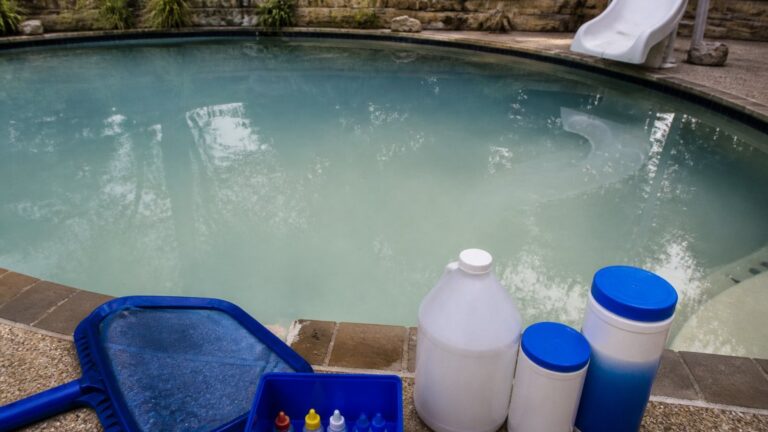
- How to Fix Cloudy Pool Water
- Pool Pump Repair Cost: What Affects the Price
- Repair or Replace? Guidance for Pool Equipment
- Your Swimming Pool Maintenance Checklist
- How to Evaluate and Compare Pool Repair Services
- Frequently Asked Questions
Last Updated: October 21, 2026
Pool Repair Services: What They Cover and How to Choose
Pool repair services cover everything from a failed pump to a cracked filter housing, and the right provider fixes the cause rather than just the symptom. At Aqua Bright Pool Service, we have handled these calls since 2006, and we can tell you plainly: most homeowners wait too long before calling. A small leak or a weak pump becomes an expensive repair when it is ignored for a season.
Here is what matters most. Pool repair is not one trade. It splits into four buckets:
- Equipment repair: pumps, filters, heaters, salt generators, valves
- Plumbing repair: leaks, cracked lines, fittings, skimmer connections
- Electrical repair: timers, breakers, bonding, control panels
- Structural work: resurfacing, tile, decking
A provider who only does cleaning will hand off the electrical and plumbing work. Ask upfront who actually performs each type of repair. The U.S. Consumer Product Safety Commission pool safety guidance is also worth a read before any work begins, especially on suction and drain fittings.
Comparing Pool Repair Providers: A Quick Reference Table
Use this table to sort providers before you call. The categories matter more than the names.
| Provider Type | Best For | Watch Out For |
|---|---|---|
| Full-service pool company | Repairs, maintenance, renovations under one roof | Busy season scheduling delays |
| Equipment-only specialist | Pump, heater, and filter swaps | May not touch plumbing or tile |
| General handyman | Simple fixes, minor leaks | Often unlicensed for electrical work |
| Big-box retailer service desk | Basic water testing, parts | Subcontracts the actual repair |
The honest answer: a full-service company with licensed technicians usually wins for anything beyond a cartridge swap. You get one point of accountability instead of three companies blaming each other.
Hiring an unlicensed technician for electrical or gas heater work can void your equipment warranty and may violate local permitting rules. Confirm the license before anyone opens a panel.
Common Pool Problems and Safe First Checks
Most pool problems announce themselves before they become emergencies. Here is what to check, safely, before you call anyone.
Cloudy water. Test chlorine and pH first. Low sanitizer or high pH are the usual culprits.
Pump not priming. Check the water level, the skimmer basket, and the pump lid O-ring. A dry pump running more than a minute can burn the motor.
Visible water loss. Mark the water line on the tile, wait 24 hours, and measure again. Normal evaporation is small; a drop of an inch or more points to a leak.
Heater not firing. Confirm the gas valve is open and the breaker is on. Do not open the heater cabinet yourself.
Tripping breaker. Stop resetting it. A breaker that trips repeatedly is a symptom, not the problem.
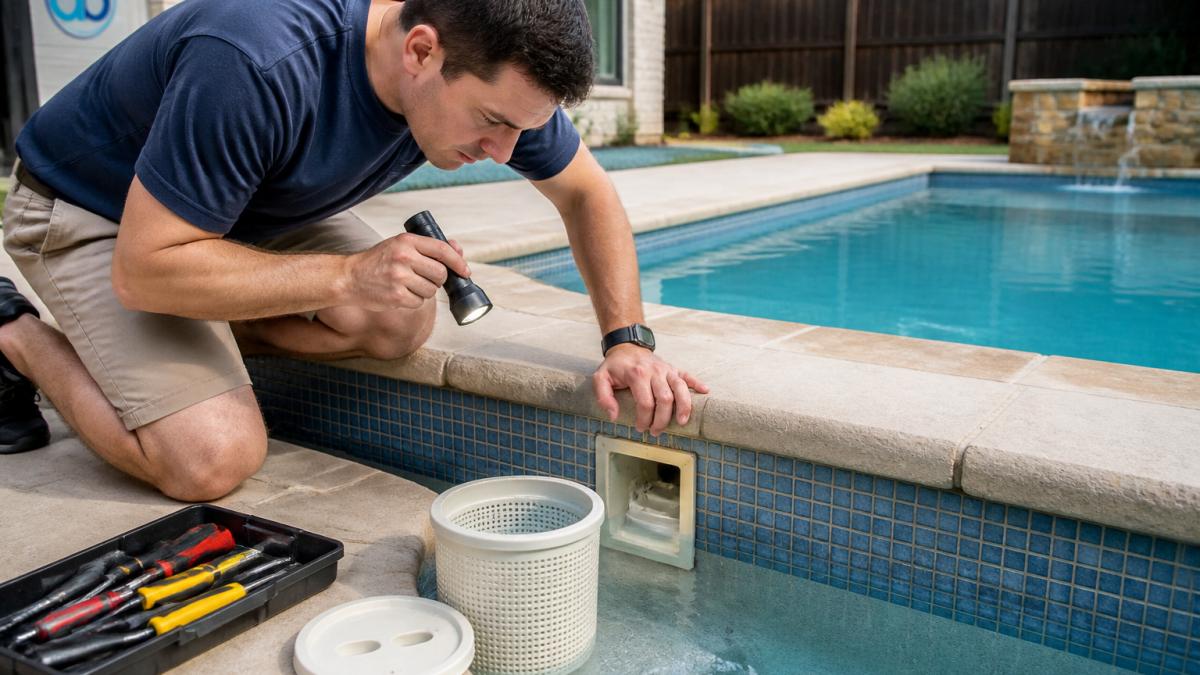
Never reach into a skimmer or drain line while the pump is running. Suction injuries are real, and the CPSC guidance on pool drain entrapment explains why.
How to Fix Cloudy Pool Water
Cloudy pool water usually means one of three things: low chlorine, high pH, or a filter that needs attention. Fix the chemistry first, then the filtration.
Work through it in order:
- Test the water. Get free chlorine, combined chlorine, pH, and alkalinity readings.
- Shock if chlorine is low. Follow the label dose for your pool volume.
- Lower high pH. High pH makes chlorine ineffective even when the level looks fine.
- Run the filter longer. Twenty-four hours of continuous circulation clears most mild haze.
- Clean or backwash the filter. A clogged filter cannot polish water no matter how good the chemistry is.
- Check for algae. Green tint means you need an algaecide and a brush, not just shock.
If the water stays cloudy after all six steps, the filter media may be failing. That is a repair conversation, not a chemical one.
A common mistake is adding more chlorine to fix cloudy water when the real issue is a dirty filter. Test first, then treat. You will save money on chemicals and clear the pool faster.
Pool Pump Repair Cost: What Affects the Price
Pool pump repair cost depends on the failure, not the brand name on the housing. A seal replacement and a motor replacement are very different jobs, and the spread between them is wide enough that a written estimate is the only number worth trusting.
Here is how the money typically breaks down. Most service providers charge a diagnostic or trip fee to identify the problem, and that fee is often credited toward the repair if you approve the work. From there, the bill is parts plus labor, and labor is usually billed hourly with a minimum service call. Ask for all three line items in writing: diagnostic fee, parts, and labor.
The main cost drivers:
- Part type. Shaft seals, O-rings, capacitors, and lid gaskets are low-cost parts. Motors, variable-speed drives, and control boards are the expensive ones, and on a variable-speed pump the drive alone can approach the price of a mid-range replacement pump.
- Pump age and model. Older single-speed pumps often cost more to repair than to replace once the motor fails. Parts for discontinued models can be scarce and marked up.
- Access. A pump tucked into a tight equipment pad or set below grade takes longer to service, and labor is the largest variable in the estimate.
- Electrical work. Any wiring, breaker, or timer work adds labor and requires a licensed technician. This is not a handyman job.
- Urgency. Same-day and after-hours emergency calls carry a premium over scheduled service.
- Warranty status. If the pump is still under a manufacturer warranty, insist the repair be done by a warranty-authorized technician. An unauthorized repair can void coverage on the whole unit.
A practical way to sanity-check a quote: ask the technician to separate the parts cost from the labor cost. If the parts number looks inflated relative to what the same part sells for at a pool supply retailer, ask why. A fair estimate will survive that question.
We do not publish flat rates because every pool is different, but we will put the diagnostic fee, the parts, and the labor in writing before work starts. Ask every provider you call for the same, and ask whether the quote includes disposal of the old unit and any permit fees. A provider who will not put it in writing is telling you something.
Before you approve a pump repair, ask for the model and serial number of the replacement parts in the estimate. That lets you verify the part is the correct one for your pump and compare its retail price against the quoted parts cost.
Repair or Replace? Guidance for Pool Equipment
The rule we use: if a repair costs more than half the price of a new unit and the equipment is past its expected service life, replace it. Otherwise, repair.
| Equipment | Typical Repair Signal | Lean Replace When |
|---|---|---|
| Pump | Leaking seal, bad capacitor | Motor is failing and unit is old |
| Filter | Cracked housing, bad valve | Housing is cracked beyond patching |
| Heater | Ignition or sensor fault | Heat exchanger is corroded |
| Salt generator | Low output, scale buildup | Cell is depleted |
Variable-speed pumps are worth the upgrade conversation when a single-speed motor dies. They run quieter and use less electricity over a season.
Get the repair estimate in writing and compare it against a replacement quote. The decision is arithmetic, not opinion.
Your Swimming Pool Maintenance Checklist
A steady maintenance routine prevents most of the repairs above. Here is the checklist we recommend for residential pools.
- Test water chemistry twice a week in swim season
- Empty skimmer and pump baskets weekly
- Brush walls and steps weekly
- Backwash or clean the filter per the manufacturer’s schedule
- Check the water level after heavy rain or heat
- Inspect the equipment pad monthly for leaks or corrosion
- Schedule a professional equipment inspection each spring
- Confirm drain covers are secure and uncracked
An above-ground pool follows the same list with extra attention to the liner and frame. Water quality problems are cheaper to prevent than to fix, and a maintenance plan spreads the cost across the year instead of landing it all in one repair bill.
How to Evaluate and Compare Pool Repair Services
Compare pool repair services on five things: licensing, insurance, written estimates, warranty terms, and response time. Everything else is marketing.
Licensing. Repair work that touches electrical, gas, or structural components is regulated, and the requirements vary by state and municipality. A legitimate company will give you its license number without hesitation, and you can verify it through your state or local licensing board.
Insurance. Ask for a certificate of insurance showing general liability coverage and, if the company has employees, workers’ compensation. If a technician is injured on your property or damages your equipment, an uninsured provider leaves you exposed.
Written estimates. The estimate should itemize the diagnostic fee, parts, labor, and any permit or disposal charges. Verbal estimates are not estimates; they are guesses. Ask whether the diagnostic fee is credited toward the repair if you approve the work.
Warranty and workmanship guarantee. Ask two separate questions: what does the manufacturer warranty cover on the parts, and what does the company warranty cover on its labor? A workmanship warranty of 30 to 90 days is common; anything shorter deserves a follow-up question.
Response time and scheduling. Ask what the typical wait is for a non-emergency repair during swim season and what the after-hours policy is. Busy full-service companies can run days out in summer; a smaller specialist may be faster but may not handle every repair type.
Ask these questions before you book:
- Are your technicians licensed for the specific repair I need, and what is the license number?
- Can you send a certificate of insurance before the visit?
- Will I get a written, itemized estimate before work begins?
- What does your workmanship warranty cover, and for how long?
- Do you do the work in-house, or subcontract it?
- What is your response time for emergency repair?
At Aqua Bright Pool Service, our technicians are professionally trained and state-licensed for repairs, and we run a randomized audit evaluation process to keep work quality consistent.
One more thing: read customer reviews for patterns, not single complaints. A provider with dozens of reviews mentioning on-time arrival and clean workmanship is a safer bet than one with a handful of five-star ratings and no detail.
Frequently Asked Questions
How often should pool equipment be inspected?
Most manufacturers and service professionals recommend a full equipment inspection at least once a year, ideally before swim season begins. Pumps, filters, heaters, and salt systems should be checked for wear, leaks, and electrical issues. If your pool gets heavy use or you notice changes in water clarity or circulation, schedule an inspection sooner. Regular inspections are part of a solid swimming pool maintenance checklist and can catch small problems before they become expensive repairs.
What are the most common causes of cloudy pool water?
Cloudy water usually comes from poor filtration, unbalanced water chemistry, or debris overload. Low chlorine, high pH, clogged filters, and a pump that isn’t moving enough water all contribute. Before calling for pool repair services, check the filter pressure gauge and skim visible debris. If the water stays cloudy after basic cleaning, a professional can test the water and inspect the circulation system. Learning how to fix cloudy pool water starts with identifying whether the cause is chemical or mechanical.
What is the average cost of a pool cleaner?
For specific figures on pool repair services or cleaning plans, contact a provider directly for a quote. Many companies offer transparent estimates after evaluating your pool’s condition and equipment.
How do I maintain the water in my pool?
Test water chemistry at least twice a week during swim season, checking pH, chlorine, alkalinity, and stabilizer levels. Adjust chemicals based on the results, and run the pump long enough to turn over the full volume of water daily. Skim debris, empty skimmer baskets, and backwash the filter when pressure rises. A written swimming pool maintenance checklist helps you stay consistent. If water quality issues persist, a professional pool inspection can identify underlying equipment problems.
Choosing a pool repair provider comes down to trust you can verify: a license you can check, an estimate in writing, and a warranty that means something. Aqua Bright Pool Service has served pool owners since 2006 with state-licensed technicians, an audited quality process, and a public storefront where you can ask us anything before you commit. Contact us to get started and keep your pool clear, quiet, and ready to swim.