
Is Professional Pool Cleaning Worth It Compared to DIY in DFW?
Yes, professional pool cleaning is often worth it for DFW homeowners who want consistent water quality, reliable equipment performance, and less time spent troubleshooting. DIY maintenance can handle basic skimming and routine upkeep, but professional pool service adds expertise in water chemistry, filtration, circulation, equipment inspection, and early problem detection that can help prevent costly pool issues.
At Aqua Bright Pool Service, we understand that maintaining a swimming pool involves much more than keeping leaves out of the water. North Texas pools face intense summer heat, strong sunlight, storms, debris, and changing usage throughout the swimming season. These conditions can quickly affect water chemistry and equipment performance. Our goal is to help DFW homeowners enjoy clean, inviting pools without turning pool maintenance into another weekly chore. With knowledgeable service and attention to the entire pool system, professional care provides homeowners with confidence that both the water they see and the equipment they do not see are being properly maintained.
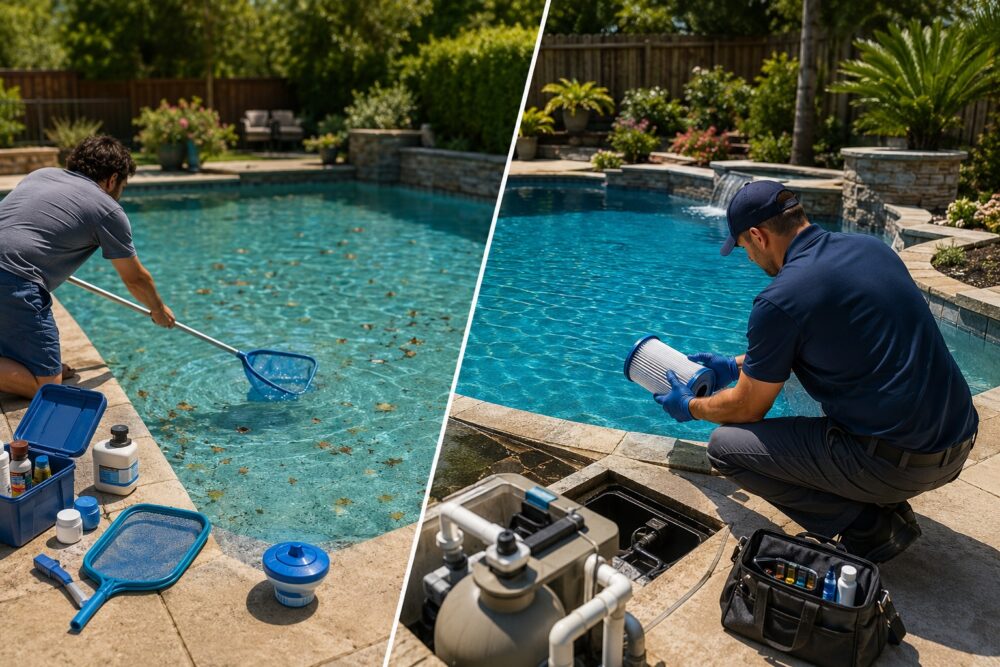
DIY Pool Maintenance vs. Professional Pool Service in DFW
The biggest difference between DIY pool cleaning and professional service is expertise. A homeowner may be able to perform many routine cleaning tasks, but maintaining a healthy pool requires understanding how water chemistry, circulation, filtration, surfaces, and equipment work together.
The Pool & Hot Tub Alliance’s professional maintenance training, for example, covers water quality, circulation and filtration, safety, structures and finishes, heaters, controls, and other aspects of pool operation. That broad scope illustrates why professional pool maintenance involves considerably more than simply brushing walls or emptying baskets.
What Can Homeowners Handle With DIY Pool Cleaning?
DIY maintenance can be practical for homeowners who have the time, knowledge, and willingness to monitor their pools consistently. Simple physical cleaning tasks are often the easiest place to start.
Common DIY tasks include:
- Skimming leaves and insects from the water
- Emptying skimmer and pump baskets
- Brushing pool walls and steps
- Vacuuming debris from the pool floor
- Checking the water level
- Visually inspecting the pool for obvious changes
- Performing routine water tests
The challenge is consistency. Pool water conditions can change even when the pool still looks clear.
According to the Centers for Disease Control and Prevention (CDC), residential pool owners should routinely monitor chlorine and pH. The CDC recommends a pH of 7.0 to 7.8 and at least 1 ppm chlorine in pools, or at least 2 ppm when cyanuric acid or stabilized chlorine is used. The CDC also notes that sunlight and contaminants introduced by swimmers can reduce chlorine concentrations.
For a DIY pool owner, that means cleaning what is visible is only part of the job. Maintaining proper water conditions requires regular testing, accurate interpretation, and appropriate chemical adjustments.
Why Is Pool Chemistry More Difficult Than It Looks?
Pool chemistry involves balancing multiple factors rather than simply adding chlorine when the water starts looking cloudy. When one part of the water balance changes, it can affect sanitizer effectiveness, swimmer comfort, pool surfaces, and equipment.
The CDC explains that chlorine becomes less effective at killing germs as pH rises, particularly above 8.0. Very low pH, meanwhile, can contribute to corrosion and deterioration of pool plumbing and equipment.
This is one area where professional expertise becomes valuable. An experienced pool technician can evaluate test results in context instead of treating each reading as an isolated number.
For DFW homeowners, regular monitoring is especially important during periods of heavy swimming and strong summer sunlight. A pool that was balanced several days ago may require different treatment after a busy weekend, significant debris, or prolonged exposure to the sun.
What Does a Professional Pool Cleaner Do That DIY Maintenance May Miss?
Professional pool service combines physical cleaning with systematic inspection and water management. The goal is not simply to make the pool look clean on service day, but to help keep the entire system functioning properly.
Depending on the pool and service plan, professional maintenance can include:
- Water testing and balancing: Professionals evaluate water chemistry and make informed adjustments instead of relying on appearance alone.
- Filtration and circulation checks: Proper water movement helps chemicals distribute throughout the pool and allows the filtration system to remove contaminants.
- Equipment observation: Pumps, filters, valves, heaters, and other components can show subtle signs of trouble before complete failure occurs.
- Surface inspection: Staining, scaling, algae, cracks, or unusual wear may indicate a maintenance issue that needs attention.
- Consistent maintenance: A regular service schedule reduces the likelihood that routine tasks will be forgotten during busy weeks.
The value is expertise combined with consistency. Pool professionals work with these systems repeatedly, which can make it easier to recognize unusual changes and developing problems.
Can Professional Pool Service Save DFW Homeowners Money?
Professional pool service can help homeowners avoid expenses caused by neglected maintenance, chemical mistakes, or equipment problems that go unnoticed. It should not be viewed as a guarantee against repairs, but preventive attention can identify concerns earlier and help owners make informed decisions.
Consider the potential costs associated with poor maintenance: persistent algae may require additional chemicals and cleaning, unbalanced water can contribute to surface or equipment problems, and restricted circulation can put unnecessary strain on the pool system.
There is also a time cost to DIY maintenance. Homeowners need to purchase supplies, test water, research treatments, clean the pool, maintain filters, and troubleshoot unexpected problems. For people who would rather spend their free time enjoying their pool, professional service can offer significant practical value.
Is Professional Pool Cleaning Especially Helpful in the DFW Area?
DFW’s long, hot swimming season makes consistent pool care particularly valuable. North Texas homeowners often use their pools heavily during summer, while strong sunlight can contribute to faster chlorine loss.
The CDC specifically identifies sunlight as one factor that reduces chlorine concentrations in pool water. That matters in DFW, where backyard pools frequently receive hours of direct summer sun.
Storms can create another maintenance challenge by introducing leaves, dirt, and other debris. Whether your home is in Dallas, Fort Worth, Plano, Frisco, Arlington, or another DFW community, pool maintenance needs can change quickly with weather and usage.
Professional service provides a consistent maintenance routine through those changing conditions.
FAQ: DIY vs. Professional Pool Cleaning
Is it cheaper to maintain your own pool?
DIY pool maintenance can have lower direct labor costs, but homeowners still need chemicals, testing supplies, cleaning equipment, replacement parts, and time. Mistakes or delayed maintenance can also create additional expenses.
How often should I test my pool water?
The CDC recommends residential pool owners test chlorine concentration and pH at least twice per day, and more frequently when many people are using the pool. It also notes that DPD test kits provide more accurate results than test strips.
Can I do some pool maintenance myself and still use a professional service?
Yes. Homeowners can perform simple tasks such as skimming debris or checking the water level between professional visits. Professional service can then handle more technical water balancing, cleaning, system monitoring, and equipment-related concerns.
What are the signs that I need professional pool service?
Recurring cloudy or green water, persistent algae, unusual stains, inconsistent chemical readings, poor circulation, declining water clarity, or equipment that sounds or operates differently are good reasons to have a professional evaluate the pool.
Enjoy Your Pool Without Making Maintenance a Second Job
DIY pool cleaning can be a reasonable choice for homeowners who enjoy pool maintenance and are prepared to learn the technical side of water chemistry and equipment care. For many DFW homeowners, however, professional pool cleaning offers something harder to achieve on your own: knowledgeable, consistent attention to the entire pool system. Contact Aqua Bright Pool Service to learn more about professional pool cleaning and maintenance in DFW.