
Pool Resurfacing in DFW: When Is It Time to Remodel?
How Do I Know When My Pool Needs Resurfacing in DFW?
Your pool likely needs resurfacing when the interior becomes consistently rough, stained, cracked, pitted, peeling, or difficult to keep clean despite proper maintenance. In DFW, intense summer heat, seasonal temperature swings, water chemistry, and the age and type of finish all affect when resurfacing is necessary. A professional inspection can determine whether isolated repairs are enough or a complete resurface is the better long-term solution.
At Aqua Bright Pool Service, we help DFW homeowners understand what their pools actually need before beginning a remodeling project. Pool resurfacing is both a functional repair and an opportunity to transform the appearance of your backyard. The right finish can restore a comfortable swimming surface, refresh an outdated design, and help protect the underlying pool structure. Our approach focuses on careful evaluation, quality workmanship, clear communication, and helping homeowners choose finishes that suit their priorities. Whether your pool in Dallas, Fort Worth, or the surrounding Metroplex is showing obvious deterioration or simply looks dated, understanding the resurfacing process can help you make a confident remodeling decision.
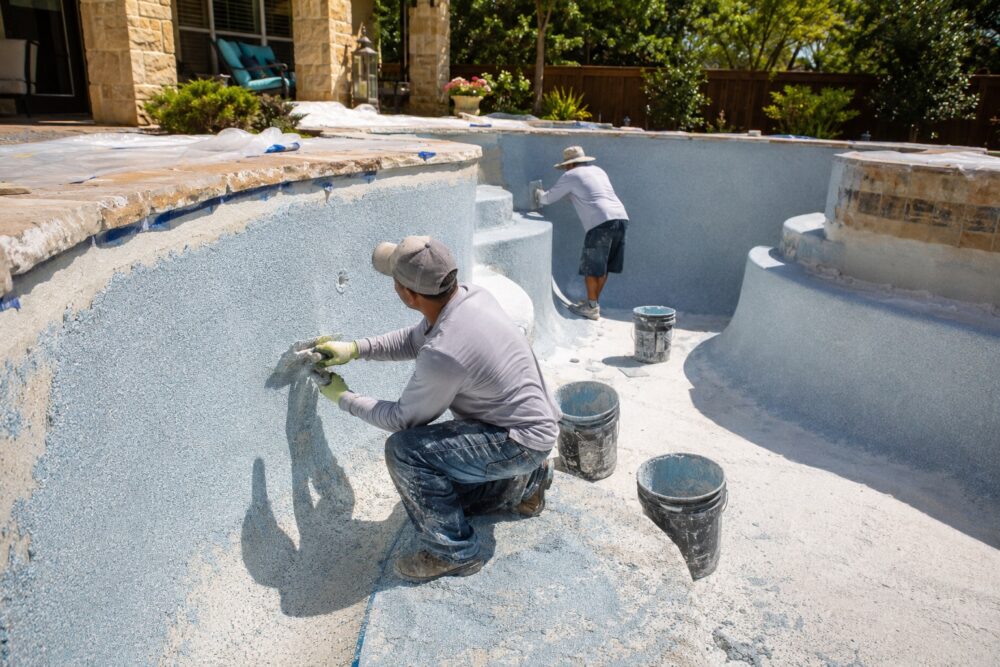
DFW Pool Resurfacing and Remodeling: When Is It Time for a New Finish?
Pool resurfacing replaces the worn interior finish of an existing swimming pool with a new surface. It becomes appropriate when deterioration is widespread enough that cleaning, stain treatment, or small repairs no longer address the underlying problem.
The National Plasterers Council (NPC) notes that resurfacing becomes necessary when cracks or finish deterioration can no longer reasonably be patched or repaired, or when the pool’s appearance is no longer acceptable.
What Are the Signs That a Pool Needs Resurfacing?
Widespread deterioration, rather than one small cosmetic flaw, is the clearest reason to consider resurfacing. A pool finish naturally changes with age, but persistent problems can indicate that its useful service life is ending.
Watch for signs such as:
- Rough or abrasive areas on the walls, floor, or steps
- Pitting, etching, flaking, or peeling
- Persistent stains that do not respond to appropriate cleaning
- Visible cracks or deteriorating plaster
- Areas where the finish appears to be separating
- An outdated or heavily faded appearance
A rough surface deserves particular attention. Besides making swimming less comfortable, deterioration can make the pool more difficult to maintain.
Age is useful context, but it should not be the only factor in your decision. According to the National Plasterers Council, pool plaster can last up to 20 years with proper care, while the expected service life varies considerably by finish type and maintenance.
How Does Pool Resurfacing Work?
Professional pool resurfacing generally involves draining the pool, preparing the existing interior, repairing appropriate problem areas, installing the selected finish, refilling the pool, and carefully managing the startup.
The exact process depends on the existing surface and new finish, but a typical project includes:
- Pool evaluation: The existing finish is inspected for deterioration and areas requiring additional attention.
- Draining and preparation: The pool is drained so crews can properly access and prepare the interior.
- Surface repairs: Necessary preparation and repairs are completed to create a suitable substrate for the new material.
- Finish installation: The chosen plaster, quartz, pebble, or other finish is professionally applied.
- Refilling and startup: The pool is filled and the new surface receives the appropriate startup care.
Startup is more important than many homeowners realize. The NPC recommends fully submerging a newly installed interior finish as soon as practical to reduce the potential for shrinkage cracking or debonding. Fill water should also be tested for factors such as pH, total alkalinity, calcium hardness, and metals.
Proper installation and startup can have a significant effect on the appearance and performance of your new pool surface.
Which Pool Resurfacing Finish Is Best for a DFW Home?
The best pool finish depends on your preferred appearance, texture, budget, maintenance expectations, and desired service life. Resurfacing is an ideal time to consider whether simply recreating the old pool is the best choice or whether an upgraded finish would better suit your backyard.
Common options include:
- Traditional plaster: A classic, smooth, economical option. The NPC lists a typical surface life of about 5 to 8 years.
- Quartz: Incorporates quartz aggregate and can provide a smooth-to-textured appearance. The NPC lists approximately 10 to 15 years.
- Pebble: Uses exposed aggregates to create a textured, natural appearance and excellent durability. The NPC lists approximately 12 to 18 years.
- Polished finishes: Provide a smooth surface with the visual character of aggregate materials. The NPC lists approximately 8 to 12 years.
These figures are useful guidelines, not guarantees. Water chemistry, workmanship, startup procedures, maintenance, and environmental conditions can all influence how a finish ages.
Think beyond the sample’s appearance when choosing a material. Ask how the surface will feel underfoot, how its color will affect the appearance of the water, and what level of maintenance it requires.
Why Does the DFW Climate Matter for Pool Remodeling?
DFW’s combination of extreme summer heat and winter freezes makes year-round pool care especially important. North Texas pools experience conditions that can shift substantially from one season to another.
The National Weather Service describes the Dallas-Fort Worth climate as having hot summers and a wide annual temperature range. July and August daytime temperatures are consistently in the 90s and often reach or exceed 100°F. According to 1991-2020 climate normals, DFW averages about 20 days at or above 100°F each year and 29 freezes per season.
These conditions make consistent maintenance particularly important. Water chemistry, water level, circulation, and freeze protection should not be ignored simply because swimming season has ended.
For DFW homeowners considering resurfacing, a professional evaluation can also identify other aging components worth addressing while planning the project. If the pool needs new tile, coping, equipment work, or aesthetic updates, coordinating improvements may create a more cohesive remodel.
Is Resurfacing the Same as a Complete Pool Remodel?
No. Resurfacing focuses primarily on replacing the pool’s interior finish, while a complete remodel can involve several parts of the pool and surrounding space.
Resurfacing alone may be appropriate when the pool layout and other components remain in good condition. A broader renovation may make more sense when homeowners also want to update waterline tile, coping, features, equipment, or the pool’s overall style.
This is why an inspection is valuable before choosing a project scope. The goal should be to address the actual condition of the pool rather than automatically choosing the largest renovation.
Frequently Asked Questions About Pool Resurfacing in DFW
How often should a swimming pool be resurfaced?
There is no single schedule for every pool. Finish material, installation quality, water chemistry, maintenance, and environmental conditions determine how quickly a surface ages. NPC estimates range from about 5 to 8 years for traditional plaster to 12 to 18 years for pebble finishes.
Can you resurface a pool instead of replacing it?
Yes. If the pool’s underlying structure is sound, resurfacing can replace a deteriorated interior finish without rebuilding the entire swimming pool. Structural concerns should be professionally evaluated before resurfacing begins.
Can resurfacing change the color of my pool?
Yes. Resurfacing gives homeowners an opportunity to select a different finish, aggregate, and color, which can dramatically change the appearance and perceived color of the water.
Is a rough pool surface a sign that I need resurfacing?
Widespread roughness can indicate deterioration or etching of the interior finish and is a common reason to have the pool evaluated. The National Plasterers Council notes that materials, application, startup procedures, and ongoing water care all play roles in minimizing chemical etching and deterioration.
Ready to Give Your DFW Pool a Fresh Start?
A worn pool surface does more than make your backyard look dated. Resurfacing can restore a more attractive, comfortable interior while giving you an opportunity to update the style of your entire pool.
Ready to explore pool resurfacing or remodeling with Aqua Bright Pool Service? Contact us to discuss your DFW pool and find the right approach for your backyard.