How to Judge Randomized Pool Audits Before You Hire
Quick Summary
Randomized pool audits are unannounced evaluations of a technician’s work at pools the company already services, scored against a fixed checklist. Because technicians cannot prepare for the visit, audits show everyday service quality, catch equipment problems early and reveal gaps in water testing and documentation.
- Every pool on the route should be eligible, not just the accounts the office watches most closely.
- Pools should be drawn using a random method rather than a manager’s judgment.
- Auditors should score every visit against the same written checklist.
- Early warning signs include unusual pump noise, water pooling and rising pressure readings.
- Ask providers how often they audit and track repeat deficiencies and corrective-action closure rates.
Table of Contents
- How to Judge Randomized Pool Audits Before You Hire
- What Randomized Pool Service Audits Are and How They Work
- Early Detection of Equipment Problems Before They Turn Costly
- Pool Water Testing and Chemical Balance Checks That Hold Up Under Audit
- A Pool Maintenance Checklist and Scoring Rubric You Can Use
- Pool Equipment Inspection and Swimmer Safety Hazards
- Service Quality Checks and What Randomized Audits Cost Versus Save
- Scheduling Your First Audit With Aqua Bright in Frisco
- Frequently Asked Questions
How to Judge Randomized Pool Audits Before You Hire
Last Updated: November 12, 2026
Randomized pool audits are a way for a pool company to check its own technicians without warning, and the benefits of randomized pool audits show up in cleaner water, fewer surprise repairs and more consistent visits. Below, we explain how these audits work, what they reveal, and how you can judge whether any pool company’s audit process is worth trusting.
What Randomized Pool Service Audits Are and How They Work
A randomized pool service audit is an unannounced evaluation of a technician’s work at a pool the company already services. Auditors arrive without a set schedule, so the technician cannot prepare for the visit. The audit then compares what the technician did against the company’s service standard.
Scheduled inspections can capture a best-case version of the work, because a technician who knows an inspection is coming may prepare for it. Random timing reduces that gap.
What Makes an Audit Truly Randomized
Randomization is more than “we show up whenever.” A defensible program has four moving parts:
- A sampling frame. Every pool on the service route is eligible, not just the accounts the office already watches. If a company audits only its newest or most visible customers, the sample is biased.
- Random selection. Pools are drawn from that full list using a random method, a random number generator, a shuffled list, or a rotating seed, rather than a manager’s judgment. Judgment-based selection tends to land on the same accounts.
- Unpredictable timing. The audit date and time are not shared with the technician in advance. Some programs also vary the day of week and the time of day so a technician cannot pattern-match the visits.
- A fixed standard. The auditor scores against the same written checklist every time, so results are comparable across technicians, routes and months.
Who Conducts the Audit and How Independence Is Preserved
The person doing the audit should not be the technician’s direct supervisor who is also responsible for route productivity, because that creates a conflict. Better practice is a separate quality or compliance role, a lead technician from another route, or a third-party auditor. The auditor should arrive unannounced, inspect the pool and equipment, review the service log, and file a written report the same day. A written report from an independent auditor can expose maintenance issues before they disrupt service, making consistent checks an important part of preventing pool downtime.
Audit Frequency and Scope
Frequency depends on route size and risk. A reasonable starting point is to audit a rotating sample of pools each month so that every account is eligible over a defined cycle, with higher frequency for commercial pools, pools with known recurring issues, and accounts with sensitive equipment such as salt systems or heaters. Professional equipment maintenance can keep that equipment running between audits.
Watch out: if the company cannot tell you how pools are selected, how often audits happen, or who conducts them, the program is probably a scheduled inspection with a new label.
Why Unannounced Visits Reveal Different Information
Unannounced visits show how service holds up on an ordinary day. They reveal whether chemicals were tested and logged, whether skimmer baskets were emptied, and whether equipment was checked before the technician left. They also show whether the same standard applies across every route, not just the accounts the office watches most closely.
Early Detection of Equipment Problems Before They Turn Costly
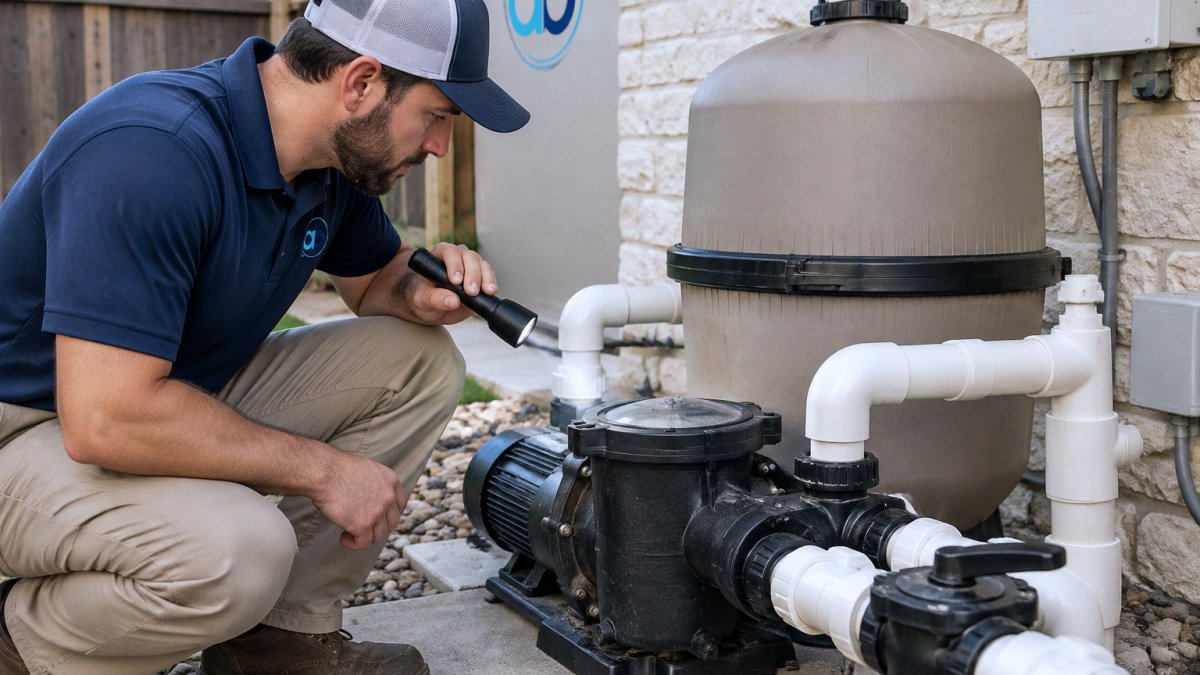
Early detection is one of the clearest practical benefits of a randomized audit. A technician who notices a weak pump, a slow-draining filter or a small leak can flag it before it becomes a larger repair.
Common early warning signs include:
- Unusual noises from the pump or motor
- Water pooling around equipment or along plumbing lines
- Pressure gauge readings that climb faster than normal between cleanings
- Salt cell output that drops or fails to hold its setting
- Pump baskets that fill quickly with debris
Catching these signs early usually means a smaller, cheaper fix. A failing pump seal caught during a routine visit is a far simpler job than one that has already damaged the motor.
The article lists common early warning signs and what each one can prevent, which is the practical benefit a randomized audit delivers.
| Warning sign | What it may indicate | Why catch it early |
|---|---|---|
| Unusual pump or motor noise | Developing mechanical fault | Simpler, cheaper fix |
| Water pooling around equipment | Leak in plumbing or fittings | Avoids damage to pump and lines |
| Pressure gauge rising fast | Clogged filter or circulation issue | Prevents strain on the system |
| Salt cell output dropping | Failing salt cell | Keeps chlorine output steady |
| Pump baskets filling quickly | Excess debris or circulation problem | Protects pump from overload |
Pool Water Testing and Chemical Balance Checks That Hold Up Under Audit
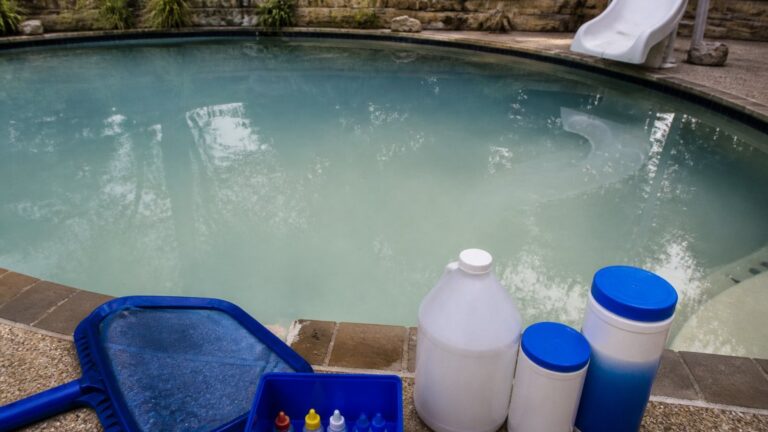
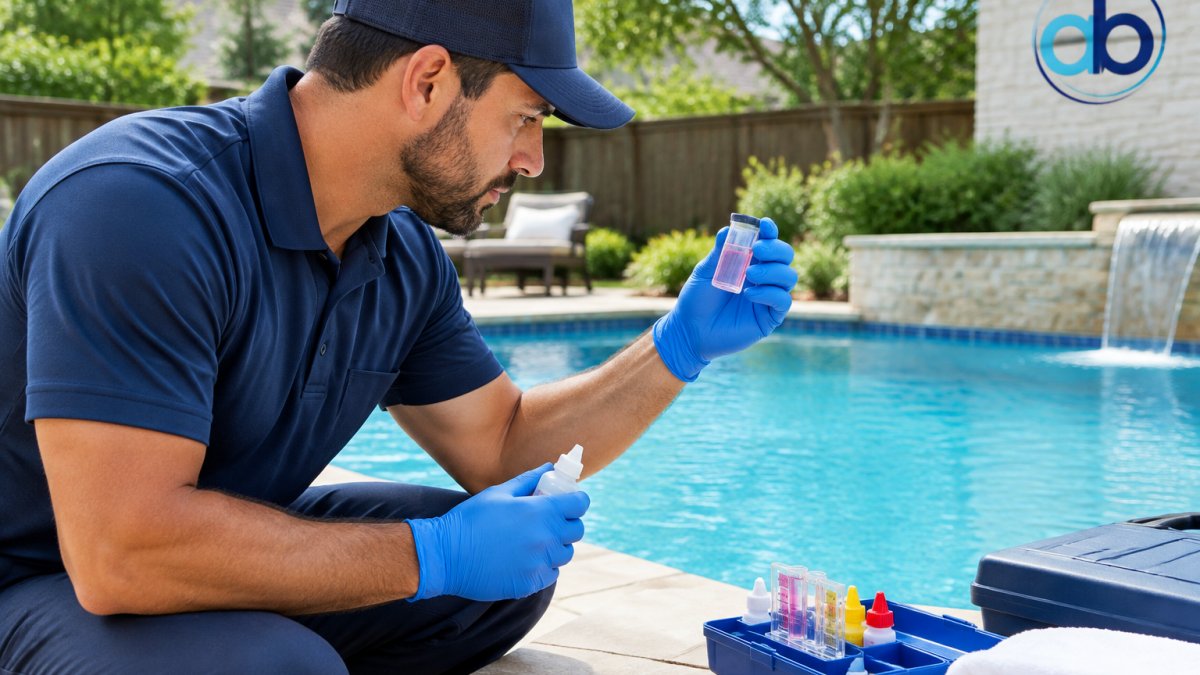
Water chemistry is where audits most often expose gaps. A technician may report that the water looks fine while the test readings are never recorded. An audit checks whether the readings match the log and whether the water sits inside the target ranges for free chlorine, pH, total alkalinity and calcium hardness.
If you are learning how to balance pool chemicals safely, focus on a few habits that auditors look for:
- Test the water before adding any chemicals.
- Add chemicals one at a time, following the label directions and waiting between additions.
- Never mix chemicals together in the same container.
- Record each reading and each dose.
Our guide on how to balance pool chemicals safely walks through the full process step by step.
A Pool Maintenance Checklist and Scoring Rubric You Can Use
A checklist turns an audit from an impression into a record. Use the items below to judge any service visit, whether you are reviewing your own company or comparing providers.
Pool maintenance checklist (score each item 0 to 2: 0 = missing, 1 = partial, 2 = complete):
- Water tested and readings logged
- Chemicals adjusted to target ranges
- Skimmer and pump baskets emptied
- Filter pressure checked against the normal range
- Walls and waterline brushed
- Equipment checked for leaks, noise and unusual heat
- Salt cell output and settings checked, if applicable
- Any issues reported to the owner in writing
- Visit time and technician name recorded
A total of 16 to 18 points suggests consistent service.
Pool Equipment Inspection and Swimmer Safety Hazards
Equipment inspections also protect swimmers. A loose drain cover, a damaged ladder, a cracked deck edge or an improperly secured safety cover can create real hazards. Auditors look for these problems because they matter as much as water clarity.
Check for these hazards during any inspection:
- Drain covers that are cracked, missing or not secured
- Ladders and handrails that wobble or have sharp edges
- Electrical equipment that is not properly bonded, grounded or enclosed
- Gates and fences that do not latch
- Standing water on the deck that could cause slips
Any hazard involving electrical equipment should be handled by a licensed professional, not a homeowner.
Service Quality Checks and What Randomized Audits Cost Versus Save
Audit pricing depends on quantity, timing and scope, so ask the provider for a quote tied to your pool and service plan. Providers may structure audit fees in different ways, so compare them against your own service needs.
The value of an audit comes from what it prevents. Here is how to think about that trade-off:
- Cost side: the audit fee, plus any time you spend reviewing reports.
- Savings side: repairs caught early, fewer emergency service calls, extended equipment life and fewer water-quality problems that require a full drain or chemical reset.
Measuring Whether the Audit Is Working
A benefit list is not a measurement. Ask the provider to report a small set of operational KPIs each month so you can see whether the program is producing results:
- Repeat deficiencies: how often the same issue is found at the same pool on consecutive audits. A falling number is the clearest sign the corrective process works.
- Corrective-action closure rate: the share of audit findings that are fixed and verified by the next audit. A high open rate means findings are being logged but not resolved.
- Repair cost trend: total repair spend per pool per quarter, compared with the prior period. Early detection should show up here first.
- Downtime: hours a pool or piece of equipment is out of service. Fewer surprise failures usually mean less downtime.
- Water-quality exceptions: the number of visits where free chlorine, pH or total alkalinity fell outside target ranges.
Service-Provider Accountability
An audit only changes behavior if findings have consequences and follow-up. Ask these questions before you sign:
- Who receives the audit report, and how quickly is it delivered?
- What is the corrective-action process, and who verifies the fix?
- Are findings tied to technician training, route changes or re-audits?
- Is there a reporting standard, a written checklist, photos, and a score, or just a verbal summary?
Watch out: an audit program that produces reports but no verified follow-up is documentation, not quality control. The closure rate is the number to watch.
For a more detailed look at whether professional audits pay off, read Are Professional Pool Audits Worth the Cost?
Scheduling Your First Audit With Aqua Bright in Frisco
If you are looking for pool service near me in Frisco, TX, start by asking any provider these questions: How are pools selected for audits? What does the audit report include? How are unresolved issues tracked?
Our technicians are licensed by the state of Texas for repairs, and our storefront office is open to the public. Before booking, read the full Frisco pool maintenance guide.
Contact Aqua Bright Pool Service to schedule your first visit and see how our audit process works at your pool.
BUTTON: Schedule Your Pool Audit
CARD_TITLE: Is your pool service actually checked?
CARD_TEXT: Aqua Bright runs unannounced audits of its technicians, with licensed repair service in Frisco.
Frequently Asked Questions
What are the benefits of conducting a pool service audit?
A pool service audit checks work that routine visits can miss. It looks at water chemistry, equipment condition, safety hazards and whether the service record matches what was actually done. Owners gain earlier warning of failing parts such as pump seals, a clearer picture of recurring problems, and documentation they can use when comparing providers. The main benefit is catching small issues before they become larger repair bills. Results depend on the audit scope and on how consistently findings are fixed afterward, so ask any provider which items their audit covers.
What is a randomized pool service audit?
A randomized pool service audit is an evaluation performed at times the provider does not schedule in advance, so the technician cannot prepare for the visit. Because the timing is unpredictable, the audit shows typical service rather than best-case service. Auditors typically test water, inspect equipment and review the job against the service checklist. Ask a provider how often audits happen and whether findings are shared with the customer.
How can a pool service audit help prevent costly repairs?
Audits catch early warning signs such as slow leaks, unusual pump noise, low chemical readings and worn seals while they are still inexpensive to fix. Addressing a small seal or valve issue during routine service typically costs far less than repairing damage from a failed pump or water loss. Pool owners can ask for audit findings in writing and track whether recurring problems are resolved over the following months.
How can pool owners verify that their pool service was completed properly?
Request a written service record listing the chemical readings taken, the chemicals added, the equipment checked and any issues noted. Compare the report with what you observe at the pool, such as clarity, pump operation and skimmer condition. Confirm that the technician holds the required state licenses for any repair work, and ask whether the company uses randomized audits to check its own staff. Keep your records so you can spot repeated problems over time.