
How to Balance Pool Chemicals Safely: A Step-by-Step Guide
Table of Contents
- Before You Add Anything: Safe Setup and What You’ll Need
- Pool Chemical Testing: Getting a Reading You Can Trust
- Pool pH and Alkalinity: Which to Adjust First
- Pool Chlorine Levels: Free, Combined, and What They Tell You
- Pool Chemical Dosage: Calculating How Much to Add
- The Safe Balancing Sequence: Step by Step
- Chemical Handling, Storage, and Dangerous Combinations to Avoid
- Overdosing, Accidental Exposure, and When to Call a Professional
- Frequently Asked Questions
Last Updated: October 18, 2026
Before You Add Anything: Safe Setup and What You’ll Need
Before you learn how to balance pool chemicals safely, set up your workspace. Most pool owners rush this step, and that’s where trouble starts. A few minutes of prep prevents most chemical mishaps.
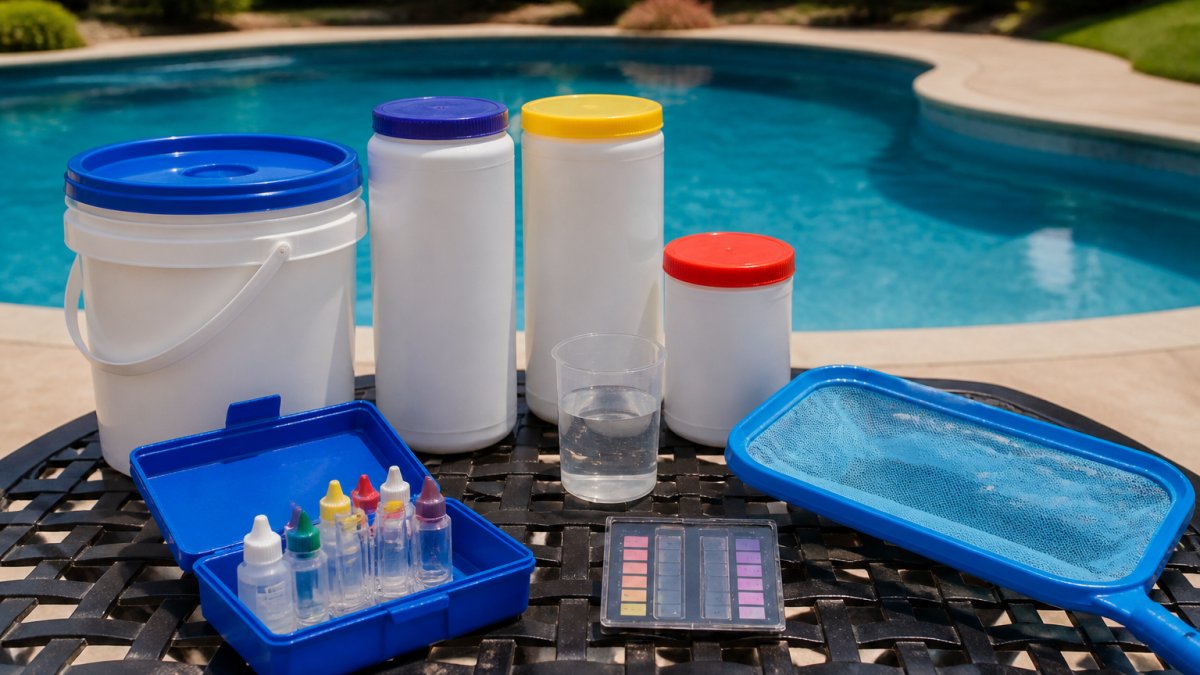
Gather these items first:
- A fresh test kit or test strips (check expiration dates)
- Protective gloves and eye protection
- A clean plastic bucket, used only for pool chemicals
- A long-handled stirring tool
- Chemical containers with readable labels
- A dry, shaded storage spot away from kids and pets
Read every chemical label before you open anything. Labels list the active ingredient, the recommended dosage, and safety warnings. The CDC’s pool chemical safety guidance explains why labels matter: mixing the wrong products can release toxic gas.
Never add chemicals near a skimmer or while swimmers are in the water. Add them to the deep end with the pump running, and always add chemicals to water, never water to chemicals.
Storing chlorine and acid side by side is a common mistake. If the containers leak or tip, the vapors can combine into a dangerous cloud. Store them apart, in a dry, ventilated area.
Pool Chemical Testing: Getting a Reading You Can Trust
Pool chemical testing tells you what your water actually needs. Skip it, and you’re guessing. A reliable test kit measures free chlorine, pH, total alkalinity, calcium hardness, and cyanuric acid.
Follow these steps for a clean reading:
- Collect water from elbow depth, away from return jets.
- Rinse the test vial with pool water first.
- Follow the kit’s timing exactly. Too long or too short skews results.
- Test in shade, since direct sun can fade strip colors.
- Write down every number so you can spot trends.
Test strips are fast but less precise. Liquid kits cost more and take longer, yet they give you numbers you can trust for dosage math. If two readings conflict, retest with a fresh sample before adding anything.
Pool pH and Alkalinity: Which to Adjust First
Adjust total alkalinity first, then pH. That order matters because alkalinity acts like a buffer that holds pH steady. Fix pH first and alkalinity will drag it right back out of range.
Here’s the target range for each:
| Measurement | Target Range | What It Controls |
|---|---|---|
| Total alkalinity | 80-120 ppm | pH stability |
| pH | 7.4-7.6 | Sanitizer efficiency, comfort |
| Free chlorine | 1-3 ppm | Killing bacteria and algae |
| Calcium hardness | 200-400 ppm | Surface and equipment protection |
| Cyanuric acid | 30-50 ppm | Chlorine protection from sunlight |
To raise alkalinity, add sodium bicarbonate (baking soda). To lower it, use muriatic acid or dry acid, added gradually with the pump running. Once alkalinity sits in range, retest pH. To raise pH, use soda ash. To lower pH, reach for muriatic or dry acid again.
Add acid to a full bucket of pool water, never the reverse. Pouring water into acid can cause a violent splashback.
Pool Chlorine Levels: Free, Combined, and What They Tell You
Pool chlorine levels come in two numbers, and both matter. Free chlorine is the active sanitizer still able to kill bacteria. Combined chlorine, or chloramines, is chlorine that has already reacted with sweat, sunscreen, and debris. That’s the stuff behind red eyes and the sharp “pool smell.”
Test both. Your free chlorine should sit at 1-3 ppm. Combined chlorine should stay under 0.5 ppm. When combined chlorine climbs, you need to shock the pool, which means adding a large dose of chlorine to break apart the chloramines.
Cyanuric acid, often called chlorine stabilizer, shields free chlorine from sunlight. Too little and your chlorine burns off fast. Too much and it locks chlorine up so it stops working. Keep it in the 30-50 ppm range and check it monthly.
Pool Chemical Dosage: Calculating How Much to Add
Pool chemical dosage starts with one number: your pool volume. Without it, every dose is a guess.
Calculate volume with this formula:
- Rectangular pool: length × width × average depth × 7.5 = gallons
- Round pool: diameter × diameter × average depth × 5.9 = gallons
- Oval pool: length × width × average depth × 6.7 = gallons
For an irregular shape, break it into rectangles and circles, then add the results.
Once you know the gallons, use the dosage chart on your chemical label. Most labels list amounts per 10,000 gallons, so scale up or down from there. Add chemicals gradually, in stages, and retest between additions. Overshooting means you’ll be correcting in the other direction, which wastes product and stresses the water.
Estimate your pool volume once, write it on the chemical storage lid, and you’ll never do the math again.
The Safe Balancing Sequence: Step by Step
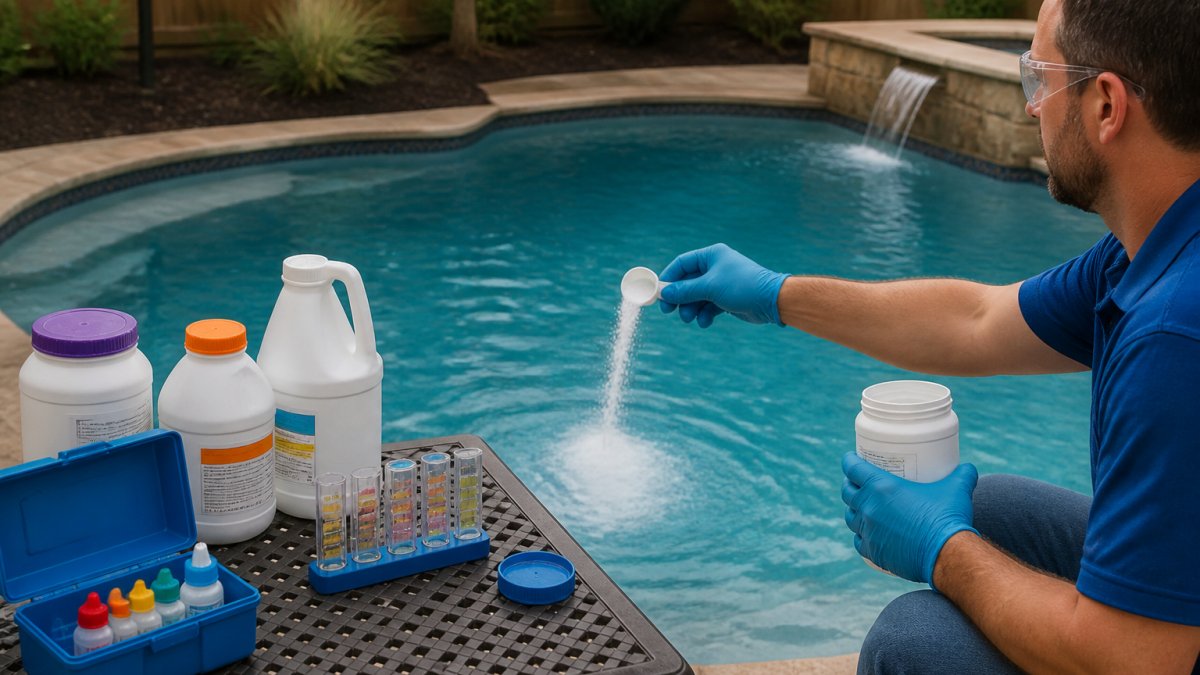
Most guides list the order but skip the timing and retest logic that make it safe. Use this workflow every time, and treat each step as a gate: do not move to the next adjustment until the current reading holds.
- Test and record. Collect a sample from elbow depth, away from return jets, and write down free chlorine, combined chlorine, pH, total alkalinity, calcium hardness, and cyanuric acid. Note the time.
- Adjust total alkalinity first to 80-120 ppm. Add the dose, then run the pump at least 4-6 hours before retesting. Alkalinity is the buffer; if it is out of range, pH will not stay put.
- Adjust pH second to 7.4-7.6 once alkalinity is stable. Add acid or soda ash in small increments, circulate 2-4 hours, and retest. Large pH swings stress surfaces and sanitizer efficiency.
- Set calcium hardness to 200-400 ppm if low. Add calcium chloride gradually; high hardness is corrected only by partial drain and refill, so undershoot rather than overshoot.
- Check cyanuric acid and adjust stabilizer toward 30-50 ppm. Add stabilizer sparingly because it does not degrade quickly and high levels lock chlorine.
- Shock only when needed, combined chlorine above 0.5 ppm, visible algae, or cloudy water. Shock at dusk, run the pump overnight, and do not swim until free chlorine falls back to 1-3 ppm.
- Retest everything the next day before swimming. Confirm free chlorine, pH, and combined chlorine are in range.
Run the pump during and after every addition. Space adjustments apart rather than dumping everything in at once; each chemical needs circulation time to mix and to be verified by a retest. For saltwater pools, balance the water the same way and let the generator maintain routine chlorine, but still test free chlorine and cyanuric acid regularly. For above-ground and smaller pools, scale doses down with volume and retest more often because small water bodies swing faster. On vinyl and fiberglass surfaces, keep calcium hardness at the lower end of range and avoid sudden pH shifts; on plaster, stay within the full hardness range to protect the surface.
Treat each step as a gate: dose, circulate, retest, then proceed. The sequence is safe only when each reading is confirmed before the next chemical goes in.
Chemical Handling, Storage, and Dangerous Combinations to Avoid
Chemical handling is where safety is won or lost, and it is the part most balancing guides skip. The EPA’s guidance on household chemical safety stresses keeping products in original containers with labels intact, and the CDC’s pool chemical safety guidance warns that mixing incompatible products can release toxic gas.
Personal protective equipment. Wear chemical-resistant gloves and splash goggles every time you open a container, even for a small dose. Add a long-sleeved shirt and closed-toe shoes when handling acid or shock. Keep a bucket of clean water and a hose nearby for immediate flushing.
Never mix these combinations:
- Chlorine and acid, releases toxic chlorine gas.
- Chlorine and ammonia-based products, forms dangerous chloramines.
- Different chlorine types, such as trichlor and calcium hypochlorite, can ignite or react violently.
- Any two products in the same bucket, add one chemical at a time to pool water, never to each other.
Prevent cross-contamination. Use a dedicated plastic scoop for each product and never swap scoops between containers. Do not pour leftovers back into the original container; dispose of them per the label. Keep containers closed when not in use and wipe up spills immediately with a damp cloth dedicated to chemical cleanup.
Storage rules. Store chemicals in a cool, dry, ventilated area, off the ground, and away from lawn equipment, fuels, and ignition sources. Keep chlorine and acid separated, ideally on separate shelves or in separate bins, because leaking vapors can combine into a dangerous cloud. Keep everything locked away from children and pets.
Spill response. For a small spill, ventilate the area, wear gloves and goggles, and absorb the material with an inert absorbent before disposing of it per the label. For a large spill or any release of gas, leave the area immediately, keep others out, and call emergency services. Do not attempt to neutralize a spill by adding another chemical.
Overdosing, Accidental Exposure, and When to Call a Professional
Overdosing happens, and it’s fixable. If you add too much chlorine, stop adding anything, run the pump, and let sunlight and time bring levels down. Retest daily. If pH crashes or spikes, correct slowly, one adjustment at a time. Never add a “corrective” chemical in a panic without testing first.
For accidental exposure, move away from the area and get fresh air. Flush skin or eyes with water for several minutes. The American Association of Poison Control Centers runs a free hotline for chemical exposure questions, and you should call emergency services for breathing trouble or serious burns.
Some situations call for a pro: cloudy water that won’t clear, algae blooms that keep returning, damaged equipment, or readings you can’t stabilize. At Aqua Bright Pool Service, our state-licensed technicians have handled DFW pools since 2006, backed by a randomized audit process that keeps our work honest. We offer pool school for new owners and full chemical service for busy households.
Frequently Asked Questions
Should I balance pH or alkalinity first?
Adjust total alkalinity first. Alkalinity acts as a buffer that holds pH steady, so fixing it first stops pH from swinging back the moment you correct it. Bring alkalinity into the 80-120 ppm range with sodium bicarbonate, let the pump circulate for several hours, then retest. Only after alkalinity is in range should you raise or lower pH with sodium carbonate or muriatic acid. If you reverse the order, you will likely adjust pH twice for the same problem.
How long should I wait to retest after adding pool chemicals?
Wait at least four hours of circulation before retesting, and longer after big corrections. Chlorine readings settle quickly, but pH and alkalinity need time to mix fully through the water. Never retest right after pouring in acid or shock, because you will read a concentrated pocket of chemical rather than the whole pool. Run the pump the entire time, brush the walls to help mixing, and retest before adding a second dose of anything.
Can I add different pool chemicals at the same time?
No. Add one chemical at a time and let it circulate before starting the next. Never mix chlorine and acid together, even in a bucket, because the combination releases toxic chlorine gas. Never add water to acid; always add acid to water. Dose each product separately, wait several hours, retest, and then move to the next correction. Following the label on each container and keeping products in their original packaging prevents the most common and most dangerous mistakes.
When should I ask a pool professional to check my water?
Call a professional when readings stay inconsistent after two or three correction attempts, when you cannot identify why chlorine keeps dropping, or when you suspect a test kit is giving false results. Cloudy water that will not clear, combined chlorine that stays high after shocking, and any chemical spill or exposure are also reasons to bring in a licensed technician. A professional can verify your results with calibrated equipment and check the pump, filter, and salt system at the same time.
Balancing pool chemicals takes patience, but the routine becomes second nature fast. When testing, dosing, and safety checks start eating your weekends, that’s the signal to hand it off. Aqua Bright Pool Service brings professionally trained, state-licensed technicians to your pool, with routine chemical delivery, expert repairs, and a storefront office you can walk into. Contact us to get started and enjoy clear water without the guesswork.