
How Does Mastic Sealing Help Create a Safer, Slip-Resistant Pool Deck in DFW?
Mastic sealing helps create a safer pool deck by sealing the expansion joint between the pool coping and deck, limiting water intrusion and allowing the deck and pool structure to move independently. While mastic itself does not make the entire deck slip-resistant, properly maintained joints can reduce cracking, gaps, uneven edges, and water-related deterioration that may contribute to slip and trip hazards.
At Aqua Bright Pool Service, we understand that a beautiful pool area should also be comfortable and safe for family and guests. DFW pools face demanding conditions, including intense summer heat, periods of heavy rain, and winter freezes. The National Weather Service reports that Dallas-Fort Worth averages about 20 days at or above 100°F each year and about 29 freezes per season. These temperature changes can put repeated stress on pool decks and expansion joints. Aqua Bright Pool Service helps homeowners protect these vulnerable areas with professional mastic sealing designed to support the long-term condition of the deck, coping, and surrounding pool area.
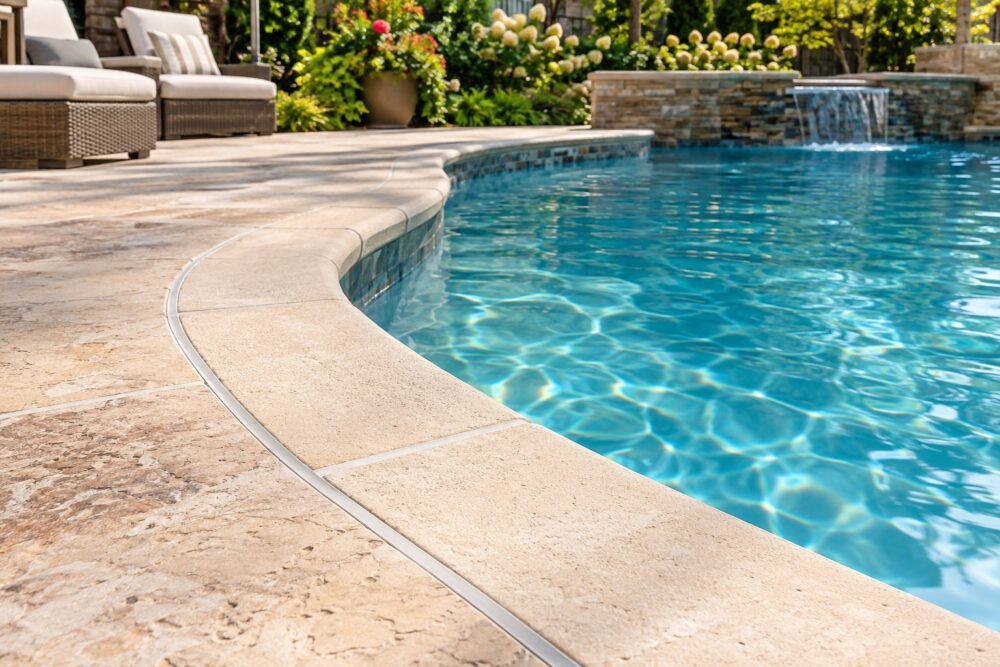
Creating a Safer Pool Deck with Expansion Joint Mastic
A safer pool deck starts with more than choosing a textured surface. Homeowners also need to consider drainage, cracks, elevation changes, expansion joints, and ongoing maintenance.
The CDC’s 2024 Model Aquatic Health Code states that aquatic deck surfaces should be kept clean and in good repair, and that their finish and profile should be maintained to help prevent slips and falls. It also specifically calls for avoiding or repairing tripping hazards. While the code is designed as guidance for public aquatic facilities rather than a rule for every private backyard pool, the safety principles are useful for residential pool owners too.
Does Pool Mastic Make a Deck Slip-Resistant?
Mastic does not turn the entire pool deck into a slip-resistant surface. Instead, it supports a safer deck by protecting the expansion joint and helping maintain a smoother, more consistent transition between the pool coping and surrounding deck.
Pool mastic is a flexible sealant installed in the expansion joint between the coping and deck. The joint allows these structures to move without being rigidly connected. When the mastic deteriorates, the joint can open and allow water and debris to enter.
For better overall traction, pair properly maintained mastic with a pool deck surface designed for wet conditions. Textured concrete, certain pavers, and appropriately finished deck coatings can provide better footing than smooth, polished surfaces.
Why Are Damaged Expansion Joints a Safety Concern?
A failed expansion joint can contribute to conditions that make the pool area less safe. Cracked, missing, sunken, or separated mastic can leave gaps and uneven transitions around the pool perimeter.
Potential problems include:
- Open gaps that can catch toes or small objects
- Water entering beneath or between deck components
- Deterioration near coping and concrete edges
- Debris collecting inside the joint
- Uneven areas that may become trip hazards
This matters because good pool deck design addresses both slipping and tripping. The ADA Standards, for example, describe slip-resistant surfaces as surfaces that provide sufficient friction for safe walking and require qualifying accessible floor and ground surfaces to be stable, firm, and slip resistant.
Residential pool owners can apply the same basic idea by focusing on traction, stable walking surfaces, drainage, and smooth transitions.
Why Is Mastic Sealing Especially Important in DFW?
DFW’s wide temperature range makes flexibility particularly valuable around pool expansion joints. Pool decks and pool structures are exposed to heat, cold, moisture, and changing ground conditions throughout the year.
According to the National Weather Service, the DFW climate features hot summers and considerable annual temperature variation. July and August normal high temperatures are around 96°F, while winter cold fronts can bring freezing conditions.
Those conditions make it important for an expansion joint to remain flexible. A properly installed mastic seal accommodates movement while helping keep water and debris out of the joint.
DFW homeowners should inspect pool mastic periodically, especially after extreme heat, freezes, or noticeable deck movement. Warning signs include cracking, pulling away from the coping, missing sections, hardened sealant, or areas where the joint has sunk significantly below the surrounding surfaces.
How Should You Design a Slip-Resistant Pool Deck?
The best approach combines a traction-friendly deck surface with good drainage and well-maintained expansion joints. Mastic sealing should be treated as one part of the overall safety plan, not as a substitute for a slip-resistant deck finish.
When designing or updating your pool deck, focus on four areas:
- Choose an appropriate surface texture. Avoid finishes that become excessively slick when wet. Consider how the material feels under bare feet as well as how it performs around water.
- Manage water effectively. Proper drainage helps prevent puddles and standing water in high-traffic areas.
- Maintain expansion joints. Replace deteriorated mastic before large gaps, debris accumulation, or water intrusion create bigger problems.
- Repair trip hazards promptly. Raised slabs, broken coping, large cracks, and uneven transitions deserve attention instead of simply being covered with sealant.
The goal is a pool deck where water can drain, walking surfaces remain consistent, and necessary movement joints stay properly sealed.
When Should Pool Mastic Be Replaced?
Replace pool mastic when it is cracked, separated, missing, hardened, or no longer sealing the expansion joint effectively. There is no single replacement schedule that applies to every DFW pool because exposure, installation quality, joint movement, drainage, and deck condition all affect service life.
A visual inspection can tell you more than relying on age alone. Look closely around the pool perimeter for gaps between the sealant and coping, deep cracks, weeds or debris growing in the joint, or sections where the material has deteriorated.
Professional replacement also provides an opportunity to identify nearby deck or coping issues that may need attention before fresh mastic is installed.
Frequently Asked Questions About Pool Mastic and Deck Safety
Is pool mastic the same as a non-slip coating?
No. Pool mastic is a flexible expansion-joint sealant, while a non-slip or slip-resistant coating is applied to walking surfaces to improve traction. The two can work together as part of a safer pool deck design.
Can damaged pool mastic cause someone to trip?
Damaged or missing mastic can leave gaps or uneven transitions around the pool perimeter that may contribute to trip hazards. Any significant deck movement or raised concrete should also be evaluated rather than assuming new mastic alone will correct it.
Does mastic keep water from getting under a pool deck?
Properly installed mastic helps limit water and debris from entering the expansion joint between the coping and deck. It is one part of moisture management, while deck slope, drainage, cracks, and surrounding landscaping also influence where water travels.
What pool deck surface is best for slip resistance?
Textured surfaces designed for wet environments are generally preferable to highly polished or smooth finishes around pools. The best choice depends on the deck material, drainage, maintenance requirements, and how the area is used.
Make Your DFW Pool Deck Safer with Aqua Bright Pool Service
A safer pool deck is the result of several details working together. Good traction, effective drainage, stable walking surfaces, repaired trip hazards, and properly sealed expansion joints all play a role.
Aqua Bright Pool Service can help DFW homeowners inspect aging pool mastic and replace deteriorated expansion-joint sealant before small problems become larger repairs. Contact Aqua Bright Pool Service today to schedule service and keep your DFW pool area looking its best.