What Pool Equipment Maintenance Should Homeowners Not Do Themselves in DFW?
DFW homeowners should leave electrical repairs, pump and motor repairs, heater service, automation troubleshooting, plumbing modifications, and complex chemical-feed equipment maintenance to trained pool professionals. Homeowners can handle basic tasks such as removing debris and checking equipment for visible problems, but repairs involving electricity, gas, pressurized plumbing, internal equipment components, or advanced diagnostics require specialized knowledge and proper safety procedures.
At Aqua Bright Pool Service, we know that taking care of a pool involves much more than keeping the water clear. Pumps, filters, heaters, valves, automation systems, and plumbing all have to work together to circulate and treat the water properly. Our team helps pool owners throughout the Dallas-Fort Worth area identify equipment problems early and maintain their systems correctly. That is especially valuable in North Texas, where long periods of summer heat, heavy pool use, storms, debris, and occasional freezing weather can put additional demands on pool equipment. We focus on practical maintenance, careful diagnostics, and dependable service so homeowners can spend less time worrying about the equipment pad and more time enjoying their pools.
Professional Pool Equipment Maintenance in DFW: Where Should DIY Stop?
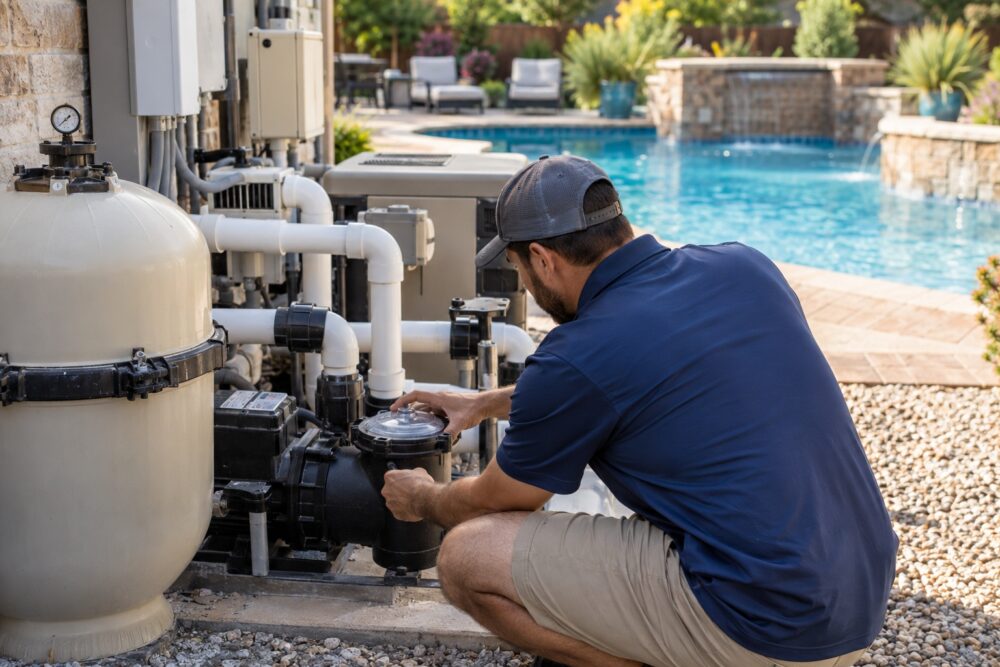
Basic pool maintenance can absolutely be part of homeownership, but equipment repair is different. A good rule is simple: if the job requires opening electrical components, disassembling major equipment, modifying plumbing, working on gas-fired equipment, or diagnosing an internal failure, call a professional.
The CDC emphasizes the importance of maintaining pool filtration and recirculation systems according to manufacturer recommendations. Proper circulation and filtration work together with water chemistry to maintain a cleaner, healthier swimming environment.
What Pool Maintenance Can You Safely Do Yourself?
Homeowners can perform routine visual checks and simple maintenance without taking equipment apart. In fact, regularly looking at your equipment can help you notice a developing issue before it becomes a major repair.
Common homeowner tasks include:
- Emptying skimmer and pump baskets
- Removing leaves and debris from the pool
- Checking the equipment pad for obvious water leaks
- Listening for unusual pump noises
- Watching the filter pressure gauge for unexpected changes
- Checking that water is returning to the pool
- Testing basic pool chemistry
- Keeping vegetation and debris away from equipment
Water chemistry deserves particular attention. The CDC recommends a pH of 7.0 to 7.8 for residential pools and notes that improper pH can contribute to corrosion or deterioration of pool pipes and equipment.
These simple checks can tell you that something is wrong, but they do not always tell you why it is wrong. That is where professional diagnosis becomes valuable.
Which Pool Equipment Repairs Should You Never DIY?
Electrical, gas, and complicated internal equipment repairs should generally be handled by qualified professionals. A pool equipment pad combines water, electricity, pressurized plumbing, mechanical components, and sometimes natural gas, so a seemingly straightforward repair can carry significant risks.
Professional service is the better choice for problems involving:
Pump motors and electrical components: If a pump trips a breaker, will not start, overheats, or has an internal electrical problem, avoid opening or rewiring the unit yourself.
Pool heaters: Gas-fired heaters involve combustion, gas connections, ventilation, electrical controls, and water flow. Heater troubleshooting should go beyond DIY maintenance only when performed by someone qualified to service the equipment.
Automation and control systems: Modern pools can include sophisticated controllers for pumps, heaters, lights, water features, and sanitation systems. A control problem may involve programming, sensors, communication wiring, or electrical components.
Major plumbing repairs: Replacing valves, cutting PVC, changing equipment configurations, or repairing significant leaks requires an understanding of flow and system design. Incorrect plumbing can reduce circulation or create new leaks.
Chemical-feed and sanitation equipment: Automatic chlorinators and other chemical systems need careful servicing. The CDC warns that pool chemicals can cause injuries when handled improperly and recommends that trained individuals service chlorine and pH control feed and recirculation systems.
Why Is Professional Pool Equipment Maintenance Especially Important in DFW?
DFW pools operate in a demanding climate. Hot North Texas summers often mean frequent swimming, strong sunlight, and extended periods when circulation and filtration are especially important. Storms can also introduce leaves, dirt, and other debris that increase the workload on the filtration system.
Winter presents a different concern. North Texas is not immune to freezing temperatures. Exposed pool plumbing and equipment can be vulnerable when water freezes and expands, particularly if circulation stops or equipment is not adequately protected.
That makes preventive maintenance especially valuable. Rather than waiting for a pump, filter, heater, or valve to fail during extreme weather, homeowners can have equipment inspected and developing problems addressed beforehand.
Professional maintenance can also identify issues that are easy to miss, including small seal leaks, restricted water flow, worn components, unusual motor behavior, and incorrect system settings.
Can Professional Maintenance Make Your Pool Equipment More Efficient?
Yes. Correct equipment operation can improve energy efficiency while reducing unnecessary strain on the system.
Variable-speed pool pumps are a good example. According to ENERGY STAR, filtration generally requires less flow than some other pool functions, so running a pump at unnecessarily high speeds can waste energy. ENERGY STAR explains that reducing pump speed by half can reduce the pump’s energy use to roughly one-eighth under those operating conditions.
But installing an efficient pump is only part of the equation. The pump must also be appropriately programmed for the pool and its functions.
A professional can evaluate factors such as:
- Pump schedules and speeds
- Water flow
- Filter condition and pressure
- Valve positioning
- Equipment compatibility
- Heater operation
- Signs of leaks or restrictions
The goal is not simply to make the equipment run. It is to help the entire system operate efficiently and reliably.
When Should You Call a Pool Equipment Professional?
Call for professional service when the equipment behaves differently from normal, especially when the cause is not immediately obvious. Continuing to operate malfunctioning equipment can sometimes turn a manageable repair into a more expensive problem.
Schedule an inspection if you notice a pump that will not prime, grinding or screeching sounds, repeated breaker trips, leaking equipment, weak return flow, unusual filter pressure, heater error messages, automation failures, or unexplained changes in water circulation.
You should also consider preventive equipment inspections before periods of heavy summer use and when preparing for colder weather.
The best approach is to divide pool care into two categories: homeowners monitor and perform safe routine maintenance, while professionals diagnose and repair complex equipment problems. That balance keeps you involved in caring for your pool without taking unnecessary risks.
Frequently Asked Questions About Pool Equipment Maintenance
How often should pool equipment be professionally inspected?
The ideal schedule depends on the pool’s age, equipment, usage, and condition. Regular professional pool service provides opportunities to catch leaks, unusual pressures, worn components, and performance changes before they develop into larger failures.
Can I repair my own pool pump?
Simple external maintenance, such as cleaning the pump basket, may be appropriate for homeowners. Motor, wiring, internal seal, electrical, or persistent priming problems are better handled by a pool professional.
What are the signs that pool equipment is failing?
Common warning signs include unusual noises, leaks, reduced water flow, air entering the system, inconsistent filter pressure, overheating, breaker trips, error codes, and equipment that frequently shuts itself off.
Is a variable-speed pool pump worth maintaining properly?
Yes. Variable-speed pumps can operate at different speeds for different pool functions, allowing them to use less energy when high flow is unnecessary. ENERGY STAR also notes that slower filtration rates can reduce strain on filters and plumbing.
Ready for Professional Pool Equipment Maintenance in DFW?
Your pool equipment is an interconnected system, and keeping it operating properly requires knowing both what to maintain and what not to tackle yourself. Aqua Bright Pool Service provides professional pool equipment maintenance for DFW homeowners who want dependable performance without the risks and guesswork of complex DIY repairs.
Keep your pool running smoothly and protect the equipment behind it. Contact Aqua Bright Pool Service today to schedule professional pool equipment service in DFW.