Pool Pump Repair vs Replacement Cost: 2026 Guide
Last Updated: October 23, 2026
Quick Summary
Fix the pump when the pool pump repair bill stays well under half the price of a new unit, and replace it when it doesn’t. The 50% rule is a useful filter, but you should also weigh remaining service life, warranty coverage, and parts availability before you commit.
- Published 2026 repair ranges run from $100-$250 for minor fixes to $250-$800 for major ones.
- Complete pump replacement is listed at $600-$4,000, while a new motor alone runs $250-$2,000.
- A typical pump lasts roughly 8 to 12 years depending on run time, water chemistry, and climate.
- A repaired older pump usually carries only a 90-day to one-year parts guarantee on the replaced component.
- Ask for the installed replacement quote and the repair quote on the same page for an apples-to-apples comparison.
Table of Contents
- Pool Pump Repair vs Replacement Cost: The Short Answer
- What Pool Pump Repair Cost Looks Like in 2026
- Pool Pump Replacement Cost: Pumps, Motors, and Labor
- How Pool Pump Lifespan Changes the Math
- Is Pool Pump Repair Worth It? The 50% Rule and Its Limits
- Diagnose Before You Decide: Warning Signs and Failure Causes
- Energy, Warranty, and Sizing: Costs the Quote Leaves Out
- Frequently Asked Questions
Pool Pump Repair vs Replacement Cost: The Short Answer
The short answer on pool pump repair vs replacement cost: fix the pump when the repair bill stays well under half the price of a new unit, and replace it when it doesn’t. At Aqua Bright Pool Service, we’ve watched homeowners overspend in both directions, so this guide breaks down the real numbers, the 50% rule, and the costs a quote usually leaves out.
Repair and Replacement Ranges at a Glance
The ranges below come from published 2026 cost guides, not from our own price list. They show how wide the spread is across sources.
| Job | Published Range | What Drives the Price |
|---|---|---|
| Minor repair (seal, capacitor) | $100-$250 | Parts plus a short service call |
| Major repair (motor, bearings) | $250-$800 | Motor type, disassembly time |
| Motor-only replacement | $250-$2,000 | Motor size, variable-speed vs. single-speed |
| Complete pump replacement | $600-$4,000 | Pump type, pool size, brand, install difficulty |
That spread is the first thing to understand. A single “average” number hides more than it reveals.
What Pool Pump Repair Cost Looks Like in 2026
Pool pump repair cost depends far more on which part failed than on the pump’s age or brand. A shaft seal or capacitor is a quick, low-cost fix.
According to Angi’s 2026 pool pump repair data, repairs run $100-$700, with leak repairs at the low end around $100-$250. A separate Texas-focused guide from Blue Pool Water’s 2026 pricing guide lists repairs at $250-$800.
Which Failures Cost the Least to Fix
- Capacitor: usually a same-day, low-cost part swap
- Shaft seal: inexpensive part, moderate labor to open the pump
- O-rings and gaskets: cheap, quick, and often the cause of a leak
Ask the technician which specific part failed before you approve anything. A quote that says “pump repair” without naming the component is impossible to compare against a second opinion.
Pool Pump Replacement Cost: Pumps, Motors, and Labor
Pool pump replacement cost splits into two very different jobs: swapping the motor and replacing the whole pump. Angi puts full replacement at $700-$4,000, while Waterline Controls’ 2026 replacement guide lists $900-$2,500 as typical. A new motor alone is listed at $250-$2,000.
Motor-Only Replacement vs. a Complete Pump
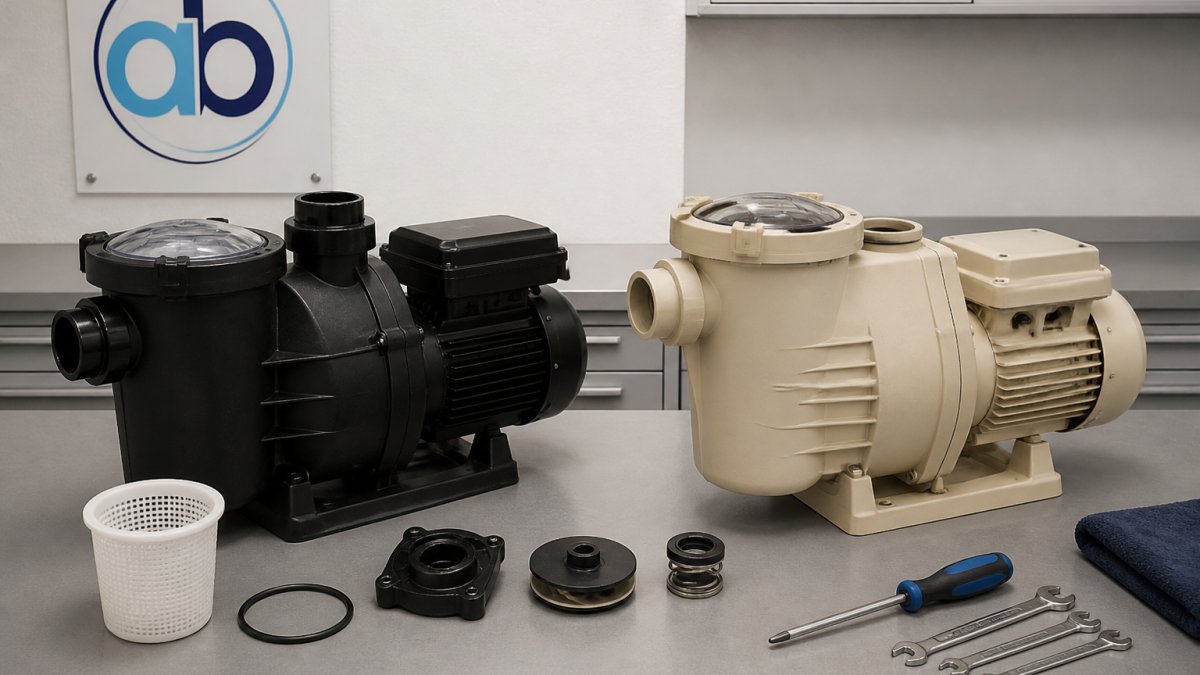
Motor-only replacement reuses the existing pump body, housing, and plumbing. It costs less and takes less time. Complete pump replacement costs more but resets the clock on every component, including the housing and impeller.
Choose motor-only when the pump body, strainer, and plumbing are sound and only the motor has failed. Choose a complete pump when the housing is cracked, the pump is undersized for the pool, or you’re upgrading to variable-speed for lower energy use.
How Pool Pump Lifespan Changes the Math
Pool pump lifespan is the variable most homeowners ignore, and it’s often the one that decides the answer. A pump near the end of its service life makes almost any major repair a poor bet, because the next failure is already queued up behind it.
A pump that’s a few years old and has a single failed part is a different story. Fix it. The remaining service life is long enough to justify the repair several times over.
Approving a $600 motor repair on a pump that’s already had two major failures in three years usually means paying twice for the same outcome. Put the money toward a new pump instead.
Is Pool Pump Repair Worth It? The 50% Rule and Its Limits
Is pool pump repair worth it? The 50% rule says yes when the repair costs less than half of a new pump, and no when it creeps above that line. It’s a useful starting point, not a law. The problem is that most homeowners apply the rule to the repair quote alone, without accounting for what the repair buys them in remaining service life, warranty coverage, or future energy savings.
The 50% Rule in Practice
Start by getting the replacement number right. The denominator in the 50% rule is not the sticker price of a pump, it’s the installed cost of a comparable new pump, including labor, tax, and any plumbing or electrical modifications your system needs.
A common pattern is that homeowners compare a repair quote to the price of a pump they saw online, which understates the true replacement cost and makes repairs look artificially attractive. Always ask for the installed replacement quote, not the equipment price.
Three Tests to Run After the 50% Rule
1. Remaining service life test. A typical pump lasts roughly 8 to 12 years depending on run time, water chemistry, and climate.
2. Warranty test. A new pump typically carries a multi-year manufacturer warranty on the motor and housing. A repaired older pump usually carries only a short parts guarantee on the replaced component, often 90 days to one year.
3. Parts availability test. Older single-speed pumps and less common brands can have obsolete motors, impellers, and housings.
Ask for the installed replacement quote and the repair quote on the same page. The 50% rule only works when both numbers are apples-to-apples, same pump class, same labor scope, same warranty terms.
When the 50% Rule Misleads
The rule breaks down in two situations. First, when the pump is old enough that remaining lifespan is short, half the replacement cost can still be too much, you’re paying for a repair on a unit that’s already near the end. Second, when the repair is a motor swap on a body that’s already worn, you may be halfway to a new pump without the warranty or the energy savings.
Use the rule as a filter, then weigh age, condition, warranty, parts availability, and energy use before you commit.
Diagnose Before You Decide: Warning Signs and Failure Causes
Diagnosis should come before any quote, not after. The warning signs below tell you whether you’re looking at a cheap fix or a failing pump.
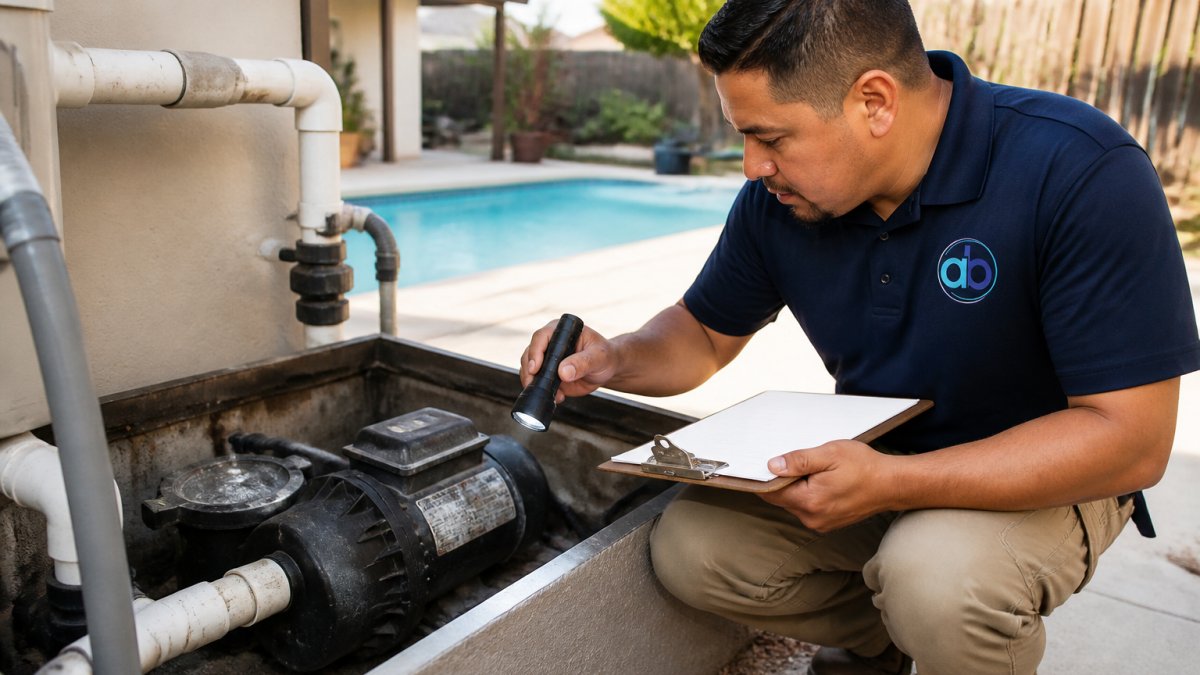
Common warning signs:
- Loud grinding or squealing (often bearings)
- Pump won’t prime or loses prime repeatedly (air leak or seal)
- Visible water leaking at the housing (shaft seal or O-ring)
Common failure causes: debris-clogged impellers, worn shaft seals, failed capacitors, overheated motors from restricted airflow, and normal bearing wear over time.
A grinding noise plus a water leak usually means two separate failures. Price both before deciding, because the combined repair bill is what the 50% rule should be measured against.
Energy, Warranty, and Sizing: Costs the Quote Leaves Out
The sticker price is only part of the cost comparison. Energy use, warranty coverage, parts availability, and correct sizing all change the long-term math, and most quotes don’t mention them. This section breaks down the costs a quote leaves out so you can compare total value rather than headline prices.
Energy: The Cost That Runs Every Day
A pool pump is one of the largest electricity users in a home with a pool, and the gap between an older single-speed pump and a modern variable-speed pump is significant.
A practical way to compare: ask the installer for the estimated annual energy cost of the proposed pump at your run schedule, and compare it to the estimated annual cost of your current pump.
Warranty: What You’re Actually Buying
A new pump typically carries a multi-year manufacturer warranty on the motor, housing, and seals. A repaired older pump usually carries only a short parts guarantee on the replaced component, often 90 days to one year, and labor may not be covered at all. When you compare a repair quote to a replacement quote, add the value of the warranty to the replacement side.
Parts Availability and Remaining Lifespan
Older pumps and less common brands can have obsolete motors, impellers, and housings. If the technician has to source a rebuilt motor or an aftermarket impeller, the repair may cost more than quoted and may fail sooner. Before approving a repair, ask whether the part is OEM, aftermarket, or rebuilt, and ask how many more years of service the technician expects from the pump body.
Sizing and Compatibility: The Hidden Replacement Cost
Replacement isn’t just a swap, it’s a compatibility decision. Pool volume, plumbing diameter, electrical circuit capacity, and filter and heater compatibility all affect which pump is correct and what it costs to install. An oversized pump wastes energy and can damage the filter; an undersized one never keeps up. A variable-speed pump may require a different electrical setup than the single-speed unit it replaces, which adds labor and parts to the installed cost.
A Total-Cost Comparison Framework
Instead of comparing headline prices, compare total cost over the expected remaining service life. For each option, repair, motor-only replacement, complete pump replacement, list:
- Parts and labor for the immediate job
- Expected remaining service life in years
- Estimated annual energy cost at your run schedule
A repair that costs $600 but leaves two years of service life and high energy use is not cheaper than a $1,800 replacement that delivers eight years of lower energy bills and a full warranty. The headline price hides that difference; the total-cost comparison reveals it.
A quote that lists only a lump-sum price without breaking out parts, labor, warranty terms, and the proposed pump model is impossible to compare against a second opinion. Ask for an itemized quote before you decide.
One regulatory note worth knowing: California Energy Commission guidance notes that since July 19, 2021, manufacturers of replacement dedicated-purpose pool pump motors have had to follow a new test procedure and standards. Ask your installer how any motor they quote complies.
Homeowners planning to stay in the house for years, where lower energy bills and a fresh warranty tip the math toward replacement.
Frequently Asked Questions
Is it worth repairing a pool pump?
It depends on the pump’s age, the failed part, and the quote. A capacitor, shaft seal, or impeller replacement is a small fraction of a new pump, so repair usually wins on a pump under eight years old. Once a repair estimate approaches half the cost of a new pump, or the motor has significant damage, replacement typically makes more financial sense. Get a written diagnosis first so you know exactly which part failed.
What’s the average lifespan of a pool pump?
Most pool pumps last roughly 8 to 12 years with regular maintenance, though run time, water chemistry, and whether the pump runs dry all shorten that window. A motor often fails before the pump body does, which is why motor-only replacement is common. If your pump is past the 10-year mark and needs a major repair, weigh the remaining service life against the replacement quote rather than fixing it on habit.
Should I replace my entire pool pump or just the motor?
Replace just the motor when the pump housing, strainer basket, and volute are intact and the wet end seals well. Go with a complete pump when the housing is cracked, the pump is oversized or undersized for the pool, or you want variable-speed efficiency.
How much does it cost to repair a pool pump?
Your actual pool pump repair cost depends on the failed component, pump type, and local labor rates, so ask for an itemized estimate before approving work.
What are the signs that a pool pump needs to be replaced?
Warning signs include loud grinding or whining bearings, water leaking from the seal area, a motor that overheats and shuts off, weak or no flow at the returns, and repeated capacitor failures. A pump that trips the breaker or smells burnt usually has significant motor damage. If you see two or more of these at once, or the pump is over ten years old, ask a technician to compare repair and replacement costs before committing to either.
The real challenge isn’t reading a price range. It’s getting an honest diagnosis and a quote you can actually compare. Aqua Bright Pool Service has handled pump repairs and replacements since 2006 with professionally trained, state-licensed technicians, a randomized audit process that checks the work, and a public storefront office you can walk into. Contact us to get started and we’ll tell you plainly whether your pump is worth repairing.