How to Troubleshoot a Salt Water Pool Generator
Last Updated: November 1, 2026
Quick Summary
When a salt water pool generator stops producing chlorine, the cause is almost always low salt, a dirty cell, no flow, or a failing cell. Run these four checks in order before assuming the unit is dead, and never replace the cell first.
- Test the salt level first, since a reading below the manufacturer’s range stops chlorine output.
- Clean the cell and retest before adding any salt to chase a low salt error.
- Shut off power at the breaker before removing the cell, and never scrape the plates with metal tools.
- A no flow error means the system shut down to protect itself, so check the filter and pump speed.
- Most failures trace back to water chemistry and flow, not the electronics.
Table of Contents
- What You Need Before You Troubleshoot a Salt Water Pool Generator
- Salt Water Pool Generator Not Producing Chlorine: The Four Checks That Find the Cause
- Salt Chlorine Generator Low Salt Error When the Level Looks Right
- How to Clean a Salt Cell Without Damaging the Plates
- Salt Water Pool Generator No Flow Error: What the Sensor Is Telling You
- Common Mistakes That Make Salt System Problems Worse
- Schedule a Salt System Inspection With Aqua Bright Pool Service
- Frequently Asked Questions
What You Need Before You Troubleshoot a Salt Water Pool Generator
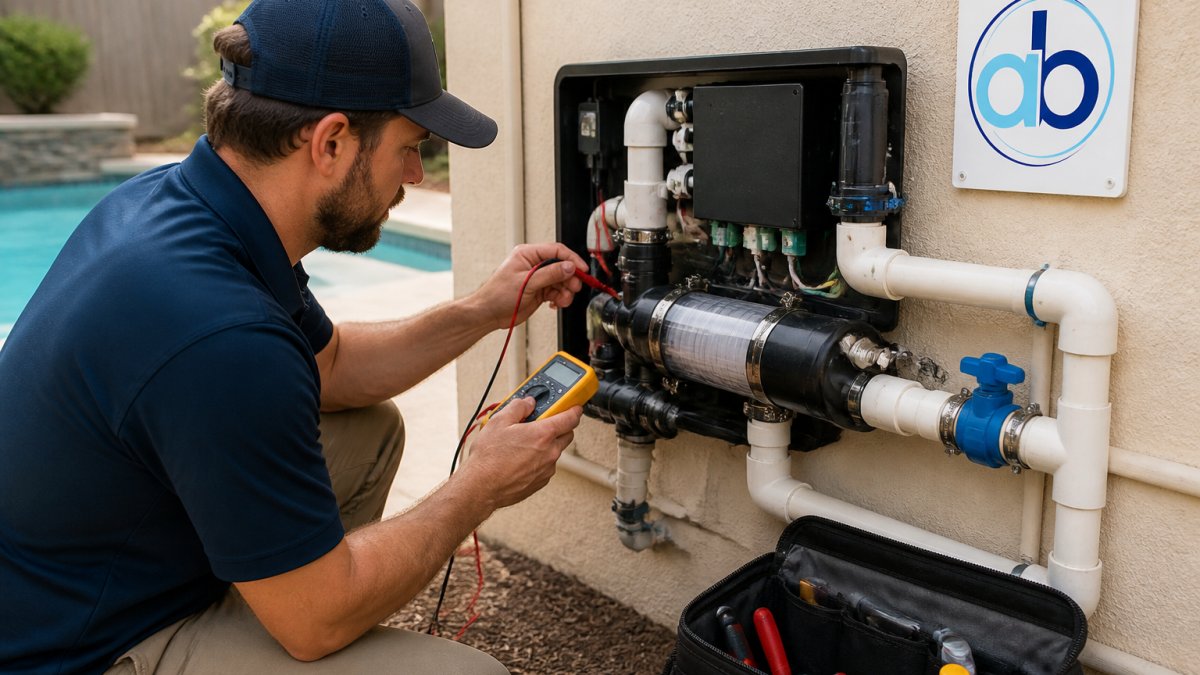
A salt water pool generator is a system that uses electrolysis to turn dissolved salt into chlorine for your pool. When it stops working, most homeowners guess at the fix and make the problem worse. Salt system problems often follow a predictable pattern, and the answer is usually found in what the system tells you before you touch a single wire.
Before you troubleshoot salt water pool generator problems, gather four things:
- The exact error message or display code on the control panel
- A salt test result from a strip or digital meter, not a guess
- The cell’s age and the date it was last cleaned
- The pump’s flow status and filter pressure reading
Write these down. A technician will ask for them, and they narrow the cause fast.
If you want a wider look at what commonly fails on pool equipment, our guide on troubleshooting common pool equipment issues covers the full picture and when to call in a pro.
Salt Water Pool Generator Not Producing Chlorine: The Four Checks That Find the Cause
When a salt water pool generator is not producing chlorine, the cause is almost always one of four things: low salt, a dirty cell, no flow, or a failing cell. Run these checks in order before you assume the unit is dead.
- Test the salt level. A reading below the manufacturer’s range stops chlorine output.
- Inspect the cell for scale. Calcium buildup blocks the plates from doing their job.
- Confirm water flow. Low flow triggers a safety shutdown on most systems.
- Check the cell’s hours. Most cells last a set number of generating hours, not years.
A common mistake is replacing the cell first. The cell is the most expensive part, so it should be the last thing you swap, not the first.
If your system is struggling, it’s fair to ask whether a saltwater pool still needs regular professional service.
When chlorine output stops, work through these four checks in order before assuming the cell is dead.
| Check | What to look for | Why it stops chlorine |
|---|---|---|
| Salt level | Reading below the manufacturer’s range | Low salt stops chlorine output |
| Cell condition | Calcium scale on the plates | Buildup blocks the plates from working |
| Water flow | Low flow through the system | Triggers a safety shutdown on most systems |
| Cell hours | Generating hours used | Cells last a set number of generating hours |
Salt Chlorine Generator Low Salt Error When the Level Looks Right
A salt chlorine generator low salt error with a correct salt reading usually points to the cell, not the water. The cell’s sensor plates get coated with scale, and that coating blocks the reading. The system thinks salt is low because it can’t sense it properly.
Here’s what to check:
- Clean the cell and retest before adding any salt
- Confirm your test method matches the system’s scale
- Check the water temperature; cold water skews some readings
- Look for a loose cell cable or corroded connection
Watch out: dumping in salt to chase a low reading is the fastest way to overshoot. Too much salt stresses the cell and can damage equipment. If the reading still looks wrong after cleaning, it’s time to balance the water properly. Our step-by-step pool chemical guide walks through safe balancing.
How to Clean a Salt Cell Without Damaging the Plates
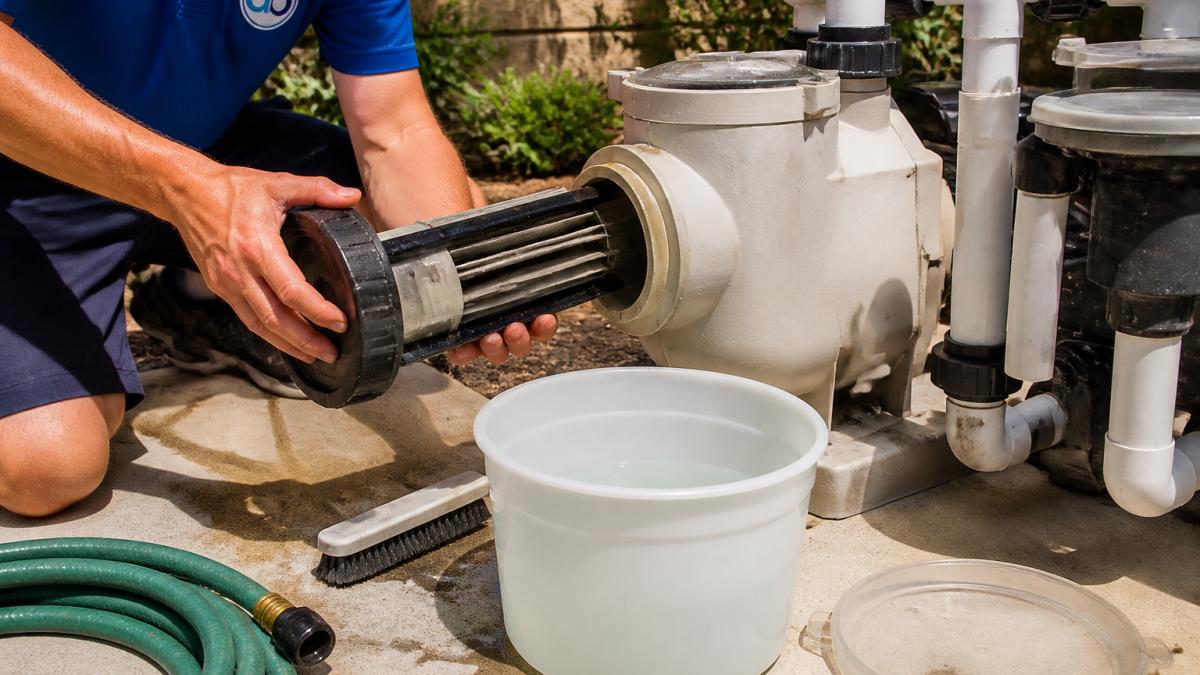
Cleaning a salt cell is simple, but the plates inside are delicate. One wrong move and you’ve turned a cleaning job into a replacement.
Follow this order:
- Shut off power to the generator at the breaker.
- Remove the cell from its housing and inspect the plates.
- Rinse with a garden hose to lift loose debris first.
- Soak in a diluted acid solution only if scale remains, following the maker’s ratio.
- Rinse thoroughly and let it dry before reinstalling.
Never scrape the plates with metal tools. A common mistake is soaking too long or using full-strength acid, which eats the coating that makes the cell work. Most cells need cleaning only a few times a season.
Some of this work is best left to a pro. Our guide on pool maintenance homeowners should not do themselves covers which tasks to hand off.
Salt Water Pool Generator No Flow Error: What the Sensor Is Telling You
A salt water pool generator no flow error means the system has detected that water isn’t moving through the cell, so it shuts down to protect itself. The sensor is doing its job. Your task is to find out why flow stopped.
Check these in order:
- Clean the filter and check the pressure gauge
- Confirm the pump is running at the right speed
- Inspect the skimmer and pump basket for debris
- Look for a stuck valve or a clogged line
- Check the flow sensor for scale or damage
Low pump speed is a frequent culprit on variable-speed systems. If the flow switch is clean and water is moving, the switch itself may have failed. That’s a part swap, not a rebuild.
Common Mistakes That Make Salt System Problems Worse
The biggest mistake with salt systems is adding salt before testing. The second is replacing parts based on a guess. Both cost money and neither fixes the real issue.
Other errors we see:
- Skipping the filter check when a no flow error appears
- Cleaning the cell with the wrong acid strength
- Ignoring a rising filter pressure gauge
- Assuming a dead display means a dead system
Salt systems are reliable when maintained. Most failures trace back to water chemistry and flow, not the electronics. That’s why a routine inspection catches small issues before they become replacements.
Schedule a Salt System Inspection With Aqua Bright Pool Service
If the checks above don’t solve it, the problem is likely in the cell, the sensor, or the control board. That’s where a licensed technician saves you money. Aqua Bright Pool Service has served DFW homeowners since 2006, with professionally trained, state-licensed technicians.
If you’re near Frisco and searching for salt system help near me, contact Aqua Bright Pool Service to get started.
When to call a pool professional covers the signs it’s time to stop troubleshooting and hand it off.
Frequently Asked Questions
Why is my salt water pool generator not producing chlorine?
Check the salt level first, then inspect the cell for calcium scale, confirm the pump is moving water, and verify the output percentage. A salt water pool generator not producing chlorine often has a scaled cell or a salt reading that drifted below the manufacturer’s range. If all four check out, the cell may be near the end of its life and needs a professional test.
Why does my salt system say low salt when the salt level is correct?
A salt chlorine generator low salt error with correct chemistry usually points to a dirty cell, a failing salt sensor, or water temperature below about 60°F, which makes readings unreliable. Test the water with an independent kit or a pool store reading before adding salt. Adding more salt on a false reading pushes the level too high and can cause new problems.
How can I tell if my salt cell is dirty or failing?
Look through the cell toward a light. White or gray scale on the plates means it needs cleaning. If the plates look clean but the system still reads low salt or produces no chlorine, the cell may be failing. Most cells last three to seven years depending on run time and water balance, so age is a useful clue.
Can a salt water pool generator run when the pump is off?
No. The generator needs water flowing through the cell to produce chlorine and to keep from overheating. Most controllers include a flow switch that shuts the cell down when flow stops, which is why a salt water pool generator no flow error appears after the pump shuts off or the filter clogs. Never bypass the flow switch.
Salt system problems rarely fix themselves, and guessing at parts gets expensive fast. Aqua Bright Pool Service offers weekly service, expert equipment repairs, and honest diagnostics from licensed technicians. Get started with Aqua Bright Pool Service and get your pool back to clear, chlorine-ready water.
