What Is Professional Pool School Service? A Local Guide
Last Updated: November 4, 2026
Quick Summary
Professional pool school service is structured instruction in which a trained technician teaches a pool owner to care for their own pool. Sessions cover routine tasks like testing water, balancing chemicals, cleaning, and checking equipment, so owners can maintain their pool confidently between professional visits.
- Pool school targets homeowners who want to maintain their own pool, not people entering the trade.
- Always test water first, adjust alkalinity before pH, and add sanitizer last.
- Never mix muriatic acid and chlorine products, and always add acid to water.
- Many owners combine pool school with a service plan for repairs and deeper maintenance.
- Sessions can include an equipment walk-through, water testing, and a hands-on lesson.
Table of Contents
- What Professional Pool School Service Means for Pool Owners
- Who Pool School Is For and How It Differs From Technician Training
- How to Balance Pool Chemicals Safely
- Pool Water Testing and Chemical Safety Basics
- What Does Pool Service Include Versus a Pool School Session
- How a Frisco Pool School Session Runs and How to Prepare
- Booking Your First Pool School Session With Aqua Bright
- Frequently Asked Questions
Professional pool school service gives homeowners hands-on training in how their pool actually works. For many new owners in Frisco, the first season brings a steep learning curve: cloudy water, a salt generator that suddenly misbehaves, and chemical readings that make no sense. Aqua Bright Pool Service has offered comprehensive pool care in the DFW area since 2006, and we know how much a little practical knowledge helps. Below, we explain what pool school is, who it suits, and how a session in Frisco runs.
What Professional Pool School Service Means for Pool Owners
Professional pool school service is structured instruction where a trained technician teaches a pool owner to care for their own pool.
Pool school sessions generally cover the basics a homeowner handles week to week:
- Testing water and reading the results
- Adjusting chemical levels safely
- Cleaning the skimmer basket and pool walls
- Checking the pump, filter, and valves
- Spotting early warning signs of equipment trouble
Watch out: Mixing chemicals together or adding them in the wrong order can cause dangerous reactions. Always follow the product label and the technician’s instructions.
Who Pool School Is For and How It Differs From Technician Training
Pool school is designed for homeowners, not for people entering the trade. A homeowner wants to keep the pool healthy, save money on service calls, and understand what the technician is talking about. A technician-training course goes much deeper into repair, licensing, and commercial work. If you would rather hire a pro, our guide on finding licensed pool technicians in DFW walks you through the process.
Pool school can suit owners who:
- Just bought a home with a pool
- Want to handle routine upkeep between professional visits
- Feel unsure about chemicals and equipment
- Want to ask better questions when a technician visits
Technician training, by contrast, is for people who plan to service pools for a living.
How to Balance Pool Chemicals Safely
Balancing pool water means keeping several readings in range at the same time, not just adding more chlorine. Local conditions such as water hardness and summer heat can make this harder than the textbook version.
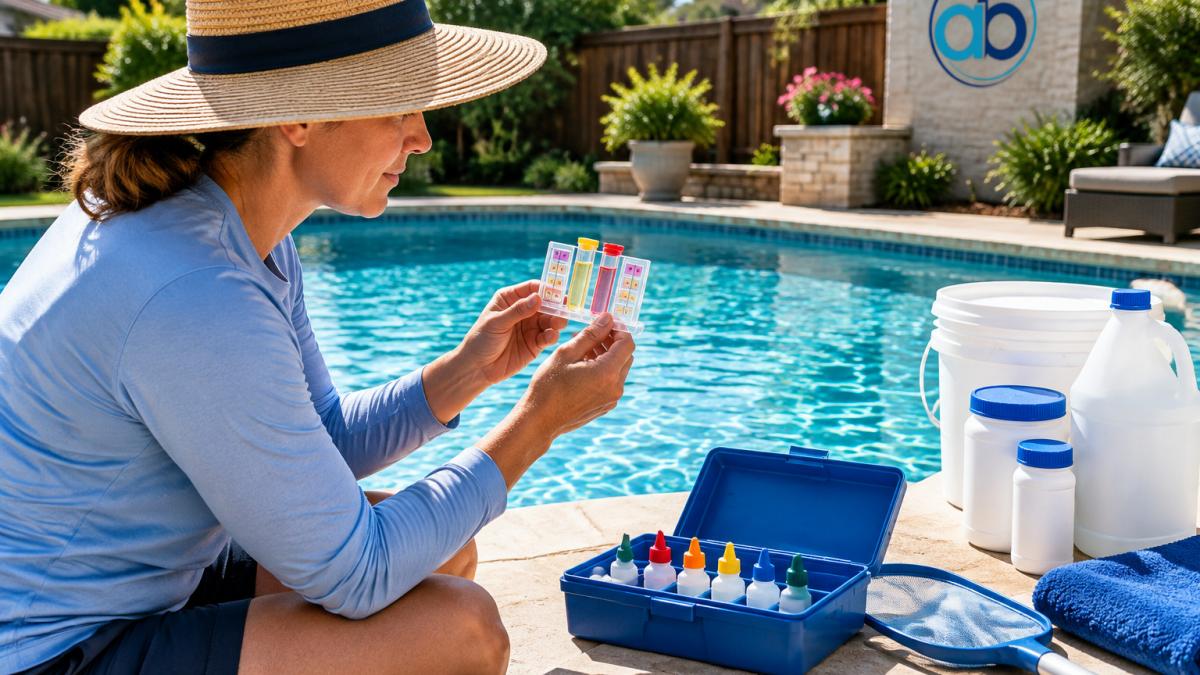
Start with target ranges a technician will walk you through on your own test kit. Water chemistry targets vary by pool and product, so follow the label on your specific product and the guidance of your technician. Keeping chemistry within the right range can also reveal when aging surfaces or equipment need attention, making remodeling old pools a natural next step in long-term care.
A general safe order of operations for adjusting pool chemicals is as follows:
- Test first. Check free chlorine, pH, total alkalinity, calcium hardness, and cyanuric acid before adding anything. Write the numbers down so you can see the trend across weeks.
- Adjust alkalinity first. Stable alkalinity makes pH easier to control. Raise it with sodium bicarbonate or lower it with muriatic acid, following label doses for your pool volume.
- Correct pH next. Add pH adjusters slowly, pre-dissolving granular products in a bucket of pool water where the label calls for it, and let the pump circulate for several hours.
- Add sanitizer last. Chlorine works best when pH is within range.
- Retest after several hours. Confirm the water has settled before swimming, and log the result.
Watch out: Never mix muriatic acid and chlorine products, and never add water to acid, always add acid to water. Mixing chemicals or adding them in the wrong order can release toxic gas or cause a violent reaction. Wear eye protection and gloves, keep products in their original containers, and store them dry, cool, and out of reach of children.
Pool chemistry shifts with the seasons, with spring pollen and runoff, summer heat, and fall leaf debris each changing testing needs. Learning to read those signals is a practical skill that hands-on instruction at your own pool can build.
Pool Water Testing and Chemical Safety Basics
Regular testing is the foundation of pool care. Test strips are quick but less precise than a liquid test kit or a digital photometer.
Testing guidance typically includes:
- How to read test kit or strip color changes under different light
- Sampling depth and location, such as mid-pool and away from return jets, so results are representative
- Keeping a log of your readings to track trends
- When a reading warrants a retest or a call to a professional
Chemical safety starts with storage and handling. Keep chemicals dry, cool, and sealed. You can browse the pool chemicals we discuss by category. Never store different products together, since some combinations release harmful gases (the CDC). Add chemicals to water rather than water to chemicals, and keep products in their original containers with labels intact. If a reading looks wrong after several adjustments, stop adding chemicals and call a professional rather than guessing.
When evaluating any pool education service, it helps to ask whether reference materials and follow-up contact are included, since the first weeks after a lesson are when much of the learning sticks.
Watch calcium hardness and scale in hard water areas, and test and adjust after storms, since heavy rain can dilute chemistry and bring in debris.
What Does Pool Service Include Versus a Pool School Session
A professional pool service visit can handle the work for you, including cleaning, testing, chemical balancing, and equipment checks. Pool school teaches you to do some of that work yourself. If you are weighing cost against value, read our analysis of whether professional pool audits are worth the cost.
| Option | Who does the work | Best for |
|---|---|---|
| Routine pool service | Technician | Owners who want the pool handled |
| Pool school session | Owner, guided by technician | Owners who want to learn |
| Combined approach | Both | Owners who want to learn and stay covered |
Many owners choose a combined approach: learning the basics in pool school while keeping a service plan for repairs and deeper maintenance.
How a Frisco Pool School Session Runs and How to Prepare
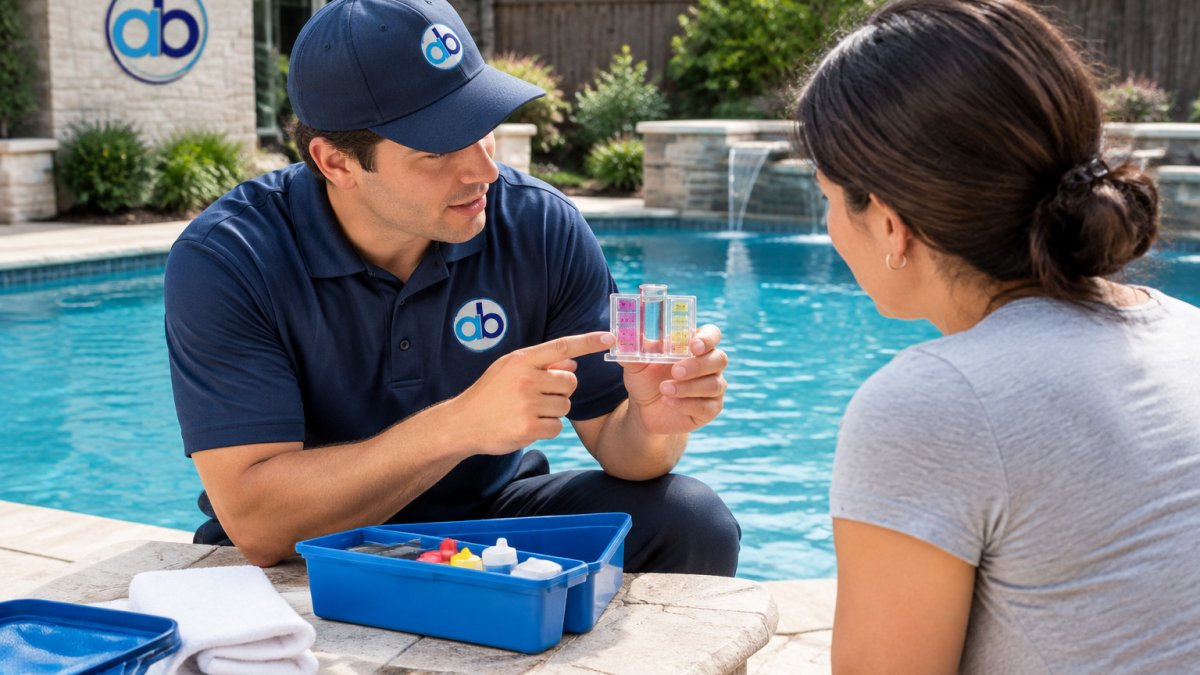
A pool school session can include a walk-through of your equipment, water testing, and a hands-on lesson, which helps explain what each reading means.
To prepare, gather a few items:
- A recent water test result, if you have one
- Your pool’s make and model information for the pump and filter
- A list of questions about problems you have noticed
- Comfortable clothing and closed-toe shoes
Booking Your First Pool School Session With Aqua Bright
Pool school can be a practical way to become a more confident pool owner. Aqua Bright Pool Service uses professionally trained technicians, a randomized audit evaluation process for technicians, and a public storefront office. You can review what a Pool School Training session includes before you sign up.
To get started, contact Aqua Bright Pool Service through its website for current details and a quote.
Frequently Asked Questions
What is professional pool school service?
Pool school service is hands-on instruction that teaches pool owners how to run and maintain their own pool. A session typically covers water chemistry, testing, chemical balance, cleaning routines and basic equipment operation such as pumps and filters. It differs from technician training, which prepares people to service pools for pay. Owners leave with a better understanding of their system and clearer habits for routine care. Aqua Bright Pool Service can confirm current session details and pricing, which depend on the format and pool size, through its website or a direct quote.
How do you balance pool chemicals safely?
Test the water first, then adjust one chemical at a time, starting with total alkalinity, then pH, then calcium hardness and sanitizer. Add chemicals to water as directed on the label, never mix products together, and keep the pump running so the chemicals circulate. Wait for circulation before retesting and avoid swimming until levels are back in range. Store chemicals in a dry, cool place away from children and pets. Pool school sessions walk new owners through these steps with real equipment.
How often should you test pool water?
Most pool owners should test water at least two to three times a week during warm months, and more often after heavy rain, heavy use or a chemical adjustment. Test free chlorine, pH, total alkalinity and calcium hardness, since each affects the others. Keeping a simple log helps you spot trends before problems develop. Water testing is one of the most useful habits covered in pool school for new owners.
How long does a pool school session take?
Session length depends on the format and the scope of instruction, so confirm the details with Aqua Bright Pool Service before booking. Sessions that include hands-on work at your pool usually run longer than classroom-style reviews because they cover testing, chemical handling and equipment checks in person. Ask what to bring and whether any pool preparation is needed in advance, since that makes the time more productive.
Ready to learn your pool inside and out? Contact Aqua Bright Pool Service today to get started, and let our Frisco team show you how to keep your water crystal clear.
