Are Professional Pool Audits Worth the Cost?
Last Updated: October 26, 2026
Quick Summary
A professional pool audit finds small problems before they become big bills by reviewing your water chemistry, equipment, and safety systems and documenting every finding in writing. You get a written baseline to compare against next year, so you stop replacing parts by guesswork and can verify your service provider is actually doing the work.
- An audit checks three layers: water chemistry, equipment under load, and safety and structure.
- A pool audit informs you but does not replace an inspection or enforcement action from your local jurisdiction.
- A failing pump seal, leaking valve, or drifting chemistry is cheap to fix early and expensive late.
- The equipment inspection covers pumps, filters, heaters, and salt cells, where most money is found or lost.
- Re-audit once a year, or after any major repair, and fix safety issues first.
Table of Contents
- What a Professional Pool Audit Actually Checks
- The Benefits of a Professional Pool Audit
- What a Professional Pool Inspection Covers Beyond Water Chemistry
- Inside the Pool Equipment Inspection: Pumps, Filters, Heaters, and Salt Cells
- How a Pool Energy Audit Finds the Money You’re Losing
- Your Post-Audit Pool Maintenance Checklist
- Book a Pool Audit with Aqua Bright Pool Service
- Frequently Asked Questions
What a Professional Pool Audit Actually Checks
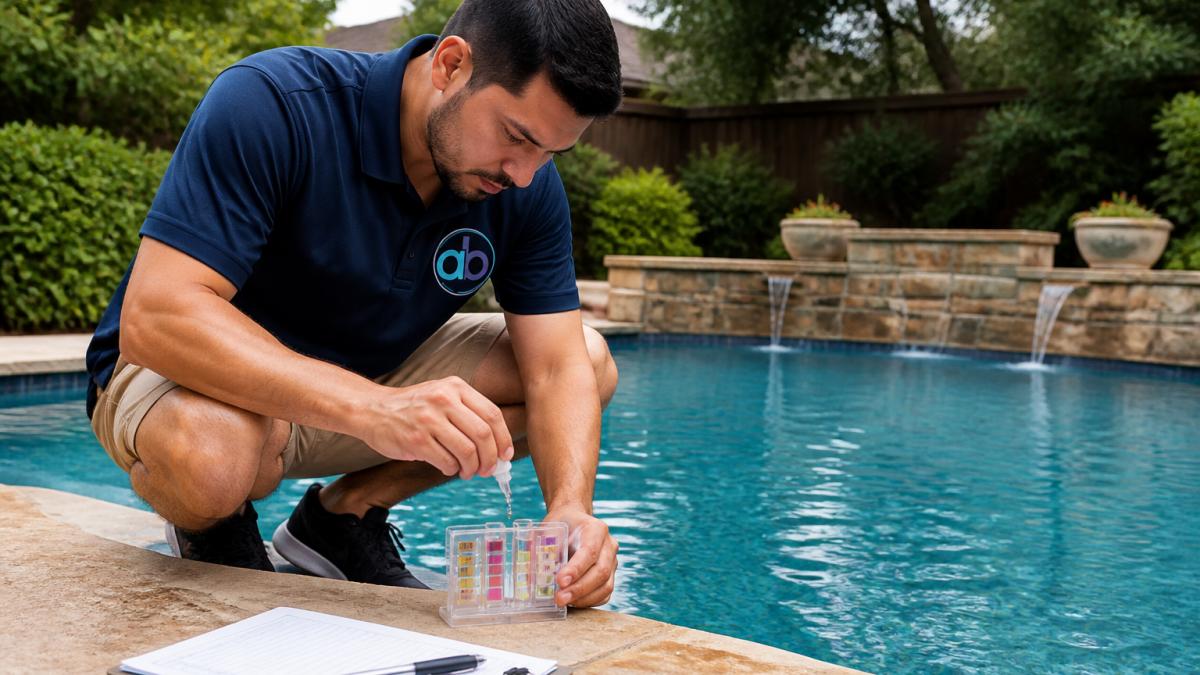
A pool audit is a top-to-bottom review of your pool’s water, equipment, and safety systems, done to document what is working and what is failing. At Aqua Bright Pool Service, we treat an audit as a written record of your pool’s condition, not a quick skim of the water’s surface. If you own a pool in Frisco, TX, this is the closest thing you have to a full health report.
So what does the audit actually check? Three layers:
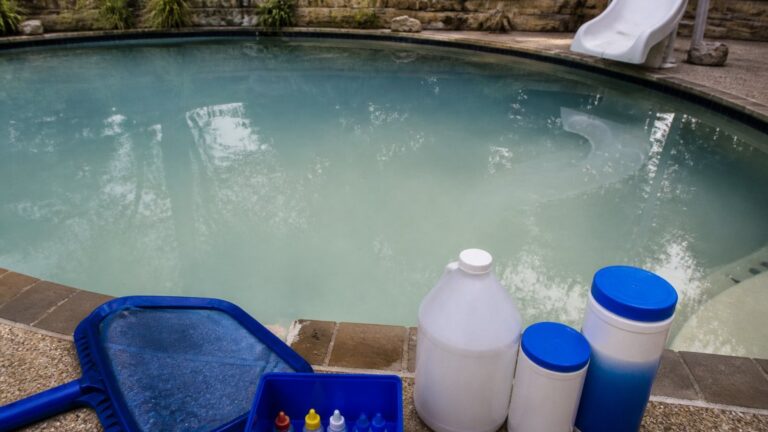
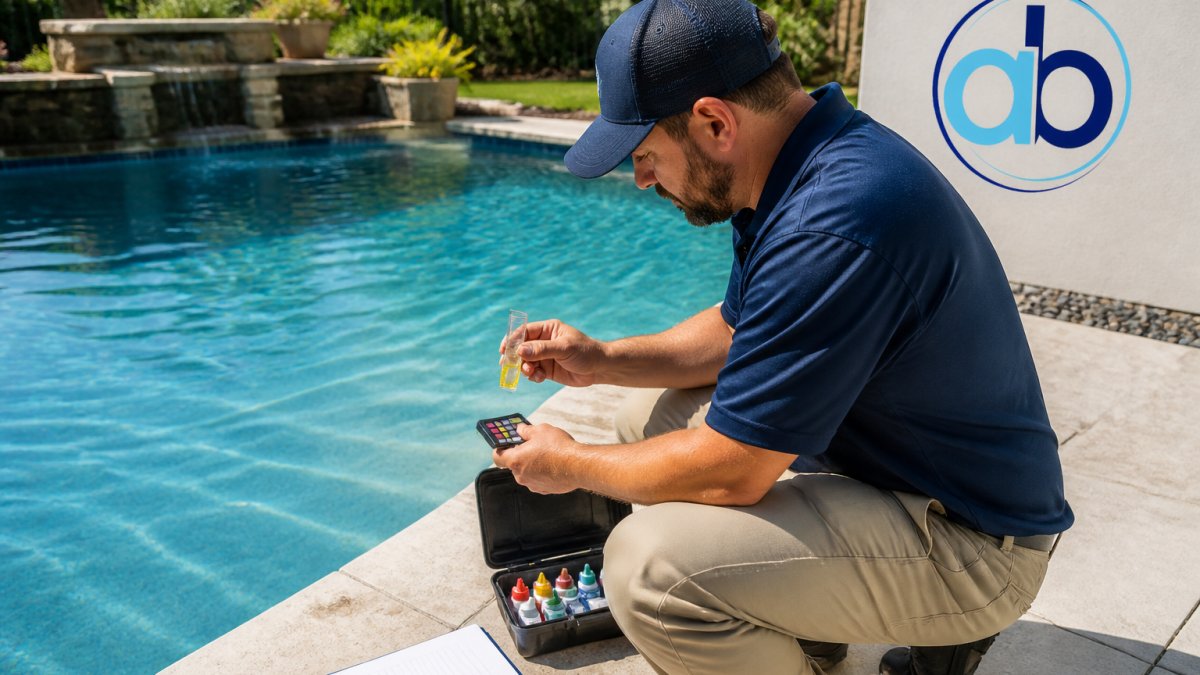
- Water chemistry: chlorine, pH, alkalinity, calcium hardness, and stabilizer levels, tested and logged
- Equipment: pumps, filters, heaters, salt cells, valves, and timers, inspected under load
- Safety and structure: fencing, drains, handrails, decking, and visible cracks or leaks
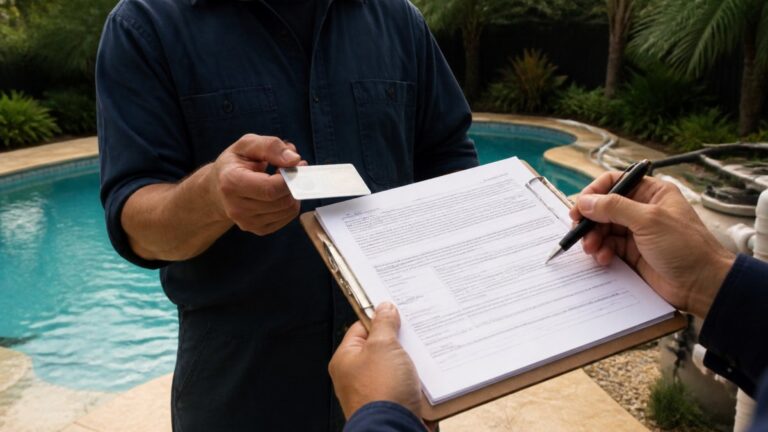
Every finding gets written down, with photos where they help.
Here is the honest limit, and it matters. A pool audit informs you. It does not replace an inspection or enforcement action from your local jurisdiction. Think of it as a second opinion with a paper trail, not a legal ruling.
The Benefits of a Professional Pool Audit
The biggest benefit of a professional pool audit is simple: you find small problems before they turn into big bills. A failing pump seal, a slowly leaking valve, or chemistry that has drifted for months are all cheap to fix early and expensive to fix late. An audit catches them while they are still cheap.
The second benefit is knowledge. Most pool owners guess at their equipment’s condition. After an audit, you know.
- You get a written baseline you can compare against next year
- You stop replacing parts by guesswork
- You can plan upgrades on your schedule, not in an emergency
- You can verify your service provider is actually doing the work
That last point is worth sitting with. Many homeowners pay for weekly service and have no idea what is being done. An audit gives you a checklist to compare against.
What a Professional Pool Inspection Covers Beyond Water Chemistry
A professional pool inspection goes well past test strips. Chemistry is the easy part, and it is the part most homeowners already handle. The inspection covers the systems chemistry can’t tell you about.
- Circulation: is water actually moving through every return?
- Filtration: is the filter media clean, or is it channeling water straight through?
- Equipment condition: are there leaks, corrosion, or unusual noise?
- Safety: are drain covers secure and gates self-latching?
- Structure: is the plaster, tile, or decking showing early failure?
Water chemistry is the piece you can learn to manage yourself. For a deeper walkthrough, our guide on how to balance pool chemicals safely covers the step-by-step process.
The rest is where a trained eye pays for itself. A homeowner can test chlorine. Spotting a hairline crack in a pump housing before it fails is a different skill.
Inside the Pool Equipment Inspection: Pumps, Filters, Heaters, and Salt Cells
A pool equipment inspection is the core of the audit, and it is where most money is found or lost. Equipment fails slowly, then all at once. The inspection catches the slow part.
Here is what we check, and why each item matters:
| Equipment | What We Check | Why It Matters |
|---|---|---|
| Pump | Seal leaks, noise, pressure, motor draw | A failing seal can flood the pad |
| Filter | Pressure gauge, media condition, backwash history | Dirty media cuts flow and clarity |
| Heater | Ignition, heat exchanger, error codes | Small leaks corrode the whole unit |
| Salt cell | Scale buildup, output, cell life | Scale kills output before the cell dies |
A pump that sounds fine can still be drawing too much current, and that shortens its life. A filter that reads normal pressure can still be channeling water past dirty media. The gauge doesn’t tell you everything.
If you want more detail on pump care specifically, our team wrote a deeper guide on pool pump maintenance. Filter efficiency gets its own treatment in our piece on why clean pool filters matter.
How a Pool Energy Audit Finds the Money You’re Losing
A pool energy audit looks at how much electricity your pool uses and where that power is wasted. Pools are one of the largest energy draws in a home, and most of that draw is invisible. You see the bill, not the cause.
Three things usually drive the waste:
- Pump runtime: running a single-speed pump far longer than the pool needs
- Undersized or dirty filters: the pump works harder for less flow
- Heater inefficiency: a failing heat exchanger burns fuel without heating well
The audit measures runtime, flow, and equipment draw, then shows you where the waste sits. Sometimes the fix is a schedule change. Sometimes it is a variable-speed pump. Sometimes it is just clean filters.
If the audit shows your equipment is past its useful life, the next question is timing. Our guide on upgrading your pool equipment walks through when an upgrade pays for itself and when it doesn’t.
Your Post-Audit Pool Maintenance Checklist
A pool maintenance checklist turns the audit into action. The audit tells you what is wrong. The checklist keeps it from going wrong again.
Use this after every audit:
- Fix any safety issue first, before anything else
- Replace or clean filter media on the schedule the audit recommends
- Log chemistry readings weekly and compare to the audit baseline
- Check pump pressure and listen for new noise once a month
- Inspect the salt cell for scale every quarter
- Re-audit once a year, or after any major repair
The most common mistake we see is treating the audit as a one-time event. It isn’t. A pool changes with every season, and a baseline only helps if you compare against it. The second most common mistake is skipping the safety items because they aren’t urgent. They are the ones that matter most.
Book a Pool Audit with Aqua Bright Pool Service
If you want a straight answer about your pool’s condition, stop guessing. Aqua Bright Pool Service has served the DFW area since 2006, with state-licensed technicians and a randomized audit process that keeps our own work honest. We also keep a storefront office open to the public, so you always know where to find us.
Here is what that means for you:
- Licensed repairs: our technicians are licensed by the state of Texas for repair work
- Randomized audits: our techs are evaluated on a random schedule, so quality doesn’t slip
- Written findings: you get a clear record of what we found
Whether you need a first-time audit, ongoing maintenance, or a repair quote, we can help. If you’re searching for a pool audit near me in Frisco or the surrounding area, book a pool audit and get a clear picture of your pool’s health.
Frequently Asked Questions
What is a professional pool audit?
A professional pool audit is a documented, top-to-bottom evaluation of your pool’s water, circulation, equipment, and safety features. Unlike a quick weekly service visit, an auditor tests chemistry, checks pump and filter performance, inspects for leaks and structural wear, and reviews energy use. The result is a written report you can act on. In Texas, a public-pool compliance audit is intended to help owners understand and document conditions, but it does not replace or override enforcement by the relevant jurisdiction.
How often should a residential pool be professionally inspected?
Most residential pools benefit from a full professional pool inspection once a year, ideally before swim season. Pools with older equipment, salt systems, or a history of leaks may need a pool equipment inspection every six months. A pool energy audit is worth scheduling whenever your electric bill jumps without an obvious cause. If you are buying a home with a pool in Frisco or Southlake, order an inspection before closing so you know what you are inheriting.
Can a pool audit help lower energy and maintenance costs?
Yes. A pool energy audit looks at pump runtime, filter pressure, heater efficiency, and circulation balance. A pump running two extra hours a day or a filter that is overdue for a backwash can quietly raise your electric bill month after month. The audit report shows which fixes deliver the fastest payback, so you spend on the changes that matter instead of guessing. It also flags small repairs before they turn into replacements.
How do I choose a qualified pool professional in Frisco, TX?
Ask for the technician’s state license number and verify it with the state, confirm the company carries insurance, and request a sample audit report so you know what you will receive. Look for a firm with a physical storefront and a documented quality-check process, such as randomized audits of its own technicians. Aqua Bright Pool Service has served the DFW area since 2006, holds Residential Contractor Lic# 449, and uses a randomized audit evaluation process to keep service consistent.
Your pool deserves more than a guess. Get started with Aqua Bright Pool Service and get a written, licensed assessment of your pool’s water, equipment, and safety systems, backed by technicians who are audited on their own work.