
Average Cost of Pool Tile Replacement in 2026
Last Updated: November 5, 2026
Quick Summary
Pool tile replacement costs most homeowners around $15,000 in 2026, with projects ranging from roughly $1,500 to $80,000 depending on pool size and scope. Per-square-foot pricing runs $20 to $50, covering tile, mortar, grout, and labor, though waterline work is often quoted per linear foot instead.
- Waterline tile typically runs $25 to $60 per linear foot of perimeter for a 6-inch band.
- A 12-inch waterline band costs $40 to $90 per linear foot.
- Full pool retiling is priced per square foot of interior surface, not linear feet.
- Add 10 percent to calculator estimates for cuts and waste.
- Combining resurfacing with tile replacement usually costs less than booking the jobs separately.
Table of Contents
- What Pool Tile Replacement Costs in 2026
- Average Cost of Pool Tile Replacement per Square Foot
- What Drives Pool Waterline Tile Replacement Cost
- Waterline Retiling Versus a Full Pool Retile
- How to Use a Pool Tile Cost Calculator
- Pool Resurfacing and Tile Replacement Cost Together
- How to Read a Frisco Pool Tile Quote Before You Sign
- Book a Tile Inspection With Aqua Bright Pool Service
- Frequently Asked Questions
What Pool Tile Replacement Costs in 2026
Pool tile replacement costs most homeowners around $15,000, according to Angi’s 2026 pool tile cost guide, with projects stretching from roughly $1,500 to $80,000 depending on pool size and scope. That spread is enormous, and it is the single most useful thing to understand before you call anyone. At Aqua Bright Pool Service, we handle tile work across the DFW area, and the scope of the job, waterline only or the whole pool, is the main factor in what it costs.
Below, we break down what drives the average cost of pool tile replacement, how to read a quote line by line, and when a repair beats a full retile.
Average Cost of Pool Tile Replacement per Square Foot
Per-square-foot pricing is the clearest way to compare bids, because it strips out pool size. HomeGuide’s 2026 cost data puts pool tile installation or replacement at $20 to $50 per square foot, covering tile, mortar, grout, and labor. Within that band, ceramic and porcelain usually land at the low end, glass and natural stone at the high end, and any substrate repair pushes a job above it.
The unit trap is the thing most homeowners miss. A waterline band is narrow, often 6 to 12 inches tall, so it is measured in linear feet around the pool perimeter, not in total surface area. Full-pool retiling is measured in square feet of interior surface. The same tile, at the same per-square-foot rate, produces wildly different totals depending on which unit the contractor is quoting. Before you compare two bids, confirm both are priced in the same unit.
| Scope | Unit Measured | Typical Frisco-Area Range | What It Covers |
|---|---|---|---|
| Waterline only | Linear foot of perimeter | $25 to $60 per linear foot | 6-inch tile band, grout, prep, removal |
| Waterline only, 12-inch band | Linear foot of perimeter | $40 to $90 per linear foot | Wider band, more tile and cutting |
| Partial replacement | Square foot of repair section | $30 to $70 per square foot | Damaged area, blending, localized prep |
| Full pool retile | Square foot of interior | $20 to $50 per square foot | All tile, substrate prep, waterproofing |
To make those units concrete, here are three worked examples using common North Texas pool dimensions. These are planning estimates, not bids, a real quote depends on what the inspection finds under the tile.
Ask every contractor to show the rate and the prep line items separately so you can compare like with like. Our guide to tile makeover options from border to waterline shows how material and design choices move these numbers.
What Drives Pool Waterline Tile Replacement Cost
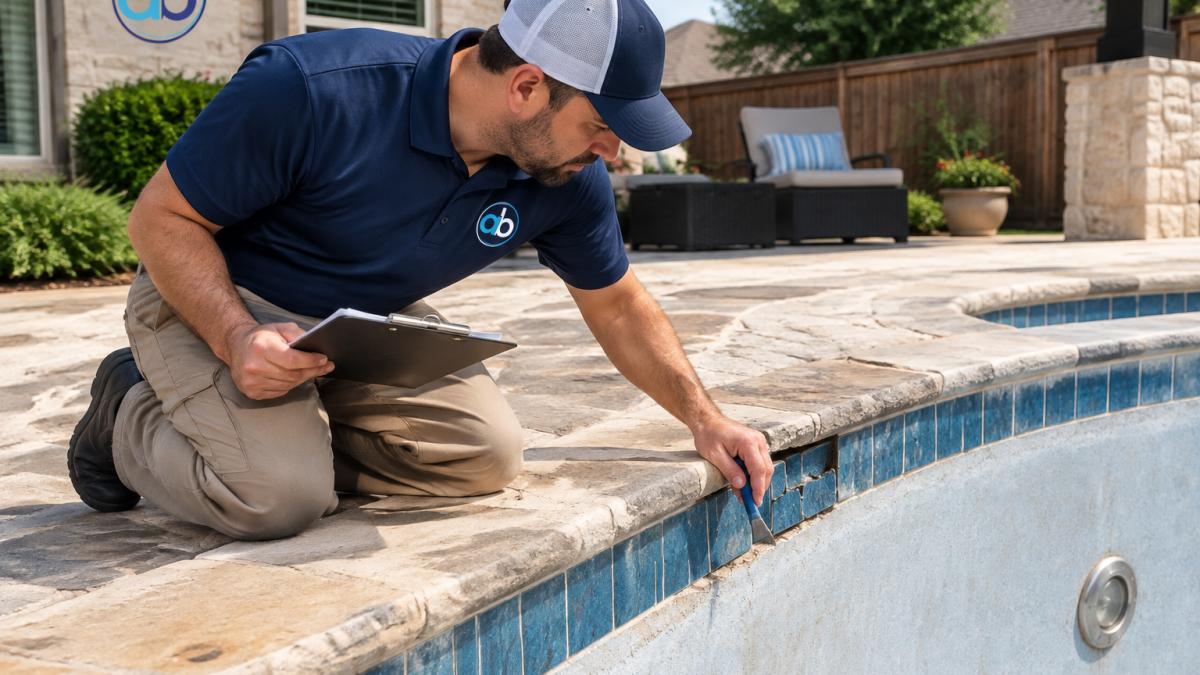
A technician on hands and knees at the edge of a drained pool, pry bar in hand, is diagnosing more than chipped tile. Three things move the price most: tile material, the condition of the substrate beneath the tile, and how much removal and surface preparation the job needs. Glass tile costs more than ceramic or porcelain, natural stone sits in between, and any soft or hollow substrate means extra waterproofing before new tile goes down.
Pool shape matters too. Custom designs with curves, spillways, and raised walls mean more cutting and more labor than a simple rectangle. If you are still choosing a look, our guide to tile makeover options from border to waterline shows how design choices affect the final bill.
Waterline Retiling Versus a Full Pool Retile
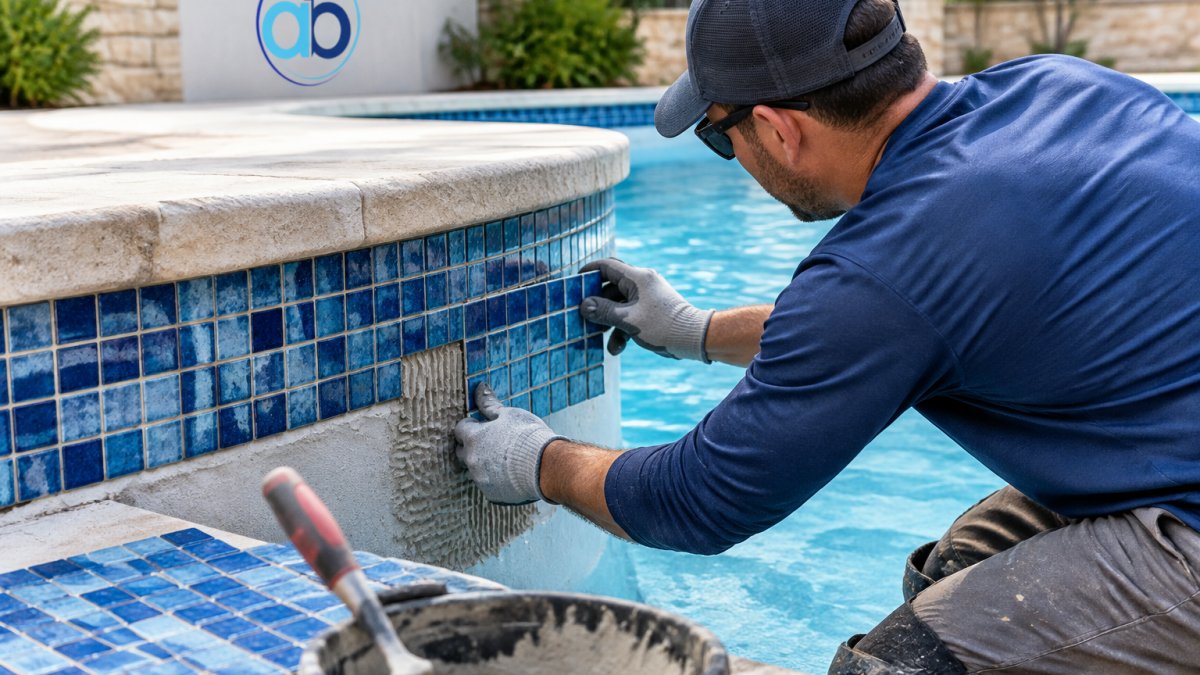
Waterline retiling replaces only the decorative band at the water’s edge. A full pool retile replaces every tile on the interior, and it is a different project with a different budget, a different unit of measurement, and a different failure diagnosis. Most quote confusion we see in Frisco comes from homeowners comparing a linear-foot waterline bid against a square-foot full-retile bid as if they were the same scope.
How the scopes differ in practice. Waterline work is priced per linear foot of perimeter and typically covers a 6- to 12-inch band, the grout, and localized prep. Full retiling is priced per square foot of interior surface and covers the floor, walls, steps, and benches, plus demolition, substrate repair, and waterproofing across the whole shell. A waterline job on an 80-foot perimeter and a full retile of a 400-square-foot pool can land in the same total range even though the scopes are not remotely comparable.
When waterline-only is the right call. If the plaster or interior finish is sound, the deck is stable, and the failure is confined to the band at the water line, waterline work solves the problem at a fraction of the cost. Isolated loose or missing tiles, efflorescence, or staining limited to the band are the classic signals. Calcium buildup and sun exposure can age the band at the water line.
When the interior is telling you it is time for more. If tiles are falling off across the floor and walls, the surface feels rough or chalky, or you can hear hollow spots when you tap the plaster, the substrate is failing and a waterline patch will not last. The same is true if the pool has visible cracks, repeated leaks at the skimmer, or a finish that has been patched multiple times. In those cases a full retile is the honest scope, and pricing it as waterline work sets up a callback.
The diagnostic step that decides it. Before either scope is quoted, a technician should tap the tile and surrounding finish for hollow sounds, check the substrate at any loose tile, and look for waterline staining that signals a chemistry or waterproofing problem rather than simple wear. That inspection is what separates an isolated repair from widespread bond failure, and it is the step a phone quote cannot replace. Our team can help you judge which situation you are in with pool resurfacing guidance for DFW homeowners before you commit to either scope.
How to compare the two bids fairly. Ask each contractor to state the unit (linear foot or square foot), the measured quantity, and whether removal, disposal, waterproofing, and grout are included. A waterline bid that omits demolition and a full-retile bid that folds it in are not comparable numbers, even if the totals look close.
How to Use a Pool Tile Cost Calculator
A pool tile cost calculator estimates your project by multiplying your measured area by a per-square-foot rate. To use one accurately, measure the pool perimeter for waterline work, or the full interior surface area for a retile, then multiply by the rate range above. Add 10 percent for cuts and waste.
Treat the result as a ballpark, not a bid. Calculators cannot see a failing substrate, hidden leaks at the skimmer, or the extra labor a curved pool shape demands. Use the number to sanity-check quotes, not to set your budget in stone.
Pool Resurfacing and Tile Replacement Cost Together
Combining resurfacing with tile replacement usually costs less than booking the two jobs separately, because the pool is drained and prepped once. Many homeowners reach this point when the interior finish and the waterline tile both show their age at the same time.
Material choice drives the resurfacing half of the bill. If you are weighing plaster against pebble or quartz finishes, our breakdown of the best pool resurfacing materials for 2026 compares durability and cost so you can plan both jobs together.
How to Read a Frisco Pool Tile Quote Before You Sign
A trustworthy quote separates labor from materials and names the prep work. Use this checklist when you compare bids:
- Tile removal and disposal listed as a line item
- Surface preparation and waterproofing spelled out
- Tile brand, material, and square footage stated
- Grout and mortar type named
- Draining and refilling included
- Timeline and pool downtime in writing
- License number shown for the contractor
Watch out: a quote that lumps everything into one number can hide prep work, which is where tile problems often start. Before you approve a replacement, ask whether professional cleaning could solve the problem instead. Our guide to DIY tile cleaning versus professional service explains when cleaning is enough and when it is not.
Book a Tile Inspection With Aqua Bright Pool Service
The fastest way to replace guesswork with a real number is an on-site inspection. Aqua Bright Pool Service has been in business since 2006, with professionally trained technicians, a storefront office open to the public, and a randomized audit evaluation process for technicians.
If you want the full picture of what a renovation involves before you book, read our complete inground pool renovation guide, then call us to schedule your inspection.
Frequently Asked Questions
How much does it cost to replace pool tile?
The cost of pool tile replacement depends on pool size, tile material, and whether the pool is drained, so the price varies widely. Get a written, itemized estimate for your pool.
What is the average cost of pool tile replacement per square foot?
Per-square-foot pricing depends on tile material, labor, and access. A pool with tight decking or a complex shape takes more cutting and fitting, which can raise the per-square-foot cost.
What affects the cost of replacing pool waterline tile?
Waterline tile replacement cost depends on linear feet of perimeter rather than the whole pool surface. Material choice, removal of the old tile, substrate repair, waterproofing, and grout selection all affect the cost.
Can you replace pool tile without resurfacing the entire pool?
Yes. Waterline tile and repair sections can be replaced on their own while the plaster or aggregate finish stays in place, as long as the finish is still sound. A tile inspection tells you which situation you have. If the plaster is chalky, cracked, or separating from the gunite, doing tile alone means paying for draining and setup twice.
How long does pool tile replacement take?
Project timelines depend on scope, and a full retile with resurfacing takes longer than a waterline-only job. Ask for a written timeline with your estimate. Weather matters in North Texas, since mortar and grout need moderate temperatures to cure properly. Plan the work for spring or fall so you are not without the pool during the hottest weeks.
How long do swimming pool tiles last?
Waterline tile lasts longer when the substrate stays sound and water chemistry is kept in range. Glass tile can outlast ceramic, but it is more sensitive to poor adhesion during installation. The most common failure is not the tile itself but the thinset or grout behind it, which breaks down when pH and calcium hardness drift. Regular brushing and balanced chemistry extend tile life more than any material upgrade. A tile that pops off in one spot is usually a localized repair, not a signal to retile the whole pool.
Tile that is cracking, falling off, or trapping water will not fix itself, and waiting usually raises the bill as the damage spreads beneath the surface. Aqua Bright Pool Service brings licensed technicians, in-house renovation work, and nearly two decades of local experience to every Frisco and DFW pool we inspect. Get started with Aqua Bright Pool Service and turn a vague estimate into a clear, itemized plan for your pool.
