
Best Pool Resurfacing Materials 2026: A Homeowner’s Guide
Last Updated: October 28, 2026
Quick Summary
The best pool resurfacing materials in 2026 depend on three trade-offs: how the surface feels, how long it lasts, and maintenance cost. Plaster offers a smooth, soft finish with a 7-10 year lifespan, quartz plaster is harder and holds color longer, and pebble finishes last longest but cost the most upfront.
- The national average cost of pool resurfacing sits at $11,000 in 2026, per Angi’s cost data.
- Paint or epoxy lasts 5-7 years, while plaster lasts 7-10 years.
- Pebble finishes resist wear and staining best but have the highest upfront cost.
- Tile is typically used at the waterline and steps rather than across an entire shell.
- A full resurfacing project runs from drain and inspect through refill and balance.
Table of Contents
- How to Compare Pool Resurfacing Materials in 2026
- Pool Plaster vs. Quartz Finish: What the Surface Actually Feels Like
- Pebble Pool Finish Pros and Cons for DFW Homeowners
- Tile, Fiberglass, and Marble: The Finishes Homeowners Ask About Last
- Pool Resurfacing Cost in Frisco, TX: What Drives the Number
- How Long Does Pool Resurfacing Take From Start to Swim
- Schedule Your Resurfacing Assessment With Aqua Bright
- Frequently Asked Questions
How to Compare Pool Resurfacing Materials in 2026
The national average cost of pool resurfacing sits at $11,000 in 2026, according to Angi’s 2026 pool resurfacing cost data, yet the material you pick shapes far more than the invoice. Choosing among the best pool resurfacing materials in 2026 comes down to three trade-offs: how the surface feels underfoot, how long it lasts, and what it costs to maintain. Aqua Bright Pool Service has been in business since 2006.
Pool resurfacing is the process of removing a worn interior finish and applying a new watertight surface to the pool shell. It restores appearance, protects the structure, and resets the clock on maintenance.
The Three Questions That Decide Your Finish
Answer these before you price anything.
- How rough is the surface now, and how rough do you want it? Plaster feels smooth; pebble feels like fine sandpaper underfoot.
- How long do you plan to stay in the house? A short horizon favors lower upfront cost; a long one favors durability.
- What is your water chemistry routine? Delicate finishes punish inconsistent chemical care.
Swimply’s 2026 resurfacing guide puts most projects at $6,000-$15,000, which shows how wide the spread runs once material choice enters the picture. If you want the full walkthrough of warning signs and finish options before comparing materials, our pool resurfacing in DFW guide covers when a remodel is actually due.
Pool Plaster vs. Quartz Finish: What the Surface Actually Feels Like
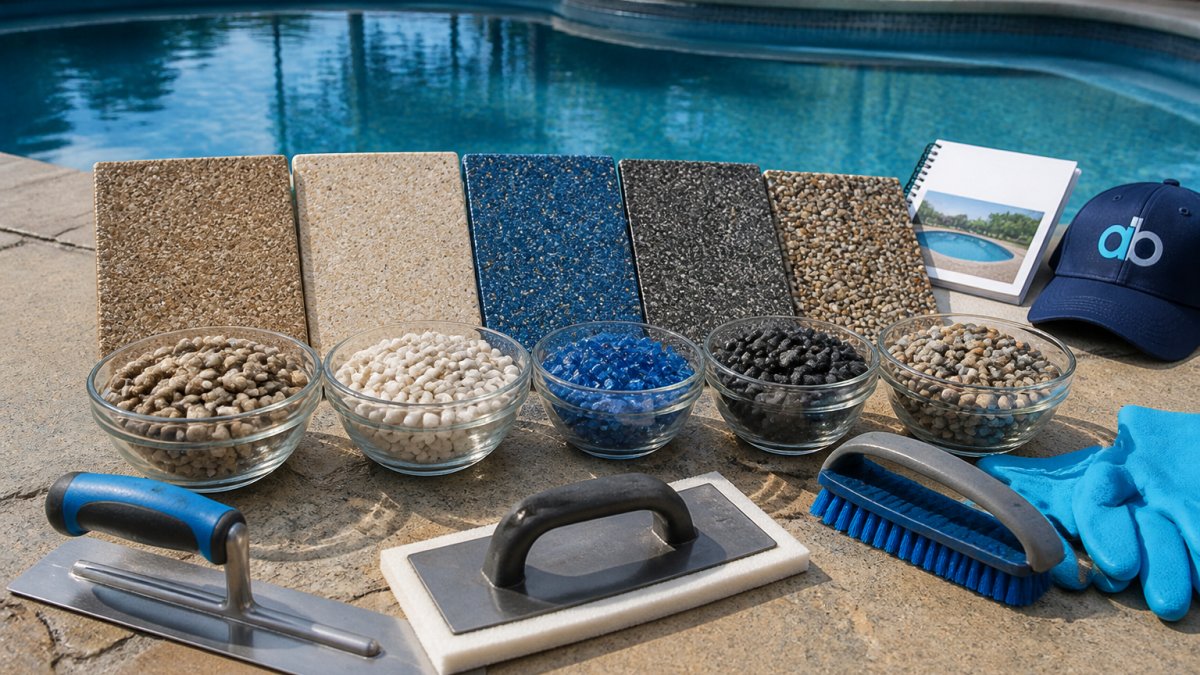
The pool plaster vs. quartz finish decision is really a texture decision. Traditional plaster, including classic white marcite, cures to a smooth, chalky surface with a soft feel underfoot. Quartz plaster blends quartz aggregate into the mix, which produces a harder, slightly grainy surface and holds color longer.
Allied Outdoor Solutions’ pool material guide lists both classic white marcite plaster and blue quartz plaster among its five resurfacing materials, alongside glass tile, porcelain tile, and pebble finishes.
Here is the practical difference most guides skip. Plaster is the forgiving choice for a pool with imperfect chemistry habits, because it wears gradually and visibly. Quartz hides wear better and resists staining, but it costs more upfront and still needs balanced water.
| Finish | Surface Feel | Typical Lifespan | Relative Upfront Cost |
|---|---|---|---|
| Paint or epoxy | Smooth, thin coating | 5-7 years | Lowest |
| Plaster | Smooth, soft | 7-10 years | Moderate |
| Quartz plaster | Hard, fine grain | Longer than plaster | Higher than plaster |
| Pebble | Textured, sandy | Longest of the aggregates | Highest |
Lifespan figures for paint and plaster come from Swimply’s material comparison, which lists paint or epoxy at 5-7 years and plaster at 7-10.
Watch out: choosing quartz purely for color while skipping a water-balance routine shortens its life and voids the advantage you paid for.
Pebble Pool Finish Pros and Cons for DFW Homeowners
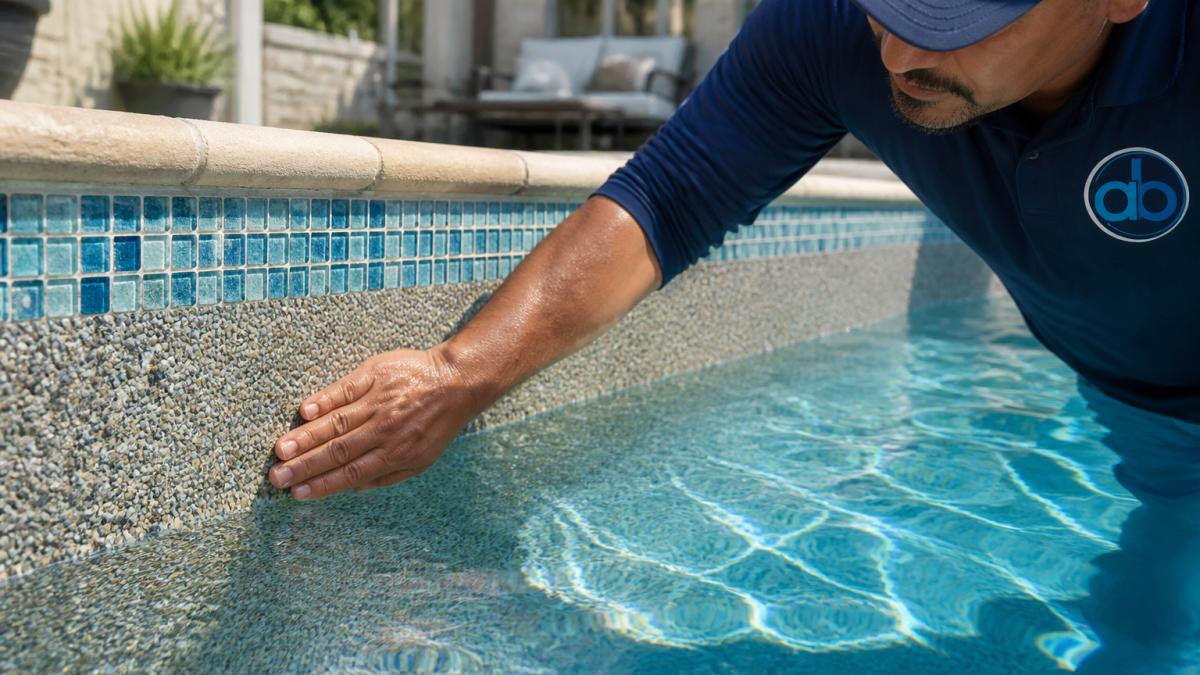
Pebble finishes win on longevity and lose on comfort and cost. A pebble pool finish is an exposed aggregate surface where small stones are set into the plaster, leaving the pebbles visible at the top. It resists wear and staining better than plaster in most cases.
The pros, in practice:
- Longest service life of the common finish categories
- Natural, non-uniform look that hides minor imperfections
- Strong resistance to staining and surface wear
The cons, honestly:
- Highest upfront cost of the options in this guide
- Textured surface some homeowners dislike on bare feet
- Rough edges can catch swimsuits and pool toys
Pebble finishes appear in multiple supplier comparisons, including Skin Micro Plaster’s six-option breakdown, which weighs plaster, quartz, pebble, tile, fiberglass, and marble side by side. For DFW pools that see heavy summer use, the durability argument is real. For a pool used mostly by small children, the texture argument matters just as much.
Tile, Fiberglass, and Marble: The Finishes Homeowners Ask About Last
Tile, fiberglass, and marble close out the shortlist for good reason: each suits a narrower set of pools. Glass and porcelain tile are typically used at the waterline and on steps rather than across an entire shell, which makes tile a design decision more than a full resurfacing one. Fiberglass offers a smooth, non-porous shell, and marble delivers a polished, high-end look.
Skin Micro Plaster’s resurfacing comparison names all three among its six options, and Allied Outdoor Solutions lists both glass tile and porcelain tile in its material guide.
Where each fits:
- Glass or porcelain tile: waterline accents, step edges, and decorative bands
- Fiberglass: homeowners who want a smooth, low-texture shell
- Marble: buyers prioritizing appearance over budget
If tile is on your list, our pool tile makeover guide walks through border and waterline options before you commit.
Pool Resurfacing Cost in Frisco, TX: What Drives the Number
Pool resurfacing cost in Frisco, TX tracks the same forces as the national figures, with pool size and finish choice doing most of the work. Swimply’s 2026 cost guide lists paint or epoxy at $1,500-$5,000 with a 5-7 year lifespan, and plaster at $5,000-$10,000 with a 7-10 year lifespan.
Four factors move the total most:
- Surface area. Larger pools need more material and more labor hours.
- Finish category. Aggregate and tile finishes cost more than paint or plaster.
- Prep work. Crack repair, delamination removal, and tile replacement add scope.
- Drain and refill. Emptying, prepping, and refilling all consume time and water.
Watch out: a quote that names a finish but not the prep steps is not comparable to one that does.
How Long Does Pool Resurfacing Take From Start to Swim
- Drain and inspect the shell: 1 day
- Remove the old finish and repair cracks: 2-4 days
- Apply the new finish: 1-3 days
- Cure the surface: 3-7 days
- Refill and balance the water: 2-3 days
Our pool renovation timeline guide lays out each phase in detail, and our guide to maintaining a renovated pool covers what to do in the first month so the new surface stays like new.
Schedule Your Resurfacing Assessment With Aqua Bright
Comparing finishes on paper only gets you so far.
Aqua Bright Pool Service has worked DFW pools since 2006. Our technicians are professionally trained and licensed by the state of Texas for repairs, and we use a randomized audit evaluation process. Our storefront office is open to the public.
If you are weighing a resurfacing project near me and want a straight read on which finish suits your pool, our guide to choosing a DFW pool renovation company covers the questions worth asking before you sign.
Frequently Asked Questions
What is the best material for resurfacing a swimming pool?
There is no single best material, only the best fit for your pool and budget. Plaster is the traditional choice and typically runs $5,000 to $10,000 with a 7 to 10 year lifespan, according to Swimply’s 2026 guide. Quartz and pebble finishes cost more but last longer and resist staining. Paint or epoxy is the cheapest at $1,500 to $5,000 but needs replacing every 5 to 7 years. Match the finish to how long you plan to stay in the home and how much upkeep you want.
Is quartz or pebble better for a pool finish?
Quartz gives you a smoother surface and a more uniform color, which many homeowners prefer for comfort underfoot. Pebble finishes use exposed aggregate for a textured, natural look and tend to hold up well against wear. The trade-off is feel: pebble is rougher on bare feet and knees. If children or older swimmers use the pool often, quartz is usually the easier choice. If you want maximum durability and a distinctive look, pebble is worth the trade.
How long do plaster, quartz, and pebble pool finishes last?
Plaster typically lasts 7 to 10 years, per Swimply’s 2026 cost guide. Quartz and pebble finishes generally outlast standard plaster because the aggregate hardens the surface, though the research does not give exact year figures for each. Paint or epoxy has the shortest life at 5 to 7 years. Actual lifespan depends on water chemistry, how heavily the pool is used, and whether the surface was properly applied by a licensed crew.
What does pool resurfacing cost in Frisco, TX?
National figures put most pool resurfacing projects between $6,000 and $15,000, with an average of about $11,000 in 2026, according to Angi and Swimply. Material choice drives the range: paint or epoxy runs $1,500 to $5,000, while plaster runs $5,000 to $10,000. Frisco pricing depends on pool size, surface condition, and finish selection. Aqua Bright can assess your pool and give you an exact quote rather than a national average.
How long does pool resurfacing take?
Most resurfacing projects take one to three weeks from drain to refill, depending on the material and the condition of the surface. Plaster and quartz applications need cure time before the pool can be filled, and the water then needs balancing before swimming. Pebble and tile work can add days because of the detail involved. Weather and access to the pool deck also affect the schedule. Ask for a written timeline before work begins.
Your pool’s finish is the one surface every swimmer touches, and it deserves a decision made on inspection rather than guesswork. Aqua Bright Pool Service brings state-licensed technicians, a randomized audit process, and two decades of DFW experience to every resurfacing assessment. Get started with Aqua Bright Pool Service and choose a finish built for your pool, your budget, and how you actually swim.
