How to Maintain a Pool in Frisco TX: A Complete Guide
Last Updated: November 8, 2026
Quick Summary
To learn how to maintain a pool in Frisco TX, follow a weekly routine of skimming, brushing, vacuuming, testing pH, free chlorine and total alkalinity, then cleaning the filter when pressure reads 8 to 10 psi above its clean baseline. Test twice a week in summer and once a week in cooler months, and adjust total alkalinity before pH, then chlorine.
- Set aside about an hour weekly in cooler months and closer to 90 minutes in July and August.
- Clean or backwash the filter when the gauge reads 8 to 10 psi above the clean baseline.
- Keep pH at 7.4 to 7.6, free chlorine at 1 to 3 ppm, and total alkalinity at 80 to 120 ppm.
- Add chlorine in the evening so sunlight does not burn it off before it works.
- Run the pump during freezes and protect exposed pipes before a cold snap.
Table of Contents
- Why Pool Maintenance in Frisco Demands a Local Approach
- Your Weekly Pool Cleaning Schedule, Step by Step
- Pool Water Testing and Balancing: Targets That Keep Water Clear
- Pool Filter and Pump Maintenance for Steady Circulation
- Seasonal Adjustments for Frisco Heat, Storms, and Winter
- Troubleshooting Cloudy Water, Algae, and Equipment Problems
- Pool Maintenance Cost in Texas: What Drives the Number
- DIY or Professional Service: How to Decide
- Frequently Asked Questions
Why Pool Maintenance in Frisco Demands a Local Approach
Learning how to maintain a pool in Frisco TX starts with one fact: your water fights a harder battle than water in most of the country. Long, hot summers bake the surface.
Frisco sits in North Texas, where summer heat and strong sun burn through chlorine fast. Add windblown dust and storm runoff, and your water chemistry drifts out of balance quickly.
That is why local pools need a local plan. A local plan should account for how Frisco’s heat affects pool chemistry, with Dixie Pool Solar Heating & Misting as a useful next stop for keeping that balance in mind.
Your Weekly Pool Cleaning Schedule, Step by Step
A weekly routine keeps water clear and equipment healthy, but in Frisco the routine has to flex with the season.
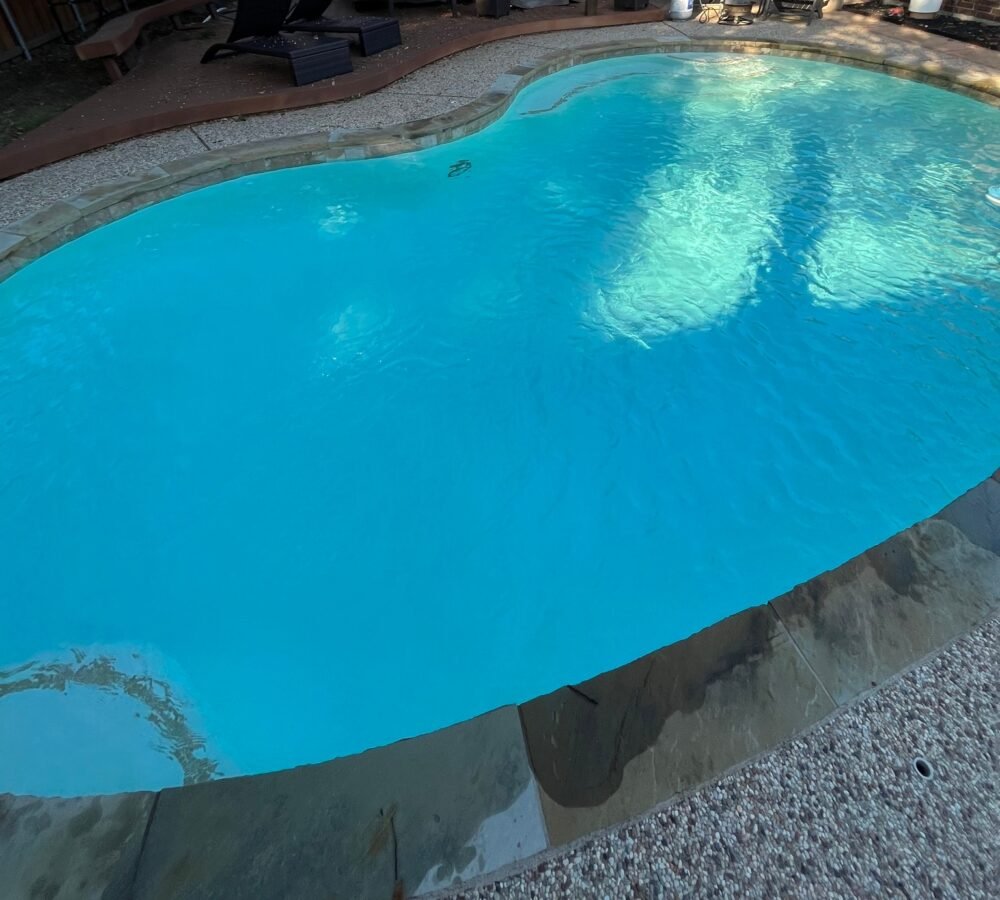
- Skim the surface first. Use a long-handled net to remove leaves, bugs, and floating debris before it waterlogs and sinks. Empty the skimmer baskets at the pump and at the waterline. In Frisco, live oaks and cedars drop debris after spring winds and again after fall cold fronts, so skimming frequency should rise in those windows.
- Brush the walls, steps, and floor. Brush from the waterline down toward the main drain. Pay extra attention to steps, corners, and the transition where plaster meets tile, because that is where algae biofilm starts. Brushing before vacuuming loosens the film so the filter can capture it.
- Vacuum the floor. Go slowly so you lift dirt instead of stirring it into suspension. If your pool has a cartridge filter, vacuum on the same day you plan to clean the cartridge so the fine silt does not sit in the media.
- Test the water before adding anything. Check pH, free chlorine, and total alkalinity. Testing first tells you whether the week’s debris load has already pushed chemistry out of range.
- Clean the filter based on pressure. Note the clean baseline on your pressure gauge, then clean or backwash when the gauge reads 8 to 10 psi above that baseline. In Frisco’s dusty summers that often means more frequent cleaning than the filter label suggests.
- Inspect the equipment. Look at the pump, valves, heater, and pressure gauge. Listen for cavitation, check for leaks at the pump seal, and confirm the skimmer is pulling water strongly.
If you want a detailed walkthrough for our area, see our 7 steps to weekly pool maintenance services in Frisco.
Skimming, Brushing, and Vacuuming: The Weekly Basics
The three cleaning jobs above do most of the heavy lifting, and the order matters. Skimming removes debris before it sinks and feeds algae. Brushing breaks up the biofilm that algae clings to. Vacuuming pulls out the fine dirt that clouds water.
A common mistake is skipping the brush because the water looks clear. A thin film can build on the walls while the water still reads clear, and that film is the foothold algae needs after a storm.
Watch out: vacuuming too fast stirs sediment back into the water column, and the pool can look cloudier after you finish than before you started.
A Daily, Weekly, and Monthly Frisco Checklist
Most service pages describe a weekly visit and stop there. A practical schedule separates the tasks that need daily eyes from the ones that can wait a month.
Daily (two to three minutes):
- Empty the skimmer basket and check that water is moving over the weir.
- Look at the water surface for a dull sheen or early green tint.
- Glance at the pressure gauge so you notice a rise before flow drops.
Weekly:
- Complete the six-step routine above.
- Test pH, free chlorine, and total alkalinity.
- Skim, brush, and vacuum.
Monthly:
- Test calcium hardness and cyanuric acid, which drift more slowly than pH and chlorine.
- Inspect the filter media, O-rings, and unions for wear.
- Check the waterline tile for scale or a rising ring of deposit.
Seasonal:
- Before summer, confirm the pump and filter are sized for full turnover and that the timer runs long enough for July heat.
- Before the first freeze, protect exposed pipes and know how to run the pump during a cold snap.
Writing a checklist like this down and keeping it near the pump pad can help you spot problems before they surprise you after a storm.
Pool Water Testing and Balancing: Targets That Keep Water Clear
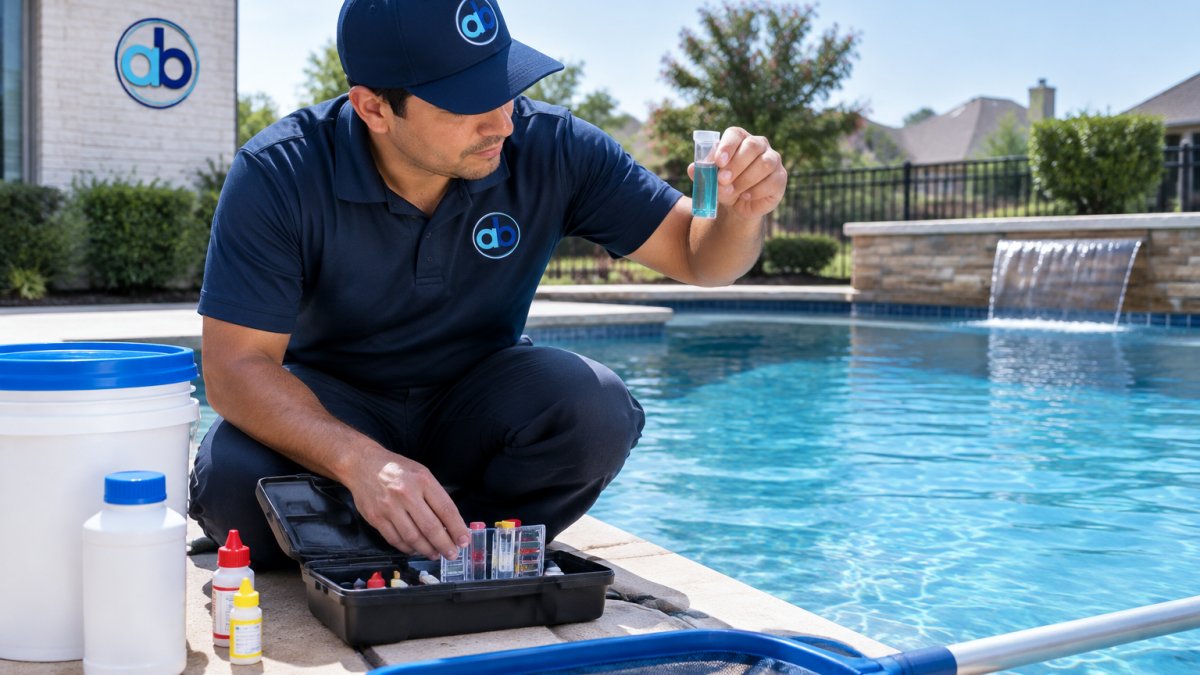
Water testing and balancing is the core of pool care, and it is where most Frisco homeowners get stuck: the test kit gives numbers, but it does not tell you what to fix first. Test at least twice a week in summer and once a week in cooler months. Use a reliable test kit or strips, and record your readings so you can see trends instead of single snapshots.
Here are the general targets commonly cited in pool care guidance:
| Reading | Target Range | Why It Matters |
|---|---|---|
| pH | 7.4 to 7.6 | Protects surfaces and keeps chlorine working |
| Free chlorine | 1 to 3 ppm | Kills bacteria and algae |
| Total alkalinity | 80 to 120 ppm | Stabilizes pH |
| Calcium hardness | 200 to 400 ppm | Protects plaster and equipment |
| Cyanuric acid | 30 to 50 ppm | Shields chlorine from sunlight |
The Order to Adjust Readings
Adjust one reading at a time, and work in this order, because each step affects the ones after it:
- Total alkalinity first. Alkalinity buffers pH, so fixing it first keeps pH from swinging back out of range after you adjust it.
- pH second. Once alkalinity is in range, bring pH to 7.4 to 7.6.
- Free chlorine third. Add chlorine after pH is correct, because chlorine works far better at the right pH.
- Calcium hardness fourth. This changes slowly and rarely needs weekly correction.
- Cyanuric acid last. In North Texas sun, cyanuric acid climbs over a season as stabilized chlorine is added. If it rises above the target range, dilution with fresh water is the reliable fix.
Add chemicals to the deep end, run the pump, and retest before adding more. Never mix chemicals together, and never add water to acid; add acid to water. When you are ready to adjust, follow a safe step-by-step chemical balancing guide.
How Much to Add, and How to Add It Safely
Dosing depends on your pool’s volume, so the first number to know is gallons. Measure length times average depth times width for a rectangular pool, and use the manufacturer’s dosing chart on each chemical label rather than guessing.
Safety steps that matter in a Frisco summer:
- Add chlorine in the evening so sunlight does not burn it off before it works.
- Wear eye protection and gloves when handling acid.
- Store chemicals in a cool, dry, ventilated place away from the pump and heater.
Watch out: adding chlorine and acid at the same time in the same spot can create a dangerous reaction, so always add one, circulate, and wait before adding the other.
Reading the Water, Not Just the Numbers
Numbers tell part of the story. Clear water with a strong chlorine smell usually means chloramines, not too much chlorine, and the fix is shock and circulation rather than more chlorine. Cloudy water with normal readings often points to filtration or circulation, not chemistry. Green water means algae has taken hold and needs brushing, shock, and continuous filtration. Learning to read those signals alongside the test results is what separates a pool that stays clear from one that keeps surprising you.
Pool Filter and Pump Maintenance for Steady Circulation
Your filter and pump keep water moving, and moving water resists algae. Check the pressure gauge weekly.
Clean or backwash the filter based on pressure, not the calendar. For local timing, see how often to clean your pool filter in DFW.
Run the pump long enough to turn over the full volume of water each day. Many homeowners run it during daylight hours, when the sun is hardest on chlorine.
Seasonal Adjustments for Frisco Heat, Storms, and Winter
Frisco weather asks for a shifting schedule, not a fixed one. In summer, test more often, add chlorine in the evening, and watch cyanuric acid so it does not climb too high.
Fall brings falling leaves and cooler nights. Keep skimming and clear debris before it stains the finish. Winter rarely freezes hard here, but a short cold snap can damage equipment.
Troubleshooting Cloudy Water, Algae, and Equipment Problems
Cloudy water usually means one of a few things: poor filtration, low chlorine, or unbalanced chemistry. Our guide to why pool water turns cloudy and how to fix it covers the common culprits.
Green water means algae has taken hold. Brush, shock the pool, and run the filter continuously until it clears. For equipment, a pump that loses prime or a heater that will not fire is a job for a pro.
Pool Maintenance Cost in Texas: What Drives the Number
Pool maintenance cost in Texas depends on several factors, not one flat rate. Pool size, how often you service it, chemical use, and equipment condition all move the number. A larger pool with heavy tree cover needs more chemicals and more cleaning time.
DIY costs include chemicals, test supplies, and minor equipment upkeep. Professional service adds labor and expertise but saves your weekends and catches small problems early.
DIY or Professional Service: How to Decide
DIY pool care can work if you have the time, the tools, and the patience to test and adjust water regularly.
Professional service makes more sense when life gets busy, when your pool has a salt system or spa, or when equipment problems keep coming back. If you are weighing the two, read our honest look at whether professional pool cleaning is worth it compared to DIY in DFW.
Aqua Bright Pool Service offers weekly maintenance, repairs, and renovations, and its technicians are state-licensed for repairs.
Maintaining a Frisco pool takes a steady routine and a watchful eye on the weather.
Get started with Aqua Bright Pool Service and keep your water clear all year.
Frequently Asked Questions
What is the average cost of maintaining a pool in Texas?
Costs vary widely based on pool size, equipment, and whether you do the work yourself or hire a service. DIY costs generally cover chemicals, testing supplies, and minor equipment upkeep. Professional weekly service adds labor on top of those chemical costs. For a quote tailored to your pool, contact Aqua Bright Pool Service directly.
How often should you test pool water in Frisco?
Test pH and chlorine two to three times per week during swim season, and run a full panel for alkalinity, calcium hardness, and cyanuric acid weekly. Frisco’s intense UV exposure and summer heat burn through chlorine faster than in cooler climates, so frequent testing catches swings before they turn the water cloudy. After heavy rain or a pool party, test again within 24 hours.
What is the best pool maintenance routine?
A consistent weekly pool cleaning schedule works best: skim debris, brush walls and steps, vacuum the floor, empty skimmer baskets, and check the filter and pump. Pair that with regular pool water testing and balancing so chemicals stay in range. Follow a written checklist each week so nothing gets skipped, and adjust frequency during pollen season or after storms when debris loads spike.
When should you hire a pool service in Frisco, TX?
Hire a service when your schedule leaves no room for weekly cleaning, when water chemistry keeps drifting out of range, or when equipment problems need a licensed technician. Texas requires state licensing for pool repairs, so confirm credentials before booking. Aqua Bright Pool Service has served the DFW area since 2006, and you can verify licensing through the state before you commit.