How Often Should a Pool Be Serviced in DFW?
Last Updated: November 26, 2026
Quick Summary
Most DFW pools need professional service once a week during the hot months, and less often in cooler weather. Summer heat burns through chlorine quickly, so the pool service frequency should rise in July and drop in winter. Storms and heat waves may call for an extra visit.
- Keep weekly service through swim season, from June to August.
- Stay on weekly service until mid-October, since fall leaves and warm water still drive algae.
- Move to biweekly or monthly visits in winter, with a freeze-watch check on equipment.
- Add a visit within 24 to 48 hours after heavy rain or a storm.
- Test free chlorine and pH twice a week in summer and weekly in cooler months.
Table of Contents
- How Often Should a Pool Be Serviced in the DFW Area?
- DFW Pool Maintenance Schedule by Season
- Pool Service Frequency by Season and Why Texas Weather Matters
- What Happens During Each Service Visit
- Pool Maintenance Checklist for Homeowners
- Monthly Pool Service Cost in DFW
- Booking Your Frisco Pool Service Schedule with Aqua Bright
- Frequently Asked Questions
A pool in the Dallas-Fort Worth area usually needs professional service once a week during the hot months and less often in cooler weather. Aqua Bright Pool Service has served the DFW area since 2006, and we can set a schedule that fits your pool and the season. The right pool service frequency depends on heat, usage, rain and the equipment you own.
A Frisco pool-maintenance guide from Aqua Bright Pool Service’s local competitor, Aqua Bright Pool Service, “How to Maintain a Pool in Frisco TX: A Complete Guide”, recommends testing water twice a week in summer and once a week in cooler months. That cadence is a useful baseline. The schedule below builds on it.
How Often Should a Pool Be Serviced in the DFW Area?
Most DFW pools do best with weekly professional service during the swim season and a lighter schedule in winter. Heat speeds up chlorine use and algae growth, so a pool that sits idle in July can turn cloudy within days. Cooler months slow everything down, which is why many owners move to a reduced schedule.
Pool service frequency is the number of visits per month a technician makes to test, clean and balance your water. For a typical residential pool, that is four visits in summer and fewer in winter. If you want a complete local maintenance picture for Frisco, read the dedicated Frisco pool-maintenance guide for more detail.
DFW Pool Maintenance Schedule by Season
A seasonal schedule keeps the work predictable, though local weather can shift the calendar. The table below shows a typical residential pool schedule in the DFW area; the notes after it explain what drives the frequency changes. Because weather can alter service timing, comparing reliable local pool companies can help keep a seasonal maintenance schedule aligned with changing conditions.
| Season | Months | Typical professional frequency | What drives the change |
|---|---|---|---|
| Spring | March to May | Weekly, starting when water holds above about 60°F | Pollen and oak catkins blow in from late February through April; opening chemistry needs a full balance |
| Swim season | June to August | Weekly, with a second mid-week water test in heat waves | Water above 90°F burns through chlorine and invites algae |
| Early fall | September to mid-October | Weekly | Leaves still fall and water is still warm enough for algae |
| Late fall | Mid-October to November | Biweekly | Nights cool, but leaf load peaks |
| Winter | December to February | Biweekly to monthly, with a freeze-watch check | Chemistry holds longer, but hard freezes threaten equipment |
Spring (March to May). Frisco sits in a corridor where spring pollen and windblown debris from live oaks and cedar elms land in pools for weeks. Opening service should include a full chemical balance, a filter clean, and a skimmer-basket check, because the debris load in April and May is often heavier than in midsummer. Watch out: opening the pool before the last cold front passes can leave you re-balancing twice in two weeks.
Summer (June to August). Heat speeds up chlorine loss, so pools in full sun or with heavy swimmer load may need more frequent testing than the baseline schedule.
Fall (September to November). The most common scheduling mistake in DFW is cutting service too early. Water stays warm into October, leaves are still falling, and a pool that drops to biweekly in September can go green by Halloween. Keep weekly service through mid-October, then step down.
Winter (December to February). Reduced service is fine for chemistry, but North Texas freezes are the real risk. A biweekly or monthly visit should include a freeze-watch check on the pump, exposed plumbing, and the skimmer, and the homeowner should know where the equipment shutoff is. For measured targets and testing cadence, see the water-chemistry section below.
Weekly Service During the Swim Season
During the swim season, weekly service keeps water clear and safe. A typical visit includes:
- Testing free chlorine, combined chlorine, pH, total alkalinity, calcium hardness, and cyanuric acid (stabilizer)
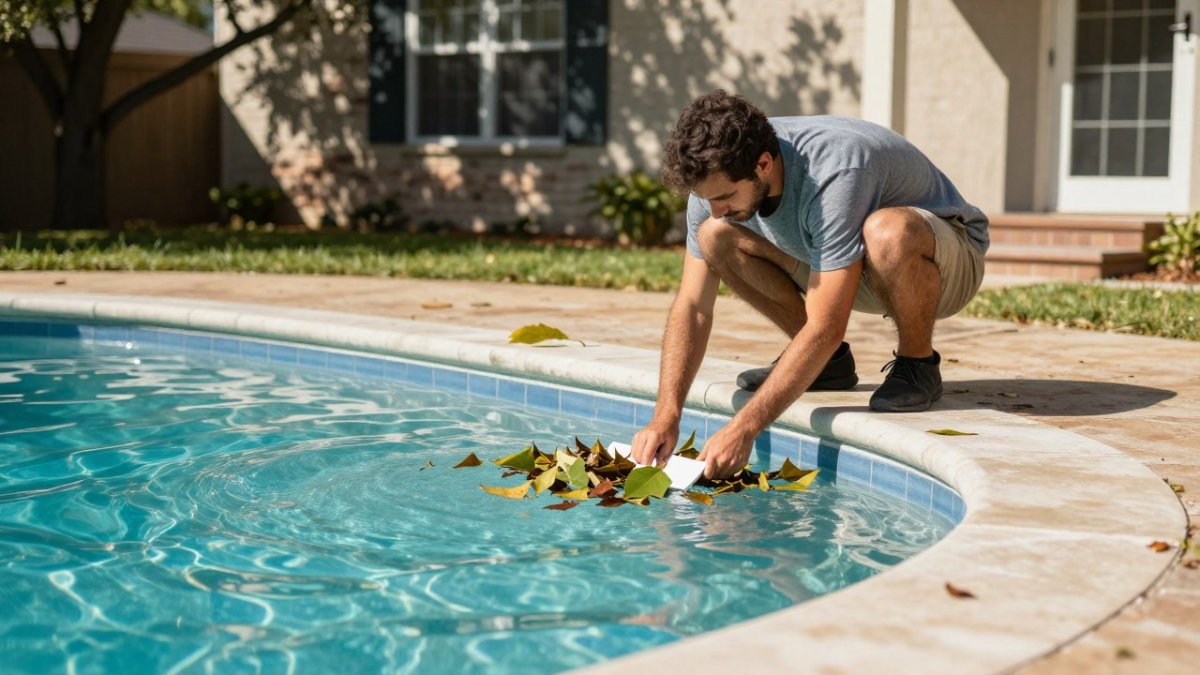
- Skimming leaves and surface debris
- Brushing walls, steps, and the floor
- Vacuuming the bottom
- Emptying skimmer and pump baskets
- Checking the filter pressure gauge against the clean-filter baseline
Reduced Service in Cooler Months
In cooler months, many pools need fewer visits, but they still need care, since water can turn green if chemicals drop too low and freezing weather can damage equipment.
Storm, Heat-Wave, and Algae-Response Schedule Changes
The seasonal calendar is the baseline; these events override it:
- Heavy rain or a North Texas storm: Rain dilutes chlorine and washes debris and runoff into the pool. Add a visit within 24 to 48 hours to re-balance and skim, and check the water level against the skimmer throat.
- Heat wave (multiple days above about 100°F): Add a mid-week water test and expect to raise chlorine demand. A pool that is clear on Monday can be cloudy by Thursday.
- Algae risk (green tint, slippery walls, or a chlorine reading near zero): Move to a recovery schedule, a shock and brush visit, then a follow-up test within 48 hours, rather than waiting for the next weekly slot.
- Debris event (post-storm leaf dump, pollen burst): A skimmer-only visit is often enough, but it has to happen before the debris sinks and loads the filter.
Measured Water Chemistry Targets and Testing Cadence
Frequency recommendations only work if you know what you are testing for. Your pool type, surface, and sanitizer system can shift targets, so follow your service technician’s or product label’s guidance.
| Parameter | Common residential target | Test cadence in swim season | Test cadence in cooler months |
|---|---|---|---|
| Free chlorine | 1-3 ppm (higher with stabilizer; follow product label) | 2x per week | Weekly |
| pH | 7.4-7.6 | 2x per week | Weekly |
| Total alkalinity | 80-120 ppm | Weekly | Biweekly |
| Calcium hardness | 200-400 ppm | Monthly | Monthly |
| Cyanuric acid (stabilizer) | 30-50 ppm | Monthly | Monthly |
| Salt (saltwater pools) | Per system manufacturer, commonly 2,700-3,400 ppm | Monthly | Monthly |
A common pattern in Frisco is that fill water and summer evaporation push calcium hardness and stabilizer readings up over a season, which changes how often you need to test and partially drain. If your pool has a water feature, a spa spillover, or a screen enclosure, the aeration and splash-out change the pH drift and the frequency of chemical adjustment. Those pool-specific variables are why a one-size-fits-all calendar underperforms a schedule built around your pool.
Pool Service Frequency by Season and Why Texas Weather Matters
Texas heat is the main reason DFW pools need more attention than pools in milder climates. Water temperatures above 90°F speed up chemical loss and algae growth. PoolBurg’s North Texas maintenance schedule notes that chemistry can change daily in hot weather and recommends checking chlorine and pH at least weekly, with twice-weekly checks during the hottest months.
Storms and heavy rain can change a pool’s chemistry. Rain dilutes chemicals and can wash debris into the pool.
What Happens During Each Service Visit
A professional service visit is more than a quick look, but the useful question is which tasks happen every visit, which happen monthly, which are seasonal, and which are as-needed. Separating them is how you compare a professional plan against doing it yourself, and how you spot a visit that is skipping work you are paying for.
Every-Visit Tasks (Weekly in Swim Season)
These are the non-negotiables on a weekly Frisco visit:
- Test free chlorine, combined chlorine, pH, and total alkalinity; adjust chemicals to target
- Skim the surface and empty skimmer and pump baskets
- Brush walls, steps, and the floor (brushing disrupts the biofilm algae attaches to)
- Vacuum or run the cleaner on the bottom
- Read the filter pressure gauge and compare it to the clean-filter baseline
- Visual check of the pump, filter, heater, and visible plumbing for leaks or noise
- Leave a short service report noting readings and anything that needs attention
Monthly Tasks
- Full chemistry panel including calcium hardness and cyanuric acid (stabilizer)
- Clean or backwash the filter based on pressure rise, not the calendar
- Inspect the salt cell and clean it if the system is saltwater
- Check the water level and the autofill, if present
- Inspect ladders, handrails, and the skimmer lid for wear
Seasonal Tasks
- Spring: open the pool, full balance, filter clean, equipment inspection
- Summer: heat-wave chlorine plan and a mid-week test during peak weeks
- Fall: leaf-load management and a pre-winter chemistry balance
- Winter: freeze-watch check on pump, plumbing, and skimmer; confirm the homeowner knows the equipment shutoff
As-Needed Tasks
- Storm response: re-balance and skim within 24 to 48 hours of heavy rain
- Algae recovery: shock, brush, and a follow-up test within 48 hours
- Post-party or heavy-bather-load recovery visit
- Equipment repair or replacement, which is quoted separately from routine service
Comparing Professional Service With Your Own Routine
Watch out: a service that only skims and drops in chlorine is not a full visit. If your report never shows chemistry readings or a filter-pressure number, ask what is being checked.
Pool Maintenance Checklist for Homeowners
Use this list to see what a regular service should cover, and to spot tasks you can handle between visits:
- Test water chemistry weekly in summer
- Skim leaves and debris from the surface
- Empty skimmer and pump baskets
- Check the filter pressure gauge
- Brush walls and the floor
- Check water level
- Clean or backwash the filter as needed
- Inspect equipment for leaks or noise
Monthly Pool Service Cost in DFW
Costs depend on pool size, how often the pool is serviced, and what extra work is needed. A local pricing guide from Noah’s Pool Service, 2026 Fort Worth weekly pool service pricing guide reports a DFW metro average of about $208 per month for weekly service, with a range of $86 to $250. Those figures are a regional reference, not a quote. For current pricing on your pool, contact Aqua Bright Pool Service directly, since our rates depend on pool size, service frequency and any repairs.
Doing the work yourself can cost less in cash but takes time and skill.
Booking Your Frisco Pool Service Schedule with Aqua Bright
Aqua Bright Pool Service has served the DFW area since 2006 with professionally trained, state-licensed technicians. Our storefront office is open to the public, so you can stop by to talk through your options. Contact us to get started and we will set up a service plan that fits your pool.
Frequently Asked Questions
How often should pool service be done in the DFW area?
Most DFW pools benefit from weekly professional service from April through October, when heat and heavy use drive chemistry changes quickly. Water testing guidance from North Texas sources often recommends checking chlorine and pH at least weekly, and twice weekly during the hottest months when water temperatures exceed 90°F. From November onward, many pools can shift to biweekly service with chemistry checks at least every two weeks. Your exact schedule should reflect pool size, shade, bather load, and whether the pool sits under trees that drop debris.
How much does monthly pool service cost in the DFW area?
Actual pricing depends on pool size, equipment, service scope, and how often the pool is visited. For a quote tailored to your pool, contact Aqua Bright Pool Service directly.
Can I maintain my pool myself between professional visits?
Yes, many homeowners skim debris, brush walls, and check water levels between professional visits. Testing water chemistry at home between visits helps catch problems early, especially during hot weather when chemistry can shift daily. Equipment items such as filter cleaning and salt-cell inspection run on longer intervals and are best left to a trained technician if you are unsure.
What factors affect how often a pool needs service?
Pool size, the number of people swimming, sun exposure, shade from trees, and nearby debris all change how quickly water chemistry and cleanliness decline. Heat waves, heavy rain, and storms can also require extra visits to rebalance chemistry or address algae. Equipment type, such as a saltwater system, adds inspection needs. Reviewing these factors each season helps you decide whether weekly, biweekly, or occasional service fits your pool.