
Why Pool Filter Cleaning Matters for Clear Water
Last Updated: November 17, 2026
Quick Summary
Pool filter cleaning is the most important routine task in pool care because it restores water flow, keeps sanitizer working, and protects the pump. A clogged filter drops flow, strains the pump, and gives algae a place to grow, so clean it every 4 to 8 weeks during swim season.
- Clean or backwash when the pressure gauge reads 8 to 10 psi above your clean baseline.
- Most pools need filter cleaning every 4 to 8 weeks during swim season.
- Backwashing a sand filter takes about 5 minutes; a yearly deep clean takes 30 to 60 minutes.
- Always turn off the pump before moving a multiport valve handle.
- Call a pro when the gauge stays high after cleaning or the media is clumped.
Table of Contents
- Why Regular Pool Filter Cleaning Matters
- How a Dirty Filter Harms Water Quality and Equipment
- Signs a Pool Filter Needs Cleaning
- How Often to Clean a Pool Filter
- How to Clean a Pool Sand Filter
- When to Call a Pool Filter Cleaning Service
- Schedule Your Pool Filter Cleaning in Frisco
- Frequently Asked Questions
Why Regular Pool Filter Cleaning Matters
Pool filter cleaning is the single most important routine task in pool care. It keeps water moving, keeps sanitizer working, and protects the pump that runs your whole system.
Aqua Bright Pool Service has served Frisco and DFW homeowners since 2006. Here is the short version of the case for filter care.
A filter traps dirt, pollen, sunscreen, and body oils. Once it fills up, water cannot pass through. Flow drops, the pump strains, and water quality slides.
- Clean filters mean clearer water and less chemical use
- A clogged filter makes the pump work harder and run hotter
- Dirty media gives algae a place to grow
- Skipping cleanings shortens filter and pump life
For a deeper look at the full case for filter maintenance, see our guide on why clean pool filters matter.
How a Dirty Filter Harms Water Quality and Equipment
A dirty filter does damage in three places at once: water, pump, and filter media itself.
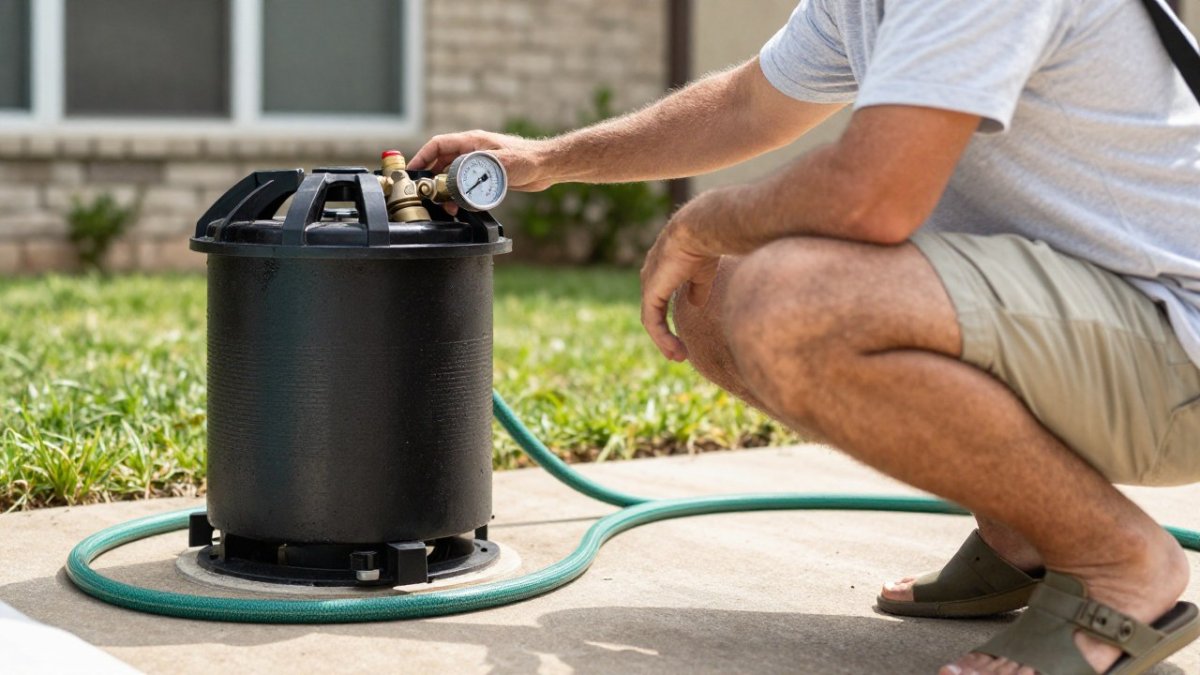
First, water. When flow drops, your pool turns over less water each day. Chlorine spreads unevenly, and dead spots form where algae takes hold.
Second, the pump. A clogged filter is like breathing through a straw. The pump pulls harder, runs hotter, and burns more energy.
Third, the filter. Trapped debris hardens and channels form through the media. Water then slips past the dirt instead of through it.
Cloudy water is a common symptom. Our article on why pool water turns cloudy and how to fix it walks through the seven usual causes.
Signs a Pool Filter Needs Cleaning
The clearest sign is a pressure gauge reading 8 to 10 psi above your clean starting pressure. Write down the pressure right after a cleaning. That number is your baseline. But the gauge is more than a single threshold; it is a diagnostic tool. Here is a practical decision rule and what persistent high or low pressure may indicate.
Pressure-Gauge Decision Rule
- Baseline: Record the gauge reading immediately after a cleaning and with a clean filter. This is your reference point.
- Clean now: When the gauge reads 8 to 10 psi above baseline, clean or backwash the filter.
- Investigate: If the gauge stays high after cleaning, the problem is likely downstream of the filter (clogged return line, closed valve) or the media is channeled and needs replacement.
- Low pressure: A reading well below baseline often means a suction-side air leak, a clogged pump basket, or a failing pump. Low pressure is not a sign of a clean filter; it is a sign of reduced flow.
A weekly gauge check can catch problems before water quality suffers. Waiting until the water turns cloudy is often too late.
Other Signs a Pool Filter Needs Cleaning
- Weak return jets and less skimmer suction
- Cloudy or dull water that will not clear
- Visible debris sitting on the filter media
- The pump sounds louder or runs hotter
- Algae returns within days of shocking
- Higher chemical use for the same results
One sign alone is worth a look. Two or more means clean it now.
Filter Problems and Water Chemistry
Filtration supports sanitation, but it does not replace it. A dirty filter can mask a chemistry problem: when flow drops, chlorine spreads unevenly and dead spots form where algae takes hold.
Watch out: ignoring a rising gauge is a common mistake. A filter left too long can send debris back into the pool and put real strain on the pump. If the gauge stays high after cleaning, do not keep running the pump; diagnose the restriction.
If you want to confirm what you are seeing, our breakdown of pool filter warning signs covers each symptom in detail.
How Often to Clean a Pool Filter
Most pools need filter cleaning every 4 to 8 weeks during swim season. Heavy use, trees, and dust push that toward every 2 to 4 weeks. Light use in cooler months can stretch to 8 to 12 weeks.
Frequency depends on three things: filter type, bather load, and local conditions. Frisco summers are hot and long, and North Texas wind carries plenty of dust and pollen. Both load up a filter fast.
| Filter Type | Typical Cleaning Interval | Best Method |
|---|---|---|
| Cartridge | 4-6 weeks | Rinse cartridges, deep soak quarterly |
| Sand | 4-8 weeks | Backwash, then full media clean yearly |
| DE | 4-8 weeks | Backwash and recharge with DE |
Typical Cleaning Interval
Check the pressure gauge weekly. That reading, not the calendar, tells you when to act. For a full DFW seasonal schedule, read our guide on how often to clean your pool filter in DFW.
How to Clean a Pool Sand Filter
Sand filter cleaning has two levels: quick backwashing and a full deep clean. Backwashing takes about 5 minutes. A deep clean takes 30 to 60 minutes and should happen once a year. But sand is only one of three common filter types, and the safe procedure differs for each. Below are separate, sequenced steps for cartridge, sand, and diatomaceous earth (DE) filters, including shutdown, pressure relief, reassembly, and safe disposal. Whichever filter you clean, keeping the system operating properly helps limit the conditions that let algae return, a concern also reflected in Sunshinepressurewashingandwindowcleaning.
Cartridge Filter Cleaning
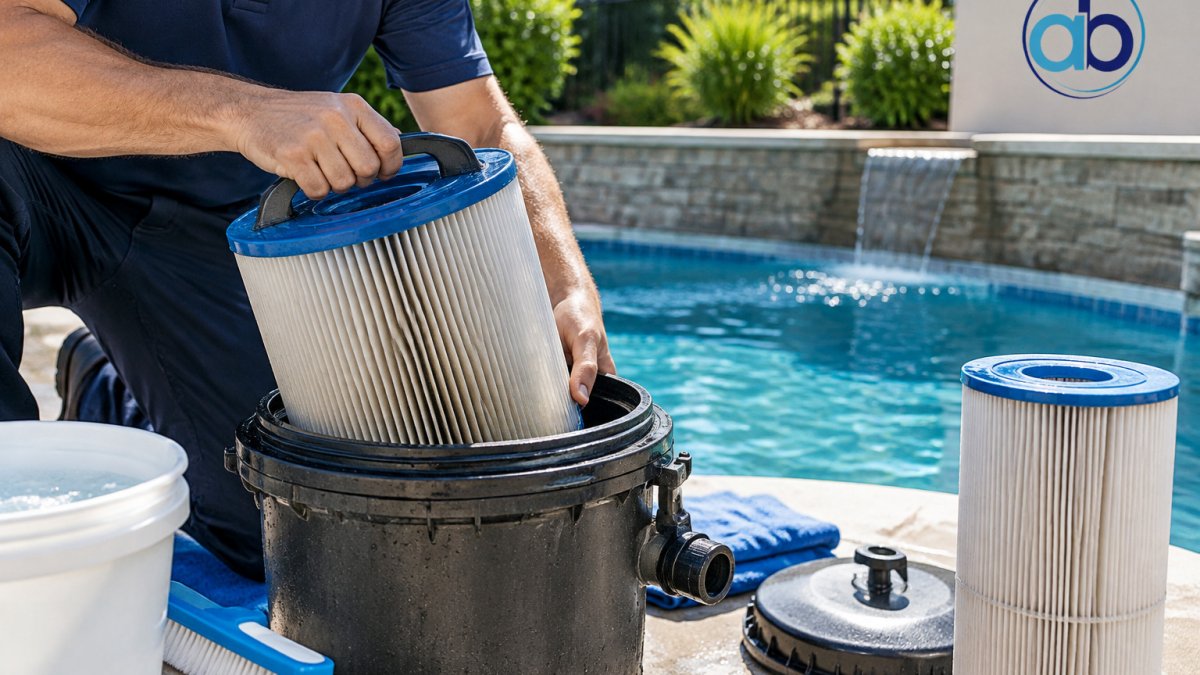
Cartridge filters trap debris in pleated fabric and are a common residential filter type. Most manufacturers recommend cleaning every 4 to 6 weeks during swim season, or whenever the pressure gauge reads 8 to 10 psi above the clean baseline.
What you need: a garden hose with a spray nozzle, a filter wrench if your housing requires one, and a large bucket or tub for deep soaking.
- Turn off the pump at the breaker, not just the timer.
- Open the air relief valve on top of the filter housing to release pressure.
- Remove the housing clamp or lid per the manufacturer’s instructions.
- Lift out the cartridge and hose it down from top to bottom, working between the pleats. A wide fan spray is more effective than a pinpoint stream.
- For deep cleaning, soak the cartridge in a commercial filter cleaner (not bleach) for the time stated on the label, usually 1 to 12 hours depending on the product.
- Rinse thoroughly, inspect the pleats for tears or collapsed areas, and replace the cartridge if damaged.
- Reinstall, lubricate the O-ring with a silicone-based lubricant, close the housing, and reopen the air relief valve before restarting the pump.
- Run the pump until water flows steadily from the air relief, then close the valve.
Watch out: never use muriatic acid or chlorine on a cartridge unless the manufacturer explicitly approves it; these chemicals can destroy the pleat fabric and void the warranty.
Sand Filter Cleaning
Sand filters use a bed of graded silica sand to trap particles. Backwashing reverses flow to flush debris to waste; a deep clean breaks up clumps and channels that backwashing cannot reach.
What you need: a garden hose, a filter wrench, and a bucket.
- Turn off the pump.
- Set the multiport valve to Backwash and restart the pump.
- Run water to waste until the sight glass runs clear, about 2 to 3 minutes.
- Turn off the pump, set the valve to Rinse, and run 30 seconds.
- Return the valve to Filter and restart.
For the yearly deep clean, shut off the pump and drain the tank. Remove the valve head and hose the sand bed until the runoff clears.
Watch out: always turn the pump off before moving the valve handle. Turning it under pressure can damage the valve and send sand into your pool.
Diatomaceous Earth (DE) Filter Cleaning
DE filters use a grid coated with diatomaceous earth, a fine powder that captures particles down to 2 to 5 microns. They require backwashing plus periodic full teardown and recharge.
What you need: a garden hose, a filter wrench, a bucket, and fresh DE powder.
- Turn off the pump and open the air relief valve.
- Backwash and rinse per the sand filter steps above, then shut off the pump.
- Open the filter tank and remove the grids.
- Hose each grid clean, then soak in a filter-cleaning solution if the manufacturer allows.
- Inspect grids for holes or tears; replace damaged grids.
- Reassemble, close the tank, and restart the pump with the air relief open.
- Once water flows steadily, close the air relief and add fresh DE through the skimmer per the label dose, typically 1 pound per 10 square feet of filter area.
Watch out: DE powder is a respiratory irritant. Wear a dust mask when handling it, and never dispose of DE slurry down a storm drain; bag it and dispose of it per local solid-waste rules.
Safe Disposal and Reassembly
Cartridge rinse water can go to landscaping or a sanitary sewer, not a storm drain. Sand and DE media should be bagged and disposed of as solid waste; check with your local solid-waste provider for current drop-off guidance. After any reassembly, open the air relief valve before restarting the pump to avoid air locks that can damage the impeller.
For a full DFW seasonal schedule, read our guide on how often to clean your pool filter in DFW.
When to Call a Pool Filter Cleaning Service
Call a pro when the gauge stays high after cleaning, when the media is clumped or channeled, or when you cannot safely open the housing. Cartridge filters with torn pleats and DE grids with holes also need expert eyes.
DIY is fine for routine rinses. It stops being fine when the job needs a wrench, a pressure test, or a decision about replacement.
Our filter cleaning service is described on our site. Our technicians are licensed by the state of Texas for repairs, and we use a randomized audit evaluation process for our technicians.
Schedule Your Pool Filter Cleaning in Frisco
Pools in hot, dusty North Texas summers can load up a filter quickly. A steady cleaning routine helps protect your water and equipment.
Aqua Bright Pool Service has served the DFW area since 2006 and offers routine maintenance, equipment repairs, and renovation services. You can visit our storefront office to learn more.
If your gauge is climbing or your water looks dull, do not wait for it to get worse.
A clear pool starts with a filter that can breathe.
Frequently Asked Questions
How many times a year should a pool filter be cleaned?
It depends on the filter type and use. Cartridge filters usually need cleaning every 4 to 6 weeks during swim season. Sand filters are backwashed monthly and the sand replaced every 3 to 5 years. DE filters need backwashing when pressure rises 8 to 10 psi above the clean baseline. In Frisco’s hot summers, heavy use can shorten those intervals, so check the pressure gauge weekly and clean when it climbs.
Can a dirty pool filter damage a pool pump?
Yes. A clogged filter restricts water flow, which makes the pump work harder and run hotter. Over time that added workload can shorten the pump motor’s life and raise energy costs. Keeping up with pool filter cleaning protects the pump and keeps water circulation strong. If you notice reduced flow or a pressure gauge reading that stays high after cleaning, have a licensed technician inspect the system.
Does cleaning a pool filter improve water clarity?
It does. A clean filter removes debris, dirt, and contaminants more effectively, so water stays clear and sanitation chemicals work better. When the filter is clogged, flow drops and algae has an easier time taking hold. Regular pool filter cleaning, paired with balanced water chemistry, is one of the simplest ways to keep water clear and healthy for swimmers.
What happens if you do not clean a pool filter?
Skipping filter cleaning leads to reduced water flow, higher filter pressure, and poor filtration. Water turns cloudy, algae grows more easily, and the pump works harder, which can drive up energy costs and shorten equipment life. In the long run, neglected filters may need replacement sooner. A pool filter cleaning service can set a maintenance schedule that fits your pool and your Frisco yard.
